Devoted 50 Years to Civil Rights as Martin Luther King Jr.'s Successor
Pioneer in Black Presidential Bids
Notable Achievements in "Civilian Diplomacy"
Reverend Jesse Jackson, an American Black civil rights activist and former presidential contender, died on the 17th (local time). He was 84.
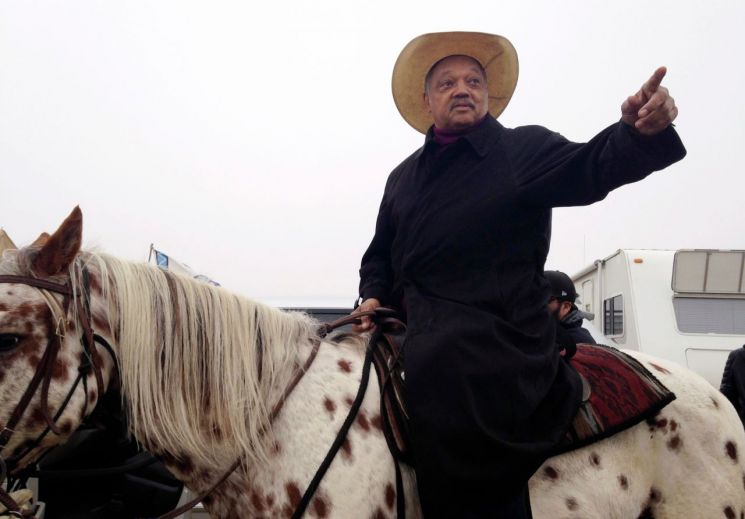
According to media reports including the New York Times (NYT), Jackson's family announced his passing in a statement, remembering him by saying, "Our father was a leader who served not only our family, but oppressed and marginalized people around the world, and those without a voice."
Jackson had previously revealed that he had been diagnosed with Parkinson's disease in 2017 and was battling the illness.
Remembered as the successor to Reverend Martin Luther King Jr., he devoted his life, from the heart of the civil rights movement in the 1960s, to advancing the rights of Black Americans and other marginalized communities. He founded Operation PUSH in 1971 and the National Rainbow Coalition in 1984, leading human rights movements for more than 50 years. The two organizations merged in 1996 to form the Rainbow PUSH Coalition (RPC).
Jackson ran in the Democratic presidential primaries in 1984 and 1988, performing strongly by drawing overwhelming support from Black voters. Until former President Barack Obama was elected in 2008, this was the closest any Black American had come to becoming a major-party presidential nominee, and it is widely regarded as having expanded the horizons of Black politics.
He also gained fame as a "civilian diplomat," who, even without any official title, helped secure the release of Americans detained in countries such as Syria, Cuba, and Iraq. Even after being diagnosed with Parkinson's disease, he continued to speak out in defense of human rights until the end, including condemning police brutality in the wake of George Floyd's death in 2020.
© The Asia Business Daily(www.asiae.co.kr). All rights reserved.

















