Private Education Spending Tops 29 Trillion Won in 2024, Hitting Another Record High
KDI Report Says "Narrow Pathways Are Fueling Competition"
An empirical analysis has found that parents' anxiety about their children's chances of getting into university and finding employment is a key factor driving the expansion of the private education market. The interpretation is that the structure of Korean society, where the "door to success" is narrow amid fierce competition, has amplified this phenomenon.
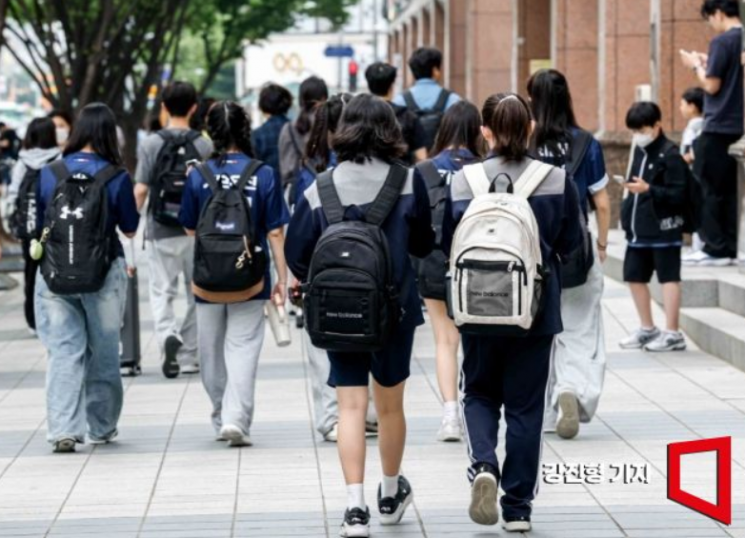
Quoting academic sources on the 17th, Yonhap News reported that in the report "A Study on the Structural Causes of Dependence on Private Education and Its Implications," published last year by Research Fellow Han Sungmin of the Korea Development Institute (KDI), it was found that parental competitive pressure has a statistically significant impact on the increase in private education spending.
Analyzing 6,807 samples from the Korean Children and Youth Panel Survey, the report found that when parents' competitive pressure score increased by 1 point, their children's private education expenses rose by an average of 2.9%. Parental competitive pressure is a concept that encompasses expectations regarding their children's academic achievement and success, as well as anxiety stemming from entrance exam competition.
However, competitive pressure was found to have no meaningful correlation with the number of hagwons or the total hours spent in private education. The researchers interpreted this as a stronger tendency, due to the physical limits of available time, to choose "qualitative upgrading" such as more expensive programs or high-end private tutoring rather than increasing study hours. This pattern of rising private education spending as competitive pressure increased was particularly pronounced among parents with a university degree or higher.
The report pointed to limited pathways to success and unequal opportunities as the background for this anxiety. Research Fellow Han explained, "The figures of a 10% probability of getting a 'good job' and a 4% probability of entering a 'good university' show a structural bottleneck in our society," adding, "In such an environment, it is inevitable that the competitive mindset of the parent generation will intensify."
In fact, the private education market continues to grow despite a decline in the school-age population. Private education spending for elementary, middle, and high school students in 2024 exceeded 29 trillion won, setting a new record high for the fourth consecutive year. The report suggested that resolving the dual structure of the labor market is urgent in order to ease parents' excessive competitive pressure. It argued that the segmented employment structure, consisting of a primary market with stable, high-wage jobs and a secondary market with unstable, low-wage jobs, fuels educational competition.
It also stressed the need for long-term efforts to diversify the criteria for success and ease the academic-credential-centered culture, along with policies to narrow the information gap between public education and private education. It added, "Since the five-grade system for high school academic records, introduced starting with the 2025 academic year, also has the potential to stimulate demand for private education, continuous follow-up monitoring will be necessary."
© The Asia Business Daily(www.asiae.co.kr). All rights reserved.
![Clutching a Stolen Dior Bag, Saying "I Hate Being Poor but Real"... The Grotesque Con of a "Human Knockoff" [Slate]](https://cwcontent.asiae.co.kr/asiaresize/183/2026021902243444107_1771435474.jpg)











