Report by The Wall Street Journal
The Wall Street Journal (WSJ) reported on the 15th (local time) that, after experiencing a surge in inflation following the COVID-19 pandemic, the U.S. economy has moved closer to a slowdown in inflation without a recession, that is, to a soft landing. However, the paper pointed out that it may be premature to declare victory in the war against inflation.
According to the report, recent indicators for the U.S. economy are pointing in a favorable direction, with inflation slowing, the labor market holding up, and growth remaining solid. The consumer price report released on the 13th showed that the core Consumer Price Index (CPI), which excludes the highly volatile energy and food categories, rose 2.5% year-on-year in January, marking the lowest increase in 4 years and 10 months since March 2021. Jeffrey Cleveland, chief economist at Payden & Rygel, said, "People used to tell me that the only way to bring inflation down to 2% was a sharp spike in the unemployment rate," adding, "But the worst disaster that everyone had in the back of their minds did not happen."
However, the WSJ noted, "Even if the economy does not need an oxygen mask, it is still not time to unbuckle the seat belt." As of the data available through November last year, the U.S. Personal Consumption Expenditures (PCE) price index was up 2.8% year-on-year, still hovering in the mid-to-upper 2% range. When assessing whether it has achieved its monetary policy goal of a 2% inflation rate, the Federal Reserve (Fed) uses the PCE price index as its benchmark instead of the relatively better-known CPI.
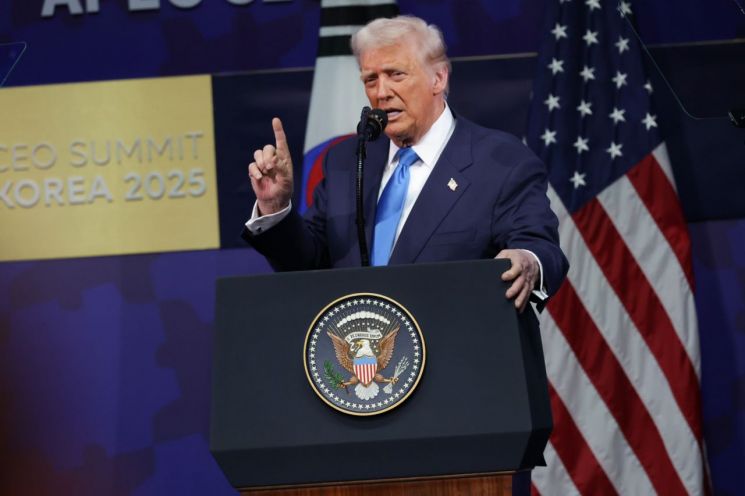
Some observers expect U.S. companies to begin passing on to consumers the higher costs stemming from the tariff policies of the Donald Trump administration. Fed officials also are not ruling out the risk that inflation could rebound. Anna Paulson, president of the Federal Reserve Bank of Philadelphia, said last month, "I am not going to declare victory on the soft landing," adding, "Inflation needs to slow to 2%, and we have not finished the job." Fed officials expect the PCE price index inflation rate to slow only to 2.4% by the end of this year.
There are also concerns that the labor market may prove less stable than expected. According to the annual benchmark revision of employment statistics, it was confirmed that the average monthly increase in U.S. employment last year was only 15,000, and that job gains were concentrated in health care-related sectors such as nursing, which suggests that the labor market remains in a fragile state. Experts predict that, with employment growth slowing while the unemployment rate remains steady, the U.S. labor market will evolve into a so-called "no hire, no fire" pattern. The WSJ assessed, "It will not take much to upset this fragile balance."
Another risk is that U.S. household wealth has been supported for years by a strong stock market. If a wave of stock selling occurs, it could come back as a "boomerang" that weakens the engine of economic growth by dampening consumption.
Some also worry that robust consumption itself could threaten the soft landing. Mark Giannoni, chief economist at Barclays, said, "Because household finances are in generally good shape, I am a little worried about the soft landing." Strong consumption is a factor that supports growth, but it can also make it harder to bring down inflation.
On top of this, if the Trump administration pursues expansionary fiscal policy ahead of the November midterm elections, it could add further tailwinds to the economy while having a negative impact on inflation. There is also speculation that, even if the economy continues to grow strongly, the Fed could proceed with additional interest rate cuts under pressure from President Trump. The WSJ assessed, "Whether Kevin Warsh, chosen by President Trump as the successor to Fed Chair Jerome Powell, will inherit the Fed's responsibility to cement the recent progress on disinflation, or instead pursue something more ambitious, will determine what comes next."
© The Asia Business Daily(www.asiae.co.kr). All rights reserved.
![User Who Sold Erroneously Deposited Bitcoins to Repay Debt and Fund Entertainment... What Did the Supreme Court Decide in 2021? [Legal Issue Check]](https://cwcontent.asiae.co.kr/asiaresize/183/2026020910431234020_1770601391.png)