"Family Operation Burdens Outweigh Housework, Reflecting Simpler Holiday Trends"
During the Lunar New Year holidays, married men find it most difficult to coordinate visits to both families, while married women struggle most with preparing holiday gifts.
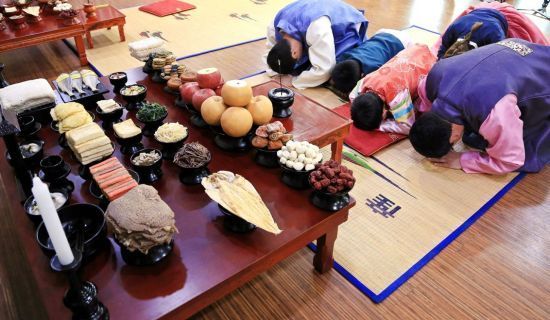 A family bowing at the Lunar New Year ancestral table. The photo is not directly related to the article. The Asia Business Daily DB
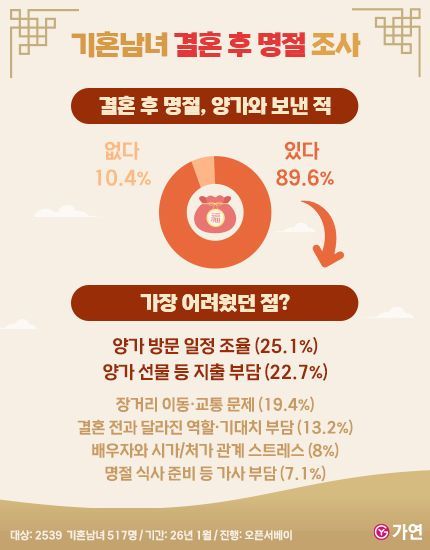
According to the results of the "2026 Dating and Marriage Perception Survey" conducted by matchmaking company Gayeon at the end of last month on 517 married men and women aged 25 to 39, the most difficult aspect of spending traditional holidays after marriage was "coordinating the schedule for visiting both families" (25.1%), as cited on the 14th. This was followed by: ▲financial burden of gifts for both parents and other expenses (22.7%) ▲long-distance travel and transportation issues (19.4%) ▲pressure from changed roles and expectations compared with before marriage (13.2%) ▲stress from relationships with the spouse's family and one's own family (8%) ▲household burden such as preparing holiday meals (7.1%). This is in line with the changing holiday landscape, where more families are skipping ancestral rites or replacing ancestral rituals and family meals with dining out or meal kits.
There were notable gender differences in perceived difficulties. Men most frequently cited coordinating the schedule for visiting both families as the hardest part (28.4%), whereas women ranked the financial burden of holiday gifts and similar expenses first (26.6%). It was explained that the psychological pressure is considerable, not only because of the amount of money spent, but also due to the need to match the level of gifts given to both sides of the family and to consider fairness. The second most difficult aspect for men and women was long-distance travel and transportation issues (23.4%) and coordinating the schedule for visiting both families (22%), respectively.
Kang Eunsun, a couple manager at Gayeon, said, "It is noteworthy that, instead of a relatively high share of responses about housework burden, there is a higher proportion of answers related to family operations such as schedule, travel, and expenses," adding, "This appears to be connected to the trend of simplification in the traditional holiday culture that used to center on large extended families preparing ancestral rites and meals on a grand scale."
Among all respondents, 89.6% said they had spent traditional holidays with both families after getting married. Only 10.4% answered that they had never spent the holidays with both families.
© The Asia Business Daily(www.asiae.co.kr). All rights reserved.
![Clutching a Stolen Dior Bag, Saying "I Hate Being Poor but Real"... The Grotesque Con of a "Human Knockoff" [Slate]](https://cwcontent.asiae.co.kr/asiaresize/183/2026021902243444107_1771435474.jpg)












