Governor Kim Jintae Announces Gangneung-Samcheok High-Speed Rail Passing Preliminary Feasibility Study
8th Major SOC Project Confirmed... "A 12 Trillion Won Era of All-Directional Connectivity for Gangwon"
"5 Hours to 3 Hours 30 Minutes" to Busa
Since the launch of the 8th elected administration, Gangwon Special Self-Governing Province (Governor Kim Jintae) has achieved an unprecedented record of "8 wins out of 8" in large-scale social overhead capital (SOC) projects, opening the era of an "East Coast Mega Economic Zone."
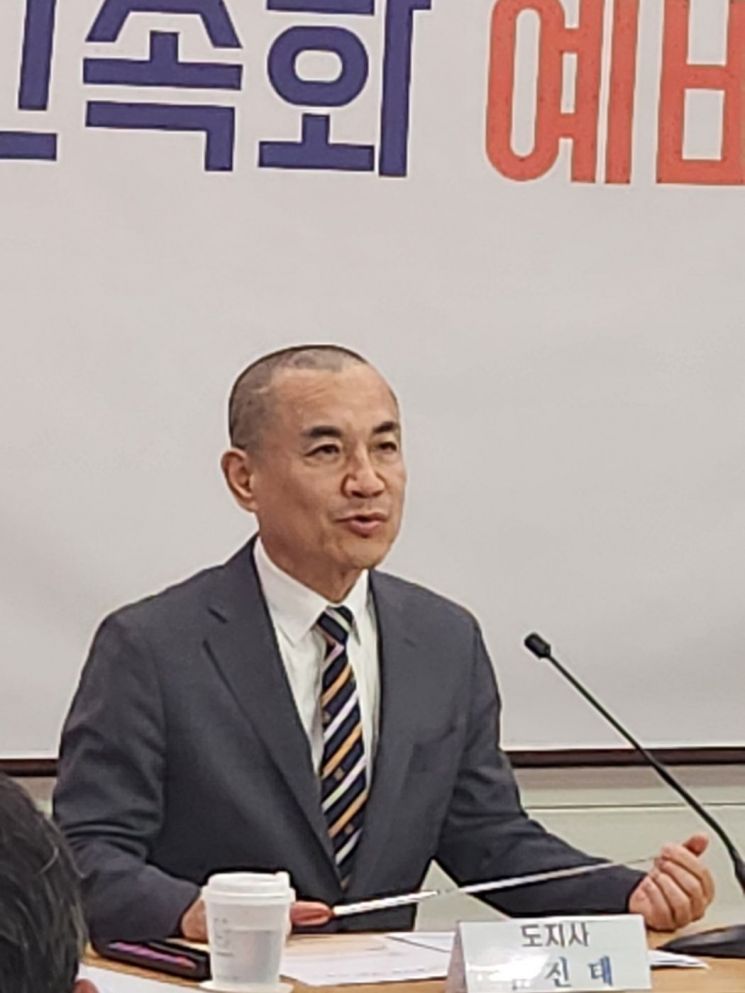 Kim Jintae, Governor of Gangwon Special Self-Governing Province, held a press conference on the 12th and announced that the Gangneung-Samcheok High-Speed Rail Project has finally passed the preliminary feasibility study at the 1st Fiscal Evaluation Committee of the Ministry of Planning and Budget. Photo by Lee Jonggu
Gangwon Special Self-Governing Province announced that at the 1st Fiscal Evaluation Committee of the Ministry of Planning and Budget held on the 12th, the "Gangneung-Samcheok High-Speed Rail Project" finally passed the preliminary feasibility study. With this, following projects such as the Yongmun-Hongcheon metropolitan railway and the Yeongwol-Samcheok expressway, Gangwon Province has successfully set all eight of its major long-cherished projects in the province on track.
The "Gangneung-Samcheok High-Speed Rail Project" will upgrade to high-speed a total length of 45.2 km from Anin Signal Station to Samcheok Station, with a total project cost of 1.1507 trillion won to be invested.
This project will upgrade the only low-speed section (60-70 km/h) within the 480 km East Coast railway network stretching from Goseong to Busan, and is expected to significantly shorten the travel time between Gangneung and Busan from about 5 hours to around 3 hours and 30 minutes. As a result, accessibility to the Yeongnam region will be greatly improved, and it is expected to serve as an important turning point in building a wide-area transportation network along the East Coast.
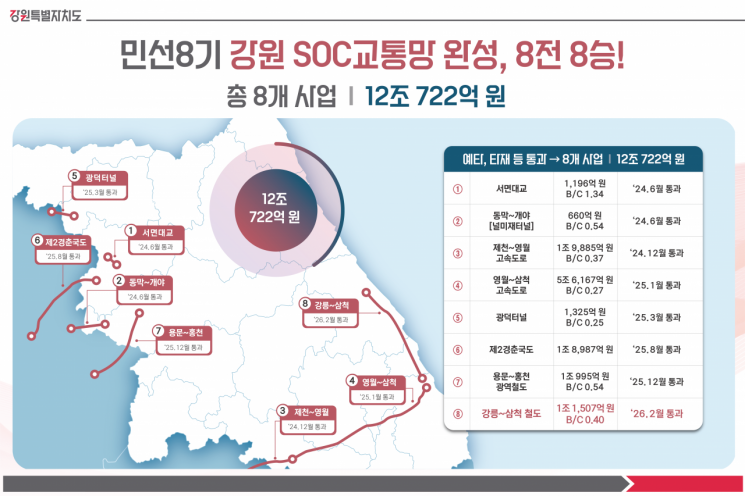 Completion of Gangwon's transportation infrastructure network under the 8th elected administration. Provided by Gangwon Province.
Kim Siseong, Chairperson of the Provincial Council, stated, "Until now, Gangwon Province has been a region with an underdeveloped railway base, but now a 'D-shaped railway network' connecting the Seoul metropolitan area and Gangwon has been established," adding, "Once completed, it will be a groundbreaking boost not only for attracting businesses but also for the development of Gangwon Special Self-Governing Province."
National Assembly member Lee Cheolgyu (Donghae, Taebaek, Samcheok, Jeongseon) said, "With the preliminary feasibility study for this Donghae Line high-speed rail construction project now passed, I am grateful that we can finally keep our long-standing promise to citizens to upgrade the only low-speed section of the Donghae Line."
He also emphasized, "The passing of this preliminary feasibility study will not only improve local residents' travel convenience, but, together with the explosive demand for the 'Donghae Line Samcheok-Donghae-Pohang section' that began commercial operation last year and for KTX routes running between Seoul and the Yeongdong region of Gangwon, it will greatly enhance vitality across the East Coast region in logistics, tourism, and industry, and firmly establish Donghae Station, Mukho Station, and Samcheok Station as key transportation hubs in the Pan-East Sea area."
Governor Kim Jintae said, "Day and night it was Yongmun-Hongcheon, sitting or standing it was the Gangneung-Samcheok railway, and we have finally put the last piece of the puzzle in place," adding, "The low-speed section I personally experienced when I rode all the way to Busan last July will, through this project, see the travel time reduced dramatically from the 5-hour range to 3 hours and 30 minutes."
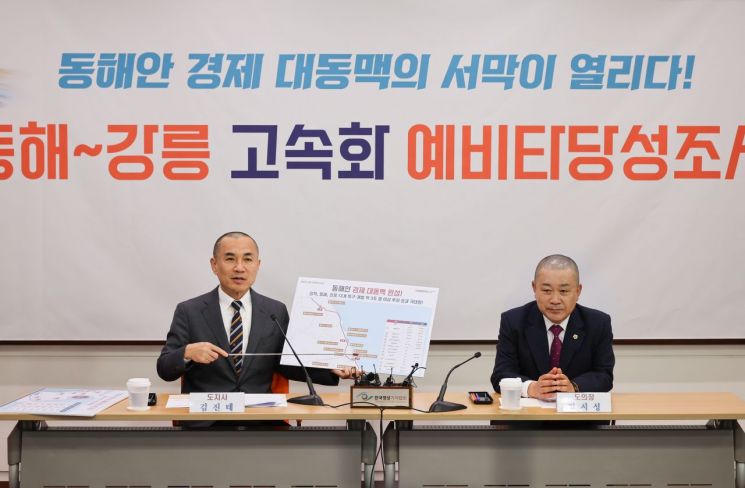 Kim Jintae, governor of Gangwon Special Self-Governing Province, announced at a press briefing on the 12th that the Gangneung-Samcheok high-speed rail project has finally passed the preliminary feasibility study at the 1st Fiscal Evaluation Committee of the Ministry of Strategy and Finance. Photo by Lee Jonggu
He continued, "With this, we have achieved our 8th major SOC success under the 8th elected administration, setting a record of 8 wins out of 8," and stressed, "Taken together, these projects amount to about 12 trillion won and will be an important turning point in opening a new era in which Gangwon is fully connected in all directions with the Seoul metropolitan area."
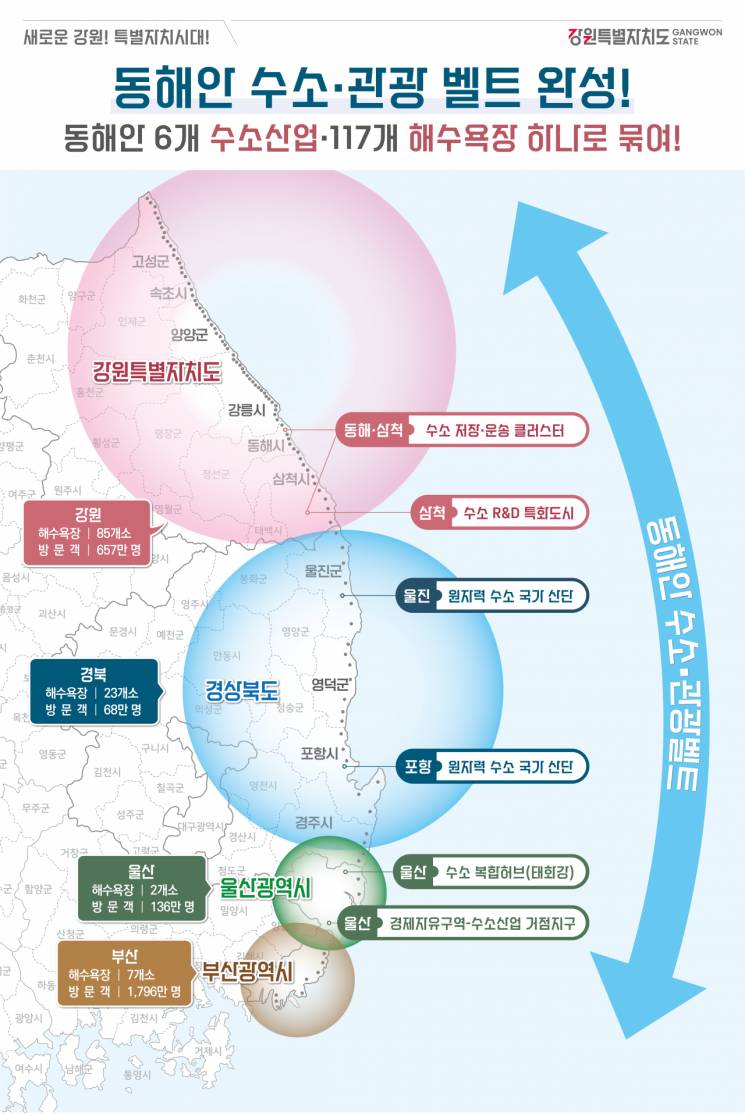
He added, "In addition to the synergy effect linked to the 3 trillion won development projects for 13 special zones in Gangneung, Donghae, and Samcheok, this will also play an important role in creating a hydrogen industry belt that connects six major hydrogen hubs dispersed across Ulsan, North Gyeongsang Province, and Gangwon, as well as in establishing a global tourism belt based on 117 beaches along the East Coast."
In the meantime, to secure passage of the preliminary feasibility study, the province has continued its efforts to promote the project by holding policy debates in the National Assembly and submitting a joint proposal to the government that reflects the aspirations of 14 million residents of Gangwon, Busan, Ulsan, and North Gyeongsang Province.
This project is a large-scale national project with a total project cost of 1.1507 trillion won, and with 1 billion won in national funding for service costs already secured for 2026, follow-up procedures are expected to proceed quickly in the first half of the year.
In addition, the approximately 4 km section from Samcheok to Donghae is planned to be almost entirely tunnel-based, and from Donghae Station to Gangneung Jeongdongjin Station, the line will bypass the city via an underground route. Accordingly, it is expected to minimize urban fragmentation and inconvenience to residents caused by land expropriation.
The province plans to concentrate its administrative capacity on opening the line as early as possible, while at the same time refining region-specific strategies such as reorganizing transportation networks for station access and operating a sea-view train utilizing abandoned tracks.
© The Asia Business Daily(www.asiae.co.kr). All rights reserved.














