Aligning Housing Acquisition Tax Brackets with Market Reality
Ensuring Residential Mobility for Genuine End-Users
Promoting Normalization of the Housing Market
Koo Jagun, Member of the National Assembly (People Power Party, Industry, Trade, Energy, Small and Medium Enterprises and Startups Committee, Gumi A, North Gyeongsang Province), announced that he has sponsored the “Partial Amendment to the Local Tax Act” to raise the taxable base brackets in line with market realities such as rising housing prices.
Under the current Local Tax Act, the taxable base brackets for housing acquisition tax rates have remained unchanged for more than 10 years since their introduction in 2013, while housing prices have continued to rise. As a result, the highest tax rate bracket, which was originally applied as an exceptional tax on high-priced housing, has come to be applied to middle-class housing as a general tax, leading to continued criticism that this no longer aligns with the original legislative intent.
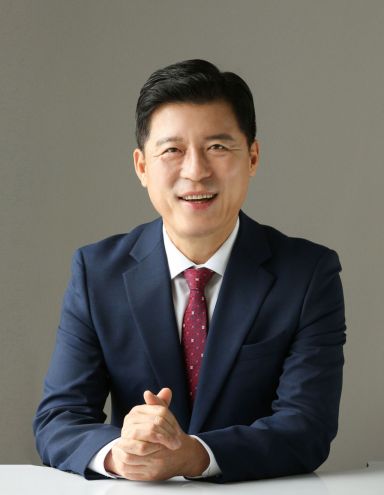 Koo Jagun, Member of the National Assembly (People Power Party, Industry, Trade, Energy, Small and Medium Enterprises and Startups Committee, Gumi City A, North Gyeongsang Province) / Reporter Kim Ihwan
According to data obtained by Assemblyman Koo’s office from the Korea Housing Association, the share of transactions for housing priced over 900 million won, to which the highest tax rate of 3% is applied, surged approximately 3.7 times, from 1.1% in 2014 to 4.1% in 2023.
During the same period, the share of total acquisition tax revenue accounted for by housing priced over 900 million won also increased from 25.6% to 49%, reaching nearly half of total revenue.
As of October 2025, if a buyer purchases a home in Seoul at the average selling price of 1.07 billion won, the acquisition tax amounts to approximately 35.31 million won.
This corresponds to 48.3% of the 2025 median income for a four-person household (approximately 73.17 million won). In other words, the excessive acquisition tax burden is difficult to bear with labor income alone and has become a factor preventing genuine end-users from making normal residential moves.
Currently, the housing acquisition tax rates and taxable base brackets are as follows: 1% for 600 million won or less; 1% to 3% for over 600 million won up to 900 million won; and 3% for over 900 million won. Through this amendment, Assemblyman Koo aims to adjust the brackets upward to reflect current conditions by setting them at: 1% for 900 million won or less; 1% to 3% for over 900 million won up to 1.2 billion won; and 3% for over 1.2 billion won.
If this amendment is passed, the tax burden on genuine owner-occupiers with one home will be reduced, facilitating residential moves in line with different life stages and easing the lock-in of housing supply, thereby helping to restore a virtuous cycle in the housing market. In the medium to long term, it is also expected to help secure a stable base for local tax revenues.
Assemblyman Koo stated, “It is contrary to tax equity that, due to fixed taxable base brackets, even the middle class is subject to an excessive tax burden,” adding, “I will do my utmost to normalize the housing market and to create an environment in which citizens can move their residence freely at the time they desire.”
© The Asia Business Daily(www.asiae.co.kr). All rights reserved.
![Clutching a Stolen Dior Bag, Saying "I Hate Being Poor but Real"... The Grotesque Con of a "Human Knockoff" [Slate]](https://cwcontent.asiae.co.kr/asiaresize/183/2026021902243444107_1771435474.jpg)











