Logan: "More Concerned About Inflation Than Employment"
Hammack: "Rates Can Be Held Steady for Quite Some Time"
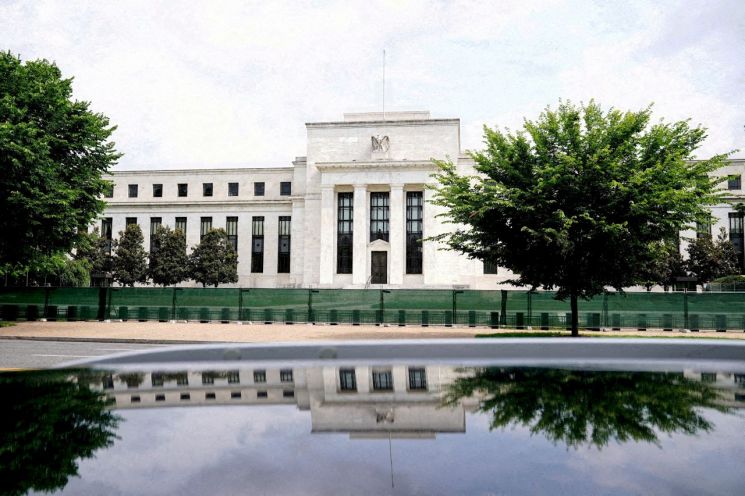
On February 10 (local time), presidents of the U.S. Federal Reserve Banks stated that it will be necessary to keep interest rates on hold for a considerable period. They are members of the Federal Open Market Committee (FOMC), the U.S. Federal Reserve (Fed)'s rate?setting body, who hold voting rights.
Lorie Logan, President of the Federal Reserve Bank of Dallas, said at a public event held in Austin, Texas, that day, "Our policy is well positioned to respond to risks to either side of the FOMC's dual mandate, which is price stability and maximum employment."
In her prepared remarks, she said, "In the coming months, we will see whether inflation is declining toward our target and whether the labor market remains on a stable footing," adding, "If so, that would suggest that further interest rate cuts are not needed."
She continued, "By contrast, if inflation moves down or if there is a material further cooling in the labor market, additional rate cuts could become appropriate," but added, "For now, however, I am more concerned about the possibility that inflation will remain stubbornly high."
In other words, she is more worried about rising inflation than about a slowdown in employment. The U.S. Department of Labor will release the January employment report on February 11. Together with the Consumer Price Index (CPI), the employment report is a key indicator used by the Fed in its interest?rate decisions. The market expects nonfarm payrolls to increase by 69,000, with the unemployment rate at 4.4%, suggesting that a slowdown in employment is inevitable.
Beth Hammack, President of the Federal Reserve Bank of Cleveland, also said at a regional banking event held in Ohio that day, "It is desirable to keep rates at their current level and watch how conditions evolve."
In her speech, President Hammack said, "According to several estimates, including my own, the current Fed funds rate is near the neutral rate," explaining, "This means it is not restraining the economy in a meaningful way."
The neutral rate refers to the real interest rate that can maximize employment without pushing inflation higher.
President Hammack went on to say, "Rather than trying to fine?tune the policy rate, I prefer to lean toward patience, assessing the effects of the recent rate cuts and monitoring economic performance," adding, "In my outlook, we can hold rates steady for quite some time."
Meanwhile, the U.S. benchmark interest rate is determined through meetings of the 12?member FOMC. Excluding the President of the Federal Reserve Bank of New York, who is a permanent FOMC member, the presidents of the other regional Federal Reserve Banks take turns exercising voting rights, four at a time each year, and both President Logan and President Hammack hold voting rights this year.
© The Asia Business Daily(www.asiae.co.kr). All rights reserved.
![Clutching a Stolen Dior Bag, Saying "I Hate Being Poor but Real"... The Grotesque Con of a "Human Knockoff" [Slate]](https://cwcontent.asiae.co.kr/asiaresize/183/2026021902243444107_1771435474.jpg)
















