President Lee's Hardline Real Estate Rhetoric Continues... All-Out Push for Tangible Results
Heavy Capital Gains Tax to Apply to Registered Rental Housing After Mandatory Period Ends
Supply Effect Expected from Hundreds of Thousands of Units
Approval Ratings Remain Solid Despite Pressure on Multiple-Home Owners
President Lee Jaemyung has been making a series of hardline remarks targeting multiple-home owners because, having set the goal of stabilizing the real estate market and already announced four rounds of real estate policies up to the "January 29 Housing Supply Measures," he believes he now needs tangible, felt results.
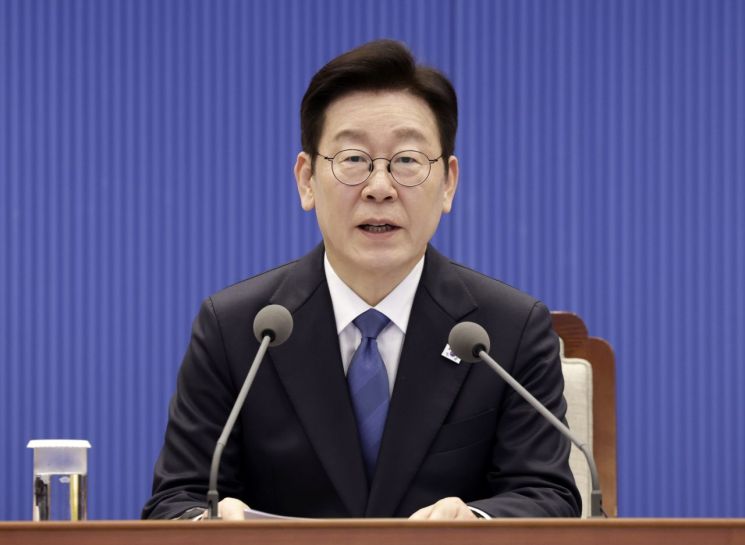
The president has repeatedly stressed that he will not extend the temporary suspension (ending on May 9) of the heavy capital gains tax on multiple-home owners, and has also proposed reducing capital gains tax benefits for registered rental housing. Through this, he has signaled his determination to boldly implement policies that can generate a supply effect in the existing housing market. Under the current system, registered rental housing that meets requirements such as price and mandatory rental period is excluded from the heavy capital gains tax applied to multiple-home owners.
On February 9, the president wrote on X (formerly Twitter), "Around 300,000 registered rental housing units in Seoul (including about 50,000 apartments) are benefiting from various tax reductions and the exclusion from the heavy capital gains tax on multiple-home owners," and said that the structure in which the exclusion from heavy taxation remains in place even after the mandatory rental period ends "needs to be re-examined from the perspective of fairness." At the same time, he mentioned buffer options such as granting a grace period before abolition or gradually reducing the benefits, instead of scrapping them immediately.
His remarks targeting rental housing began on February 8. On X, the president said in effect that "it might be understandable if rental housing had actually been built, but it is strange that one can buy up as many homes as one wants simply by registering as a rental business operator," expressing concern that, when tax and institutional incentives are combined with the purchase-rental model (buying existing homes and operating them as rentals) rather than construction-rental, they can function as a driver of "hoarding" in the market.
Although the president’s message took the form of soliciting public opinion with the phrase "seeking views on whether to continue allowing purchase-rental," many view it as effectively putting the possibility of institutional reform on the table. Unlike construction-rental, which involves building new units, "purchase-rental" is a method of buying existing homes and converting them into rentals. While this can increase the volume of rental units, it is different in nature from "net new supply" that increases the total housing stock. If combined with tax incentives, it can intensify "buying competition" and "lock-in of listings" in the market. The fact that the president specifically singled out "purchase-rental, not construction-rental" is interpreted as an attempt to highlight this difference.
The president’s recent moves place particular emphasis on "bringing existing homes onto the market as listings." Whereas the January 29 supply measures focused on accelerating supply by utilizing idle or underused sites in city centers and designating public housing districts, the overhaul of the tax and rental systems is more about reducing institutional "exceptions" and "benefits" for holding multiple homes to induce more properties to come onto the market. This is understood as an intention to pursue "supply effects within the existing market" that increase immediately tradable stock, in parallel with measures to expand new housing supply.
"Registered rental housing" is a system under which homeowners register their properties as rental housing and, in return for complying with a mandatory rental period (8 to 10 years) and a cap on annual rent increases (5% per year), receive various tax benefits at the acquisition, holding, and transfer stages. The point the president has taken issue with is the structure in which, even after the mandatory rental period ends, the exclusion from heavy capital gains taxation for multiple-home owners continues for a long time for some properties. His logic is that compensation for fulfilling rental obligations should be sufficient in the form of tax reductions during the rental period and an opportunity to dispose of the property for a certain period after the end of that period, and that reverting to normal taxation thereafter is more equitable.
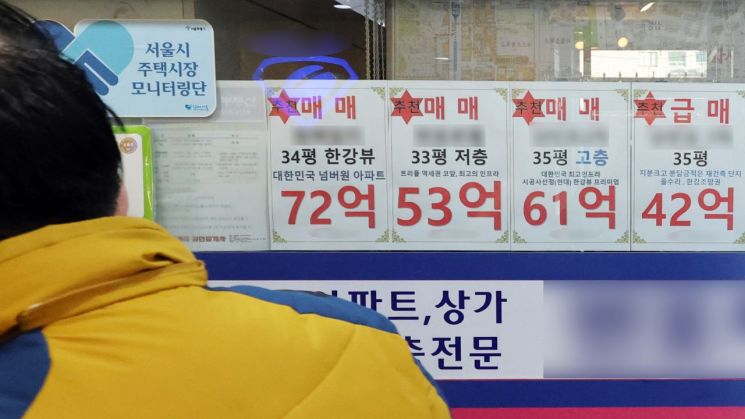
The president’s tireless hardline rhetoric in pursuit of real estate stabilization appears to be due to the fact that, unlike in the past, real estate issues are not having a negative impact on his approval ratings. In a public opinion poll conducted last week, the share of respondents giving a positive evaluation of him who cited "real estate policy" as the reason rose sharply. It has now reached a level similar to the share of respondents who cited real estate policy as a reason for negative evaluation.
© The Asia Business Daily(www.asiae.co.kr). All rights reserved.


















