“Part of the AUKUS agreement with Australia”
“Rear base for U.S. forces in the Pacific in a contingency”
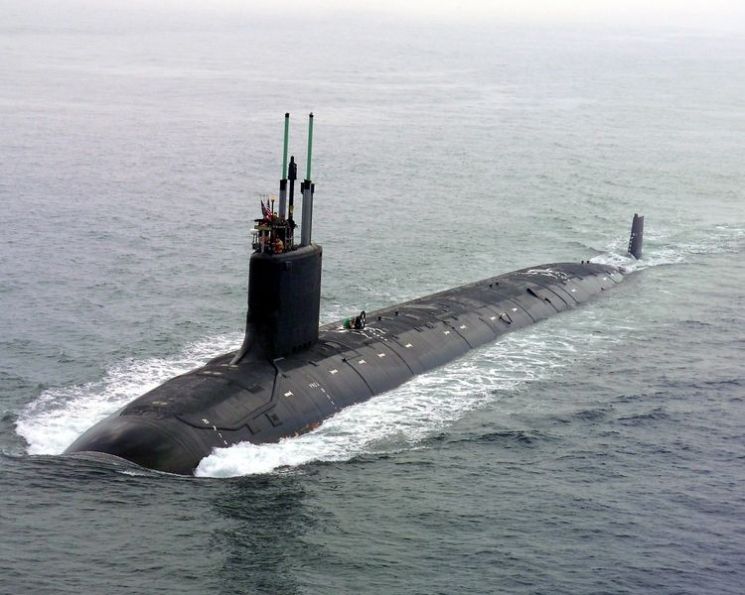
There is an emerging outlook that the United States will rotationally deploy nuclear-powered submarines to western Australia to deter China’s maritime military power. Analysts say Australia could serve as a rear base for U.S. forces in the Pacific in the event of a contingency, such as a Chinese invasion of Taiwan.
The Wall Street Journal (WSJ) reported on the 7th (local time) that the U.S. Department of Defense plans to rotationally deploy up to four nuclear submarines to HMAS Stirling, a naval base located in western Australia. According to the WSJ, the first submarine will arrive in 2027 and then be rotated, and this deployment is being pursued as part of AUKUS, the trilateral security partnership among the United States, the United Kingdom, and Australia.
This deployment is seen as a move to keep China’s military power in check from the rear. From the U.S. perspective, western Australia is highly likely to be used as a rear base if a conflict with China breaks out, including a Chinese invasion of Taiwan. The United States currently stations its nuclear submarines in the Pacific at its base in Guam, but in the event that Guam’s military facilities are destroyed by a Chinese missile offensive, the need for an alternative naval base has been raised.
HMAS Stirling in western Australia is located relatively far from mainland China, making it comparatively safe from missile barrages, while at the same time being regarded as having good access to key flashpoints such as the South China Sea and the Taiwan Strait.
Rear Admiral Lincoln Reifsteck, who commands the U.S. submarine force, also visited this base recently and stressed, "When a ship is damaged in combat, it is important that it return to the battlefield as quickly as possible after repairs," adding, "The geographical advantages of western Australia will complement the functions of Guam or Pearl Harbor in Hawaii and enhance the U.S. Navy’s response speed."
The Australian government is also actively investing in HMAS Stirling in preparation for the deployment of U.S. nuclear submarines. The government has allocated about 5.6 billion dollars (about 8.2 trillion won) to the base to upgrade training centers, housing facilities, submarine piers, and radioactive waste treatment facilities. In the nearby Henderson area, a shipbuilding and maintenance complex worth about 8.4 billion dollars (about 12.3 trillion won) is also scheduled to be built.
© The Asia Business Daily(www.asiae.co.kr). All rights reserved.
![User Who Sold Erroneously Deposited Bitcoins to Repay Debt and Fund Entertainment... What Did the Supreme Court Decide in 2021? [Legal Issue Check]](https://cwcontent.asiae.co.kr/asiaresize/183/2026020910431234020_1770601391.png)















