Changing consumption through Croffles, Tanghulu, and Dujjonku
Trend half-life shrinks to one-tenth in five years
"Ultra-short-lived trends" driven by SNS become entrenched
The lifespan of trends in the domestic dessert market is getting shorter and shorter. As desserts that once sparked nationwide frenzies are pushed out of consumers' attention in just a few weeks, analysts say that so-called "ultra-short-lived trends" are becoming established as a new consumption pattern.
On February 8, Yonhap News analyzed changes in search volume for major dessert items based on Naver Data Lab search trends, and found that the duration of K-dessert trends has shrunk sharply over the past five years. The period it takes for search volume to drop to half after peaking, the so-called "trend half-life," has been getting shorter every year.
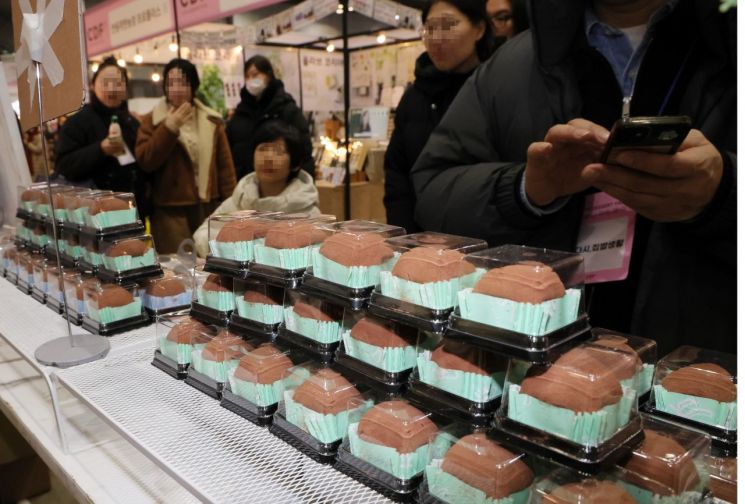
Croffles, which were popular in 2020-2021, took 163 days for search volume to fall to half after reaching its peak. However, Tanghulu, which trended in 2023, had a half-life of 54 days. Dubai Chocolate, which drew attention in 2024, had a half-life of 13 days, and Dubai Jjondeuk Cookie (often shortened to Dujjonku), which surged in popularity late last year, had a half-life of only 17 days. In just a few years, the duration of dessert trends has shrunk to about one-tenth of what it used to be.
This change is being felt on the ground in real time. On February 6, at a dessert shop in Jongno-gu, Seoul, Dujjonku, which once drew lines even before opening, remained on the display shelves. A staff member at the store said, "Until just recently, we were sold out within 30 minutes of opening, but lately the sales pace has noticeably slowed." In fact, the cost of pistachios, which had soared, has recently started to fall again, which some interpret as a signal that the trend is ending.
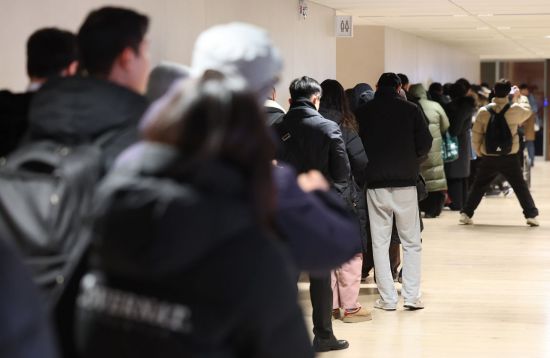
On secondhand trading platforms and in self-employed business owner communities, posts offering discounted sales to clear out inventory are appearing one after another. The "Dujjonku Map," which once attracted attention by showing each store's sales status in real time, is now mostly displaying stores as having plenty of stock.
Experts point to changes in consumption culture centered on social networking services (SNS) as the backdrop for this phenomenon. As "experience consumption" for short-form video content has become the focus rather than taste or quality, interest quickly moves on once the one-time experience is over.
The burden on self-employed business owners is growing
The problem is that this trend is translating directly into a burden for self-employed business owners. When menus are introduced late or new businesses are launched at the peak of a trend, cases in which owners are left with inventory and cost burdens are being repeated. In reality, some bakery owners are voicing difficulties, saying that "the trend is over before we can even start to catch up."
Recently, large retail companies have released a flood of products similar to Dujjonku, rapidly eroding its scarcity value. As hypermarkets, convenience stores, and franchise cafes roll out low-priced products, the craze that had centered on independent shops is fading just as quickly. Experts expect this structure of "ultra-fast trends and ultra-fast disappearance" to continue across the dessert market for the time being.
© The Asia Business Daily(www.asiae.co.kr). All rights reserved.
![Clutching a Stolen Dior Bag, Saying "I Hate Being Poor but Real"... The Grotesque Con of a "Human Knockoff" [Slate]](https://cwcontent.asiae.co.kr/asiaresize/183/2026021902243444107_1771435474.jpg)

















