A Beloved Korean Side Dish, a Popular Healthy Snack Overseas
Benchmark Price Reaches 1,515 Won per 10 Sheets
Gim, once known primarily as a staple side dish in Korean cuisine, has now established itself in the global food market as a "healthy snack," enjoying explosive popularity. As the K-food boom has driven up worldwide demand for Korean gim, exports have hit an all-time high and domestic prices have also reached record levels.

On February 4 (local time), the BBC in the United Kingdom spotlighted the surge in global demand for Korean gim and the accompanying price increases, reporting that "gim, which used to be a common sight on Korean dining tables, is now enjoying worldwide popularity, raising concerns among domestic consumers about the growing burden of higher prices."
The 'Black Semiconductor' Driving Export Growth
The BBC reported that gim is now considered such an important export item that it is being called the "black semiconductor," in reference to semiconductors, one of Korea's core export industries. In fact, according to the Korea Maritime Institute (KMI), gim exports last year reached approximately 1.134 billion dollars (about 1.66 trillion won), the highest level on record.
Industry insiders expect this export growth trend for gim to continue for the time being. As interest in K-food rises overseas, gim is becoming established as one of the representative Korean food products, alongside kimchi and tteokbokki. In addition, as the nutritional value of gim is being rediscovered, analysts say it is solidifying its position in step with the spread of global health-oriented trends.
Record-High Prices Amid Soaring Popularity
Along with the increase in exports, domestic gim prices are also continuing to rise. According to the Korea Agro-Fisheries & Food Trade Corporation (aT), the average retail price of medium-grade dried gim late last month stood at 1,515 won per 10 sheets. This is the first time that the price of gim has exceeded 1,500 won.
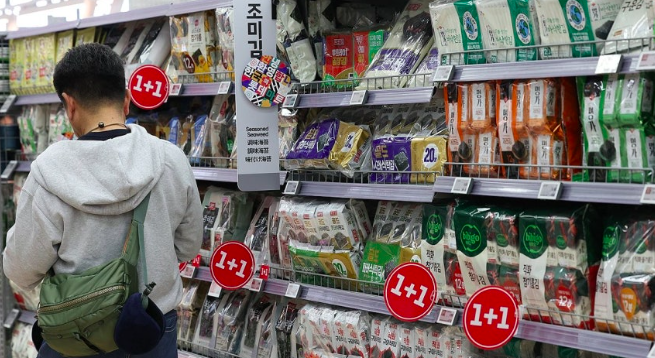
The BBC reported that the price per sheet of gim recently surpassed 150 won, setting a new record, and that premium products have risen to around 300 to 350 won per sheet. This is interpreted as price pressure arising as the burden on supply grows in line with expanding demand.
Experts point out that the process of securing sufficient volume to meet overseas demand has relatively reduced domestic supply, and that this has led to higher prices. While the export boom is positive for the industry, it is acting as a burden on the prices that consumers actually feel.
Evolving Into a Global 'Healthy Snack'
In overseas markets, gim is now consumed not just as a Korean-style side dish but as a healthy snack. Many consumers in the United States perceive gim as a snack enjoyed like potato chips. A consumer living in Brooklyn, New York, said in an interview with the BBC, "Gim feels like a healthier choice than conventional snacks."
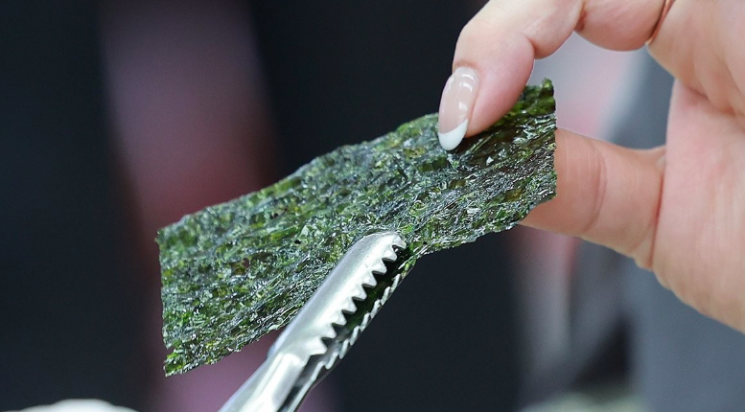
The reaction of foreign tourists has also changed dramatically. In the past, many saw gim as an unfamiliar food, but it has recently become a popular souvenir that people make a point of buying when they visit Korea. A merchant who has been selling gim for more than 40 years at a traditional market in Seoul told the BBC, "In the past, foreigners used to say gim looked like black paper, but now they come looking for it on purpose," describing the changing atmosphere.
© The Asia Business Daily(www.asiae.co.kr). All rights reserved.














