Press Conference by President Hong Kiyong
Promoting Strategic Research on Electrified Ships, Onboard Carbon Capture, and AI-Based Design Support
"Strengthening Global Competitiveness through Early Demonstration and Standardization Leadership"
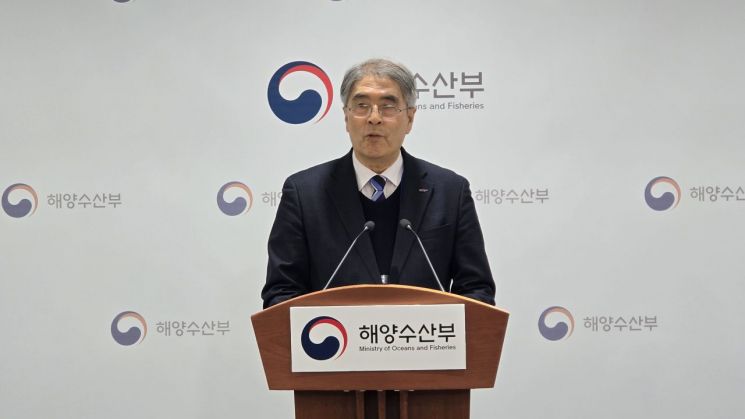
The Korea Research Institute of Ships and Ocean Engineering (KRISO) is stepping up to support the "K-Maritime Power" strategy, with digital and decarbonization transitions of ships as its core pillars. Based on the technological achievements it has secured over the past three years in the fields of autonomous navigation and eco-friendly ships, the institute plans to accelerate the structural transition of the maritime industry by fully launching strategic research this year on electrified vessels, onboard carbon capture, and artificial intelligence (AI)-based design support.
On February 5, KRISO President Hong Kiyong held a press conference at the Ministry of Oceans and Fisheries building in Busan and announced the institute's research achievements over the past three years and its key initiatives for 2026 under the theme of "Supporting the Construction of a K-Maritime Power through Ship 2DX (Digital and Decarbonization Transition)."
President Hong assessed that, amid the rapidly changing maritime environment marked by the International Maritime Organization (IMO)'s 2050 carbon-neutral declaration, moves to introduce international regulations on autonomous ships, and the strengthening of ESG-centered global supply chain standards, the competitiveness of the shipbuilding industry will depend on the speed of execution and the completeness of its technologies.
The institute's achievements over the past three years have also focused on digital and decarbonization transitions. In the eco-friendly ship sector, representative examples included the development of an electric-propulsion car ferry equipped with the world's first mobile power supply system, the conceptual design of a high-speed container ship powered by a small modular reactor (SMR), the construction of the K-GTB, a demonstration vessel for eco-friendly alternative fuels at sea, and the acquisition of new technology certification for a lightweight rotor sail based on magnetic bearings.
In the autonomous navigation field, KRISO has secured technology competitiveness centered on real-sea environments by establishing an integrated onshore-offshore testbed dedicated to autonomous ships, conducting ocean-going demonstration voyages of its independently developed situational awareness system (iSAS) and intelligent navigation system (NEMO), and designating demonstration navigation areas in and around Ulsan Port.
Starting in the first half of this year, the institute will fully implement five strategic research programs. The core tasks presented are the development of intelligent electrified ships, commercialization of a high-efficiency onboard carbon capture system, and the establishment of an AI-based design support system for special-purpose vessels. The intelligent electrified ship development project aims to develop a next-generation smart coastal passenger ship that integrates electric propulsion and autonomous navigation technologies, with a prototype scheduled for real-sea demonstration in 2030 through deployment on a nationally subsidized route.
The onboard carbon capture technology centers on developing a high-efficiency system that reduces the energy required for carbon dioxide capture processes by more than 30% compared with existing systems. It is regarded as a "bridging technology" that can deliver tangible greenhouse gas reduction effects in the phase before the full transition to zero-carbon ships.
The AI-based design support system for special-purpose vessels aims to reduce the design period for hull forms and propellers by more than 50%, with a focus on enhancing design efficiency and productivity at small and medium-sized shipyards. In addition, KRISO will expand support for demonstrating eco-friendly propulsion systems, centering on its regional hub in Mokpo, which is scheduled for completion in the first half of 2026. In particular, once the 30 MW-class land-based test site (LBTS) goes into full operation, the scope of electrification demonstrations is expected to gradually expand from coastal vessels to large merchant ships and special-purpose vessels.
President Hong stated, "The future of the sea lies in the 'three types of connection': technological connections among port, shipping, and shipbuilding industries; connections between research and development outcomes and real-world demonstrations; and connections between domestic technologies and international standards," adding, "By carrying out the entire process from R&D to testing, evaluation, and demonstration, we will drive technology commercialization and leadership in international standards, thereby supporting the construction of a K-Maritime Power."
© The Asia Business Daily(www.asiae.co.kr). All rights reserved.
![Clutching a Stolen Dior Bag, Saying "I Hate Being Poor but Real"... The Grotesque Con of a "Human Knockoff" [Slate]](https://cwcontent.asiae.co.kr/asiaresize/183/2026021902243444107_1771435474.jpg)
















