More than 20 companies including Fujitsu, Canon, and Honda join the race
From IBM's technology partnership to investment... "A strategy to reduce dependence on TSMC"
The number of investing companies in Japanese semiconductor company Rapidus is expected to increase significantly from the current eight to thirty. U.S. company IBM has also signaled that it will invest.
The Nihon Keizai Shimbun (Nikkei) reported on the 5th that private-sector investment in Rapidus is expected to exceed 160 billion yen (149.05 billion won. This is a level that far surpasses earlier projections. Rapidus had initially estimated that it would receive around 130 billion yen (121.10 billion won) from private sources.
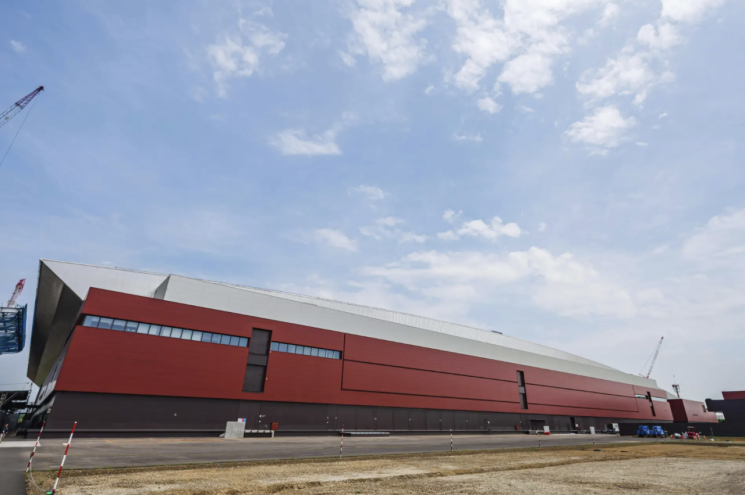
Rapidus is a company jointly funded by eight leading Japanese conglomerates, including SoftBank, Sony, Kioxia, and NTT. In addition, more than 20 companies, including Fujitsu, Canon, and Honda, have expressed their intention to invest. They completed discussions with Rapidus last month and plan to finalize their investments within this year. Fujitsu is reportedly planning to invest around 20 billion yen (approximately 186.258 billion won). Existing shareholder NTT will add 10 billion yen (approximately 93.129 billion won), and Toyota Motor will contribute an additional 4 billion yen (approximately 37.25 billion won).
SoftBank and Sony Group are each expected to invest 21 billion yen (approximately 195.57 billion won), making them the largest private shareholders. SoftBank established a high-performance memory company called Samemory in 2024 and plans to mount the memory produced there on Rapidus artificial intelligence (AI) semiconductors.
IBM has also announced its intention to join. IBM is a key partner that provides technology to Rapidus. Nikkei analyzed, "It appears that IBM will support both technology and capital to ensure stable mass production of semiconductors," adding, "There is likely an intention to reduce dependence on Taiwan's TSMC."
Nikkei evaluated this as a result of Rapidus having demonstrated tangible achievements. Rapidus had been seeking investment from various companies since 2024. However, companies were cautious, saying they could not commit funds to Rapidus, which had no track record. Subsequently, Rapidus succeeded in actually operating its self-developed 2-nanometer (nm) semiconductor and also released a prototype of the wiring layer that connects AI semiconductor chips.
It is known that officials from the Ministry of Economy, Trade and Industry sat in on negotiations with major companies to help persuade them. The Japanese government has designated the "domestic production of semiconductors" through Rapidus as a project that must succeed from the perspective of national economic security. In addition to private investment, the Japanese government has already provided full support, spending 250 billion yen (232.77 billion won) so far. A representative of one investing company told Nikkei, "We do not necessarily need cutting-edge semiconductors, but we have no other choice but to cooperate with a national project."
However, there are also concerns that the sharp increase in the number of investing companies could actually hinder decision-making. Nikkei reported, "If the number of participating companies rises to more than 30, there is a risk that Rapidus could lose one of its strengths, which has been speed."
© The Asia Business Daily(www.asiae.co.kr). All rights reserved.

















