Trump: "China to Increase Purchases of U.S. Soybeans"
Xi Jinping: "U.S. Must Be Prudent in Arms Sales to Taiwan"
On February 4 (local time), ahead of the U.S.-China summit scheduled for April, U.S. President Donald Trump and Chinese President Xi Jinping held their first phone call of the new year and discussed trade, the Taiwan issue, and various global matters.
President Trump wrote on his social networking service (SNS) Truth Social that day, "Just finished a wonderful phone call with President Xi. It was a long and detailed call."
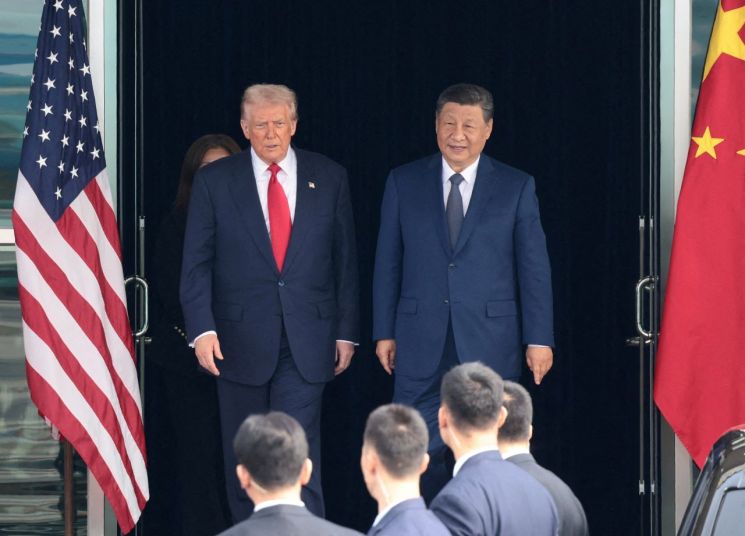 Trump Donald, President of the United States (left), and Xi Jinping, President of China. Reuters Yonhap News
He went on to say, "Important topics were discussed, including trade, the military, my upcoming visit to China in April that I am very much looking forward to, Taiwan, the Russia-Ukraine war, the situation in Iran, China's purchases of U.S. oil and gas, China's consideration of additional purchases of agricultural products, the supply of aircraft engines, and numerous other subjects," adding, "Everything was very positive."
Regarding China's purchases of U.S. soybeans, President Trump stated that China had agreed to increase its purchases to 20 million tons for the current season and had confirmed that it would purchase 25 million tons in the next season.
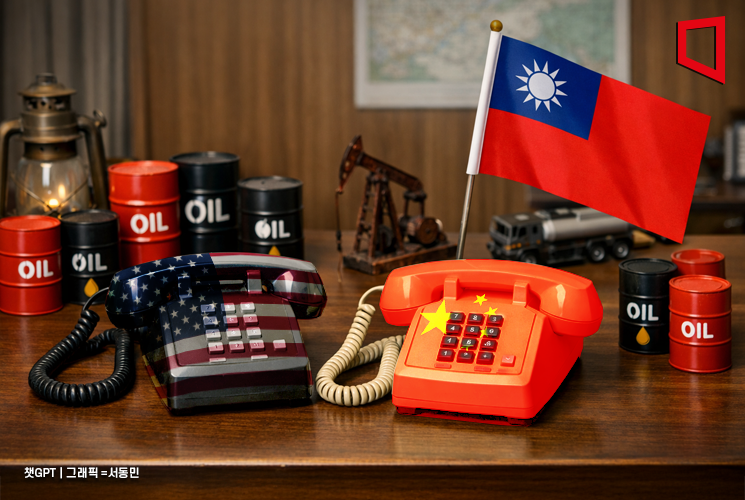
It is also notable that China has agreed to purchase oil and gas from the United States. Until now, China has imported oil and gas from countries such as Russia, Iran, and Venezuela, but discussions have reportedly taken place on partially replacing these imports with U.S. supplies.
China's state-run Xinhua News Agency also reported on the call between President Trump and President Xi. President Xi said that the Taiwan issue is the most important matter in China-U.S. relations, stating, "Taiwan is part of China's territory. China must resolutely safeguard its national sovereignty and territorial integrity and will never tolerate Taiwan being separated from China."
He then stressed, "The United States must handle the issue of arms sales to Taiwan with great prudence."
In response, President Trump said, "I respect China's concerns over the Taiwan issue," and added, "I hope to maintain communication with China and to keep U.S.-China relations good and stable during my term in office," according to Xinhua.
The two leaders also emphasized the importance of U.S.-China relations. On Truth Social, President Trump said, "Our relationship with China, and my personal relationship with President Xi, are very friendly, and we both know how important it is to maintain this," adding, "I am confident that over the remaining three years of my term, President Xi, China and I will be able to achieve many positive outcomes."
According to Xinhua, President Xi said, "I attach great importance to China-U.S. relations," and added, "In the new year, I hope that together with you we can steer the great ship of China-U.S. relations through the waves, move forward in a stable manner, and accomplish more major and beneficial things."
President Xi also said, "In line with the agreements already reached, both sides should strengthen dialogue and communication, properly manage differences, and expand practical cooperation," proposing, "Let us move forward step by step, build trust, and make 2026 a year in which the United States and China move toward mutual respect, peaceful coexistence, and win-win cooperation."
The phone call between the U.S. and Chinese leaders was the first in a little over two months since November 24 last year. At that time, they spoke by phone one month after their bilateral summit, which was held on the sidelines of the Asia-Pacific Economic Cooperation (APEC) summit in Gyeongju.
Recently, President Trump has been stepping up indirect checks on China. Observers note that President Xi may have expressed concern about several developments: the United States controlling trade in oil produced in Venezuela, a key source of energy imports for China; Washington increasing pressure on Cuba, a Chinese ally in Latin America, as its next target in the region; and the possibility of U.S. military intervention in Iran, one of China's sources of oil imports.
© The Asia Business Daily(www.asiae.co.kr). All rights reserved.