Pyeonghwanuri-gil 12th Course: Journey Along Tongilieum-gil
The Spectacle of Upside-Down Icicles in Yeoncheon’s Abandoned Tunnel?A February-Only Wonder
Walking the 12th Course of Pyeonghwanuri-gil Along the Gyeongwon Line
A Walking Trail Quietly Linking South and North Korea, Where Division Brought Trains to a Halt
Pyeonghwanuri-gil is the northernmost walking trail that connects four cities and counties-Gimpo, Goyang, Paju, and Yeoncheon-along the DMZ border area in Gyeonggi Province. Walking along the barbed-wire fences near the DMZ, visitors can not only experience the reality of division but also enjoy the outstanding natural scenery and traces of history. Opened in 2010, Pyeonghwanuri-gil consists of 12 courses, with a total length of approximately 189 kilometers. The trail is made up of three courses in Gimpo, two in Goyang, four in Paju, and three in Yeoncheon.
Located adjacent to the DMZ, Pyeonghwanuri-gil fully embodies the characteristics of all four seasons. With the theme “DMZ: Four Colors of Contemplation,” Gyeonggi Province introduces a recommended Pyeonghwanuri-gil course each month, encouraging visitors to “walk slowly and savor the colors of each season.” This month, ahead of the Lunar New Year holiday, the province presents all 12 winter courses of Pyeonghwanuri-gil as recommended destinations.
The Tongilieum-gil in Yeoncheon County
The 12th course of Pyeonghwanuri-gil, located in Yeoncheon County, Gyeonggi Province, is called “Tongilieum-gil.”
This trail follows the Gyeongwon Line, a railway that once ran through the heart of South Korea. Sintan-ri Station, Daegwang-ri Station, and Sinmang-ri Station-now silent, with only footsteps instead of trains-hold both the passage of divided time and scenes of everyday life. Where the railway to the North once ended, Tongilieum-gil now stands as a symbolic path quietly connecting South and North Korea. Walking this trail is not just a simple stroll; it is an experience of slowly retracing history that has come to a halt.
“Upside-Down Icicles” at the Foot of Godae Mountain in Yeoncheon
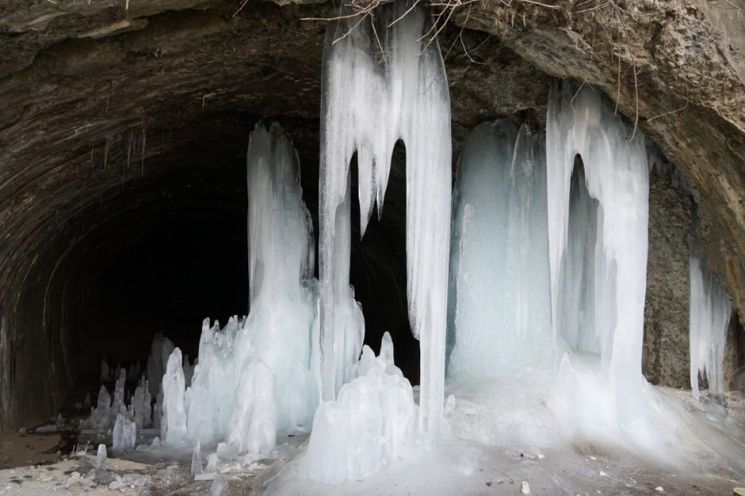
The impressive beginning of Tongilieum-gil is found at the very edge where it meets Cheorwon in Gangwon Province, inside an abandoned tunnel: the “upside-down icicles.” These icicles can be seen in an old tunnel beneath the Gyeongwon Line railway in Yeoncheon. Hundreds of icicles rise from the tunnel floor, each varying in size and shape, creating the illusion of walking through a forest of ice.
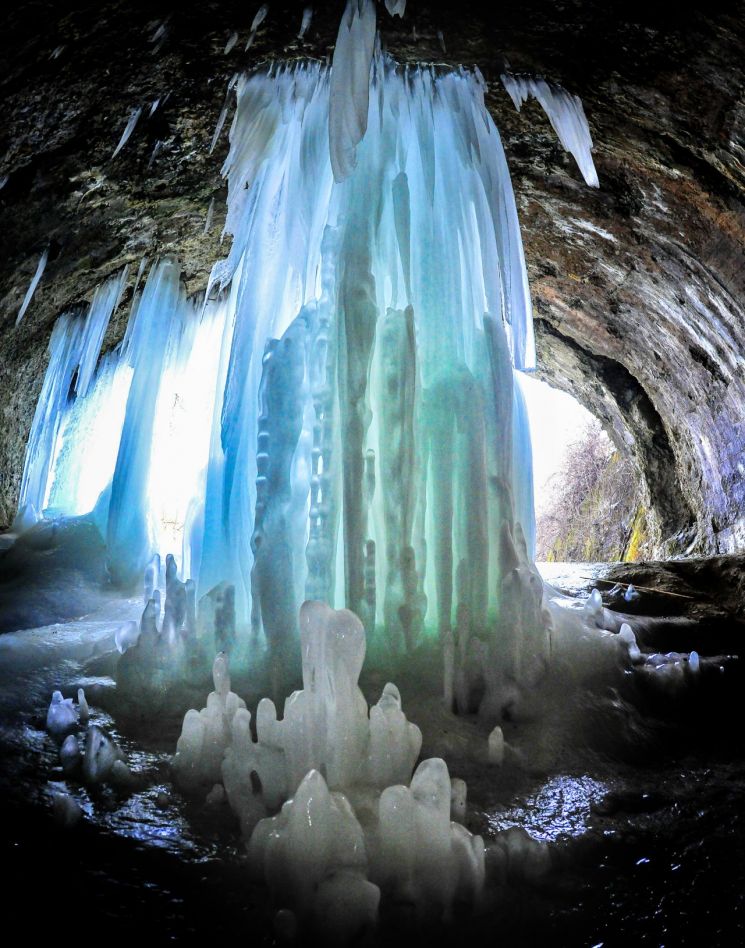
This fascinating phenomenon was first brought to public attention in 2005, thanks to a report from a local resident. It was also then revealed that the icicles form when water seeps through cracks in the tunnel ceiling-cracks created by war-and freezes. Recent research has found two reasons why these icicles grow upside-down: water droplets falling onto the ice on the floor repeatedly accumulate and grow upward, and tiny water molecules on the ice surface draw up groundwater, causing the icicles to extend.
Inside the tunnel, where icicles growing from above and below meet, the scene resembles the open jaws of a shark. This spectacle, visible from mid-December to February each year, has become a symbol of Korea’s dynamism, reminiscent of salmon swimming upstream.
A Trail That Moves Against the Current, Like the Upside-Down Icicles
Pyeonghwanuri-gil’s 12th course is a trail that moves “against the current,” just like the upside-down icicles. The feeling of walking against nature, time, and history is the unique charm of this course. The trail skirts the slopes of Godae Mountain, where the winter landscape of Godae Mountain Natural Recreation Forest is quiet and serene. The snow-covered forest paths and calm air naturally slow the pace of those who walk here.
The section from Sintan-ri Station to Daegwang-ri Station and on to Sinmang-ri Station is currently closed to train traffic due to the Dongducheon-Yeoncheon electrification project, which has extended Subway Line 1 to Yeoncheon Station. Instead, the Chatancheon riverside path accompanies walkers. The name “Chatancheon” is said to originate from “Suraeyeoul,” meaning “cart ford.” There is also a legend that during the early Joseon Dynasty, Lee Bangwon’s cart got stuck here while he was on his way to meet Lee Yangso.
The trail continues to Okgyeri, which was once north of the 38th parallel and part of North Korea. During the Korean War, North Korea’s 4th Division was deployed here, and the front lines shifted countless times as South Korean and UN forces, North Korean, and Chinese troops alternated control. Although it is now a quiet village, the intense history remains embedded in the land.
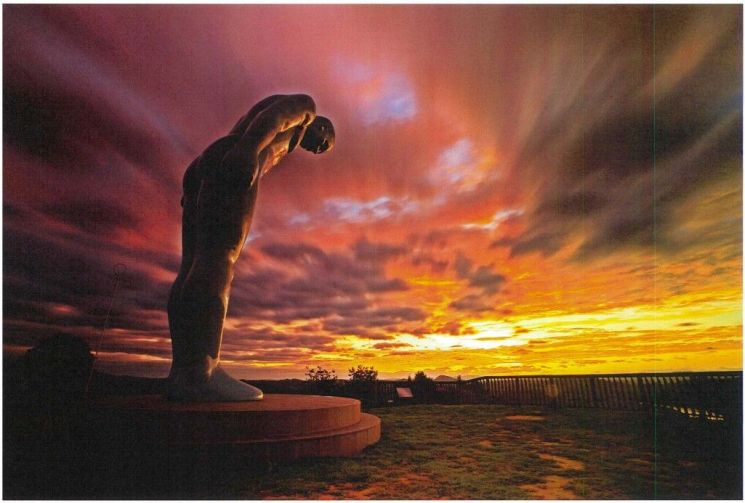
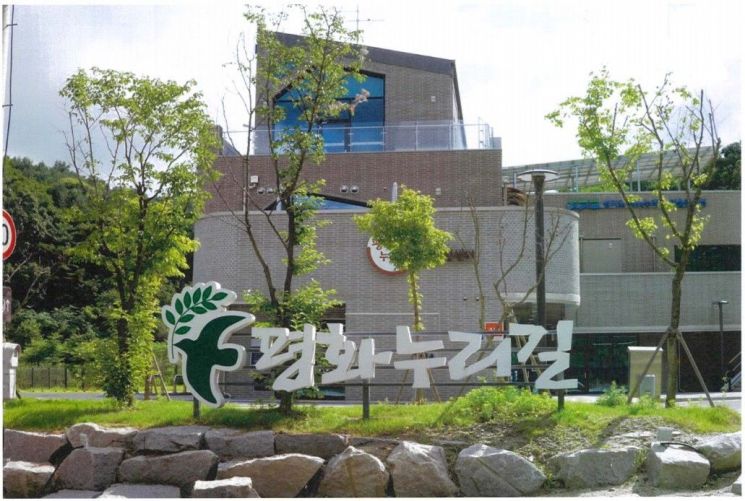
Near the end of the course, the Pyeonghwanuri-gil Eoullim Center appears-a rest stop and a popular spot for commemorative photos. The Eoullim Center offers an overview of all 12 Pyeonghwanuri-gil courses. After passing the nearby Yeoncheon Lohas Park and briefly leaving the trail at Oknyeobong, travelers are greeted by the “Greetingman” sculpture. This artwork, with its head bowed at a 15-degree angle, symbolizes consideration and respect for others. The panoramic view of Yeoncheon from the 205-meter-high summit of Oknyeobong clears the mind of any lingering thoughts accumulated during the walk.
Pyeonghwanuri-gil 12th Course: Walking with the “Aesthetics of Reversal and Slowness”
Tongilieum-gil is not a destination to be consumed quickly. It is a trail where thoughts accumulate as you walk slowly. Like the upside-down icicles, this path prompts us to question the directions we have always taken for granted. Each step along the halted railway is a message in itself.
As you walk, the meaning of “unification” naturally grows in your heart, even without saying the word out loud. Although three stations are connected along the way, you will not hear the sound of trains. Instead, the sounds of the wind, the gravel underfoot, and the flowing water of Chatancheon fill the trail. This quietness speaks volumes: “What did we want to connect? What did we bring to a halt?” Tongilieum-gil does not provide answers but leaves you with questions, making it all the more memorable.
An official from the DMZ Policy Division of Gyeonggi Province stated, “The 12th course of Pyeonghwanuri-gil is the perfect place to walk and savor the colors of each season. In particular, February-when the upside-down icicles remain-is a special time to experience both the reverse flow of history and the wonders of nature.”
© The Asia Business Daily(www.asiae.co.kr). All rights reserved.