Jeollanam-do Institute of Health and Environment urges adherence to preventive guidelines
including thoroughly cooking seafood
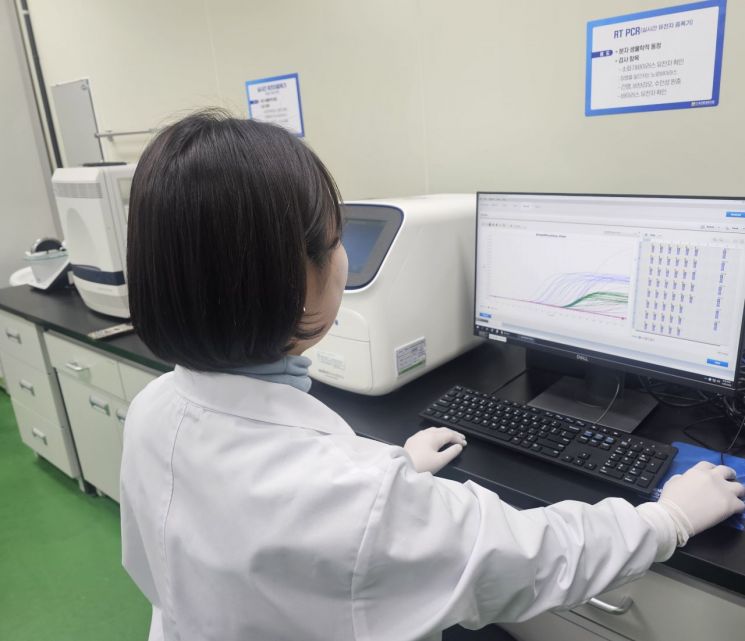 The Jeollanam-do Institute of Health and Environment is conducting pathogen surveillance activities to prevent the spread of norovirus. Provided by Jeonnam Province
The Jeollanam-do Institute of Health and Environment has urged the public to follow preventive measures, such as thoroughly cooking seafood, after analyzing infectious disease pathogens through a sewage-based surveillance system and finding that norovirus continues to increase.
The sewage-based infectious disease surveillance project, overseen by the Korea Disease Control and Prevention Agency, is a monitoring initiative that regularly analyzes the concentration of infectious disease pathogens in domestic sewage to efficiently track infection trends. The institute monitors pathogens such as norovirus and influenza every week in the influent water from 11 sewage treatment plants.
According to the institute, as of the fourth week of January 2026 (based on January 24), there were 2,519 reported cases of norovirus infection nationwide, the highest number in the past five years. Since November 2025, the number of cases has been increasing each week, indicating a growing trend, and similar patterns have been observed in the influent water within the province.
Testing of norovirus in influent water has revealed higher concentrations compared to 2025. The levels have continued to rise since November, with the average concentration of norovirus in the 11 sewage treatment plants increasing significantly from 94,998 copies/mL in the first week of November 2025 to 1,654,238 copies/mL in the fourth week of January this year.
Norovirus is a virus that causes acute gastroenteritis and is known to be prevalent mainly in winter (November to April). It accounts for the highest proportion among causes of intestinal infections, requiring particular caution.
Nah Hwansik, Director of the Microbiology Division at Jeonnam Province, stated, "Continuous monitoring of pathogen concentrations in domestic sewage helps predict infection trends, and the increase in norovirus concentrations in influent water suggests a potential rise in cases of food poisoning and diarrhea." He also emphasized, "In addition to following basic preventive guidelines, oysters, clams, and other seafood, as well as other foods, should be cooked thoroughly at 85 degrees Celsius or higher for at least one minute before consumption."
© The Asia Business Daily(www.asiae.co.kr). All rights reserved.

![Clutching a Stolen Dior Bag, Saying "I Hate Being Poor but Real"... The Grotesque Con of a "Human Knockoff" [Slate]](https://cwcontent.asiae.co.kr/asiaresize/183/2026021902243444107_1771435474.jpg)















