Norwegian Polar Institute Study Finds
"Body Fat Increased as Terrestrial Diet Expanded"
Despite the rapid decline of Arctic sea ice due to climate change, a new study has found that polar bears inhabiting Norway's Svalbard archipelago have actually become fatter and healthier.
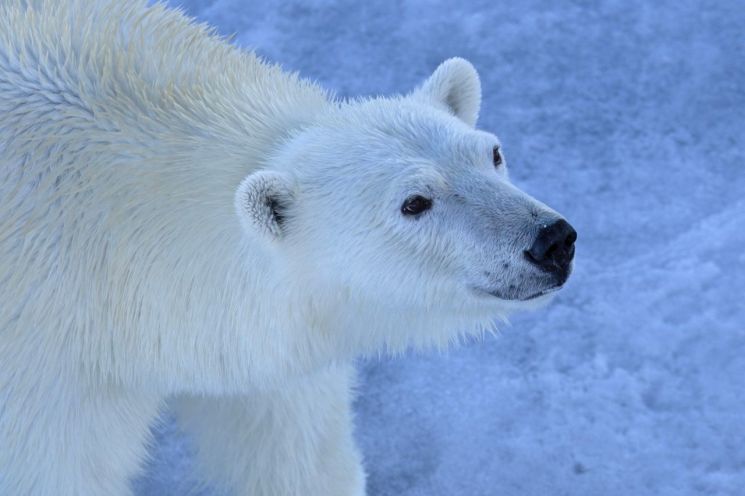
On January 29 (local time), the BBC reported, citing research by the Norwegian Polar Institute published in the scientific journal Scientific Reports, that "polar bears have adapted to the reduction in sea ice by expanding their terrestrial diet, resulting in increased body fat."
Polar bears are apex predators that hunt seals on sea ice. The fat they accumulate through feeding serves as a vital energy source and helps maintain body temperature, and is also essential for producing highly nutritious milk for their cubs.
"Adult Polar Bears Gain Body Fat... Increased Consumption of Terrestrial Animals"
The research team investigated the physical condition, including weight, of 770 adult polar bears in Svalbard from 1992 to 2019. They found that the amount of body fat in these polar bears increased significantly over this period. The researchers analyzed that polar bears in Svalbard have recently adapted to the reduction in sea ice by consuming more terrestrial prey, such as reindeer and walruses. Svalbard is a Norwegian territory located in the Arctic Ocean.
This finding is considered unusual, given that it comes from Svalbard, a region known to be particularly affected by climate change. In fact, during the study period, the number of ice-free days per year in the region increased by about four days annually, totaling around 100 additional days.
Jon Aars, the lead researcher at the Norwegian Polar Institute, explained, "The fatter a polar bear is, the better its chances of survival," adding, "We expected to see a decline in physical condition given the severity of sea ice loss."
In Norway, walruses have been designated as a protected species since the 1950s, and their population has recovered significantly. This appears to have provided polar bears with a new high-fat food source. Aars noted, "The walrus population has increased significantly in recent years," and suggested, "As the habitat for seals has shrunk, it may have actually become easier for polar bears to hunt."
However, the researchers believe that this positive trend is unlikely to continue in the long term. If sea ice continues to decline, polar bears will have to travel greater distances to reach hunting grounds, which would increase their energy expenditure and could rapidly deplete their accumulated fat reserves.
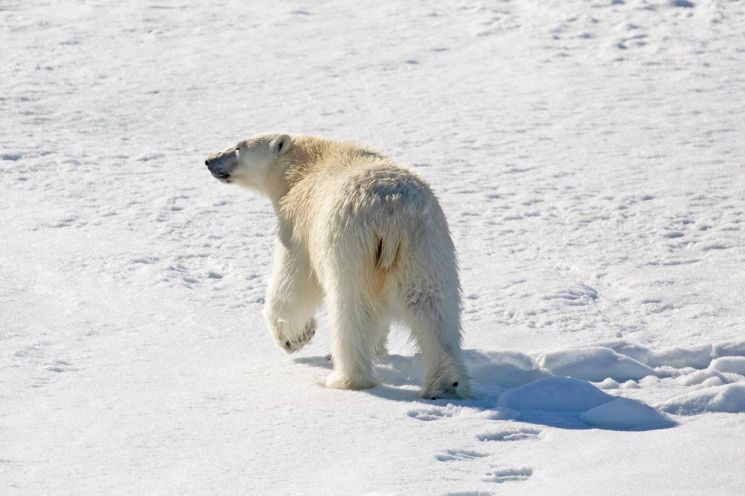
Population Declines Confirmed in Other Regions... "If Sea Ice Continues to Decrease, Polar Bears Will Disappear"
Some experts believe that this result is likely a temporary phenomenon, influenced both by the recovery of populations after past hunting pressures and the recent increases in walrus and reindeer numbers over the past few decades. John Whiteman, lead scientist at the international conservation group Polar Bears International (PBI), said, "In the short term, this is a positive sign," but added, "Physical condition is only one of several factors determining overall survival." He continued, "Recent studies have shown that the increasing number of ice-free days lowers the survival rates of cubs, subadults, and older females."
There are also polar bear populations that have been directly impacted by climate change. Globally, polar bears are divided into 20 subpopulations, and in the western Hudson Bay region of Canada, population declines have been observed due to rising temperatures.
Whiteman emphasized, "In the long term, the conditions for polar bear survival are clear: if sea ice disappears, the population will inevitably decline." He added, "This study is only a short-term and regional exception. If the reduction in sea ice is not controlled, polar bears will ultimately disappear."
© The Asia Business Daily(www.asiae.co.kr). All rights reserved.


















