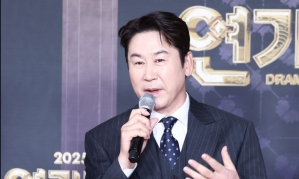
Mayor Kwangduk Joo Unveils Blueprint at New Year's Press Conference
Securing an Advanced General Hospital After 30 Years... Declaring Medical Independence
A Spectacular Transformation of the Old Downtown
Balanced Growth Through 'Spatial Innovation'
Groundbreaking of Wangsu High-Tech Industrial Complex and 3 Trillion Won Investment
Accelerating Economic Growth
"2026, the Starting Point of a 'Major Urban Transformation' That Will Redraw Namyangju's Landscape"
On January 29, Namyangju Mayor Kwangduk Joo held a New Year's press conference at Dasan Hall in City Hall, where he unveiled a blueprint to complete Namyangju as the most dynamic "future-oriented self-sufficient city" in South Korea.
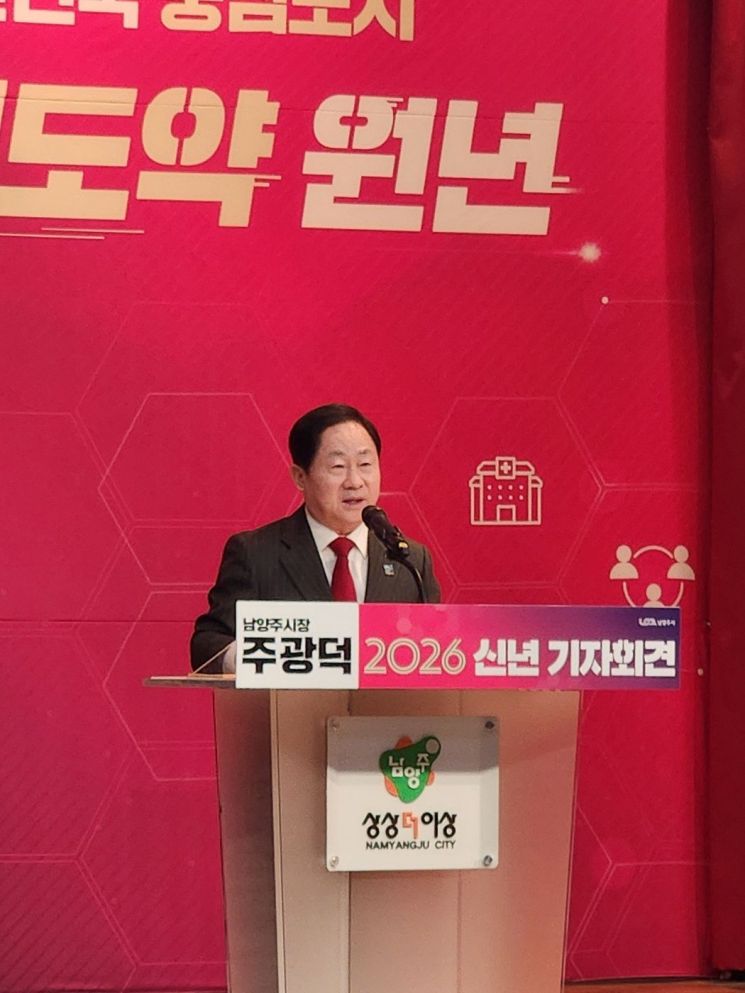 Namyangju Mayor Gwangdeok Joo held a New Year's press conference on the 29th and announced a blueprint to complete Namyangju as the most dynamic 'future-oriented self-sufficient city' in South Korea. Photo by Jonggu Lee
During the conference, Mayor Joo stated, "As a result of our relentless efforts over the past three years, we have achieved meaningful outcomes across all sectors, including transportation, industry, and healthcare," adding, "2026 will be the year we complete a 'major urban transformation' that will redraw Namyangju's landscape based on the achievements we have accumulated so far."
The mayor identified the "fundamental restructuring of the healthcare system" as this year's top priority project. Despite being a large city with a population of 740,000, Namyangju residents have had to travel to Seoul and other nearby areas for treatment of serious illnesses.
Mayor Joo emphasized, "We will definitively usher in the era of a university hospital (advanced general hospital) that will be remembered in our city's 30-year history," adding, "By simultaneously establishing an advanced general hospital capable of cutting-edge medical research and an 'innovative public medical center' with a public focus, we will transform into a 'regionally self-contained medical city' where everything from treatment to care is provided in one place."
In the economic sector, he stressed a major transformation of the industrial ecosystem to complete the self-sufficient city.
Mayor Joo announced, "The Wangsu Urban High-Tech Industrial Complex, which is 1.7 times the size of Pangyo, will begin construction this year," and stated, "We will attract more than 3,000 companies leading future industries such as AI, bio, and advanced finance, creating 90,000 jobs."
He also highlighted the record achievement of attracting 3 trillion won in investment in just one year, including an additional 1 trillion won investment agreement in Hwado-eup, and added that the city will solidify its status as South Korea's top investment destination by holding its first-ever "investment attraction briefing session" in March.
He also presented bold spatial innovation plans for balanced development between the old downtown and new city areas.
The Deokso area will be reborn as a hub of vitality for the southern region by establishing a "Youth Complex Hub" consisting of 19 and 39-story buildings (a total of 58 stories), symbolizing young people aged 19 to 39.
The original downtown of Dasan-dong will see the full-scale promotion of a public-led mixed-use development with a 49-story building through the Jungchon Village National Pilot District project.
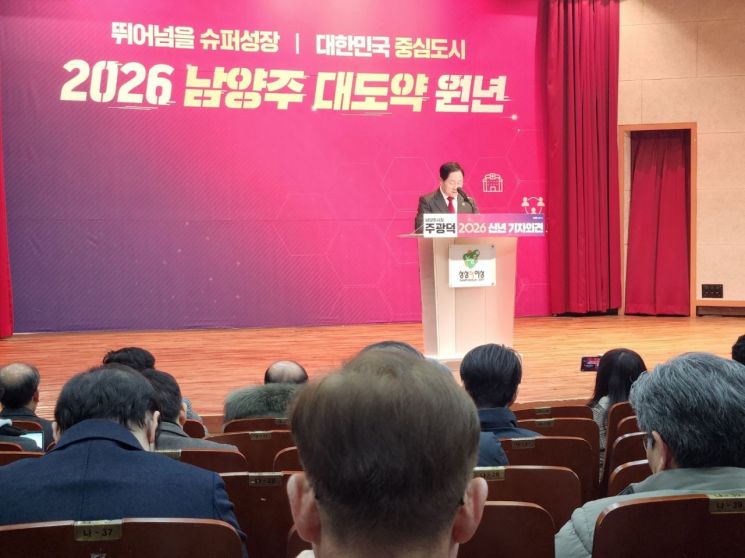 Namyangju Mayor Kwangduk Joo held a New Year's press conference on the 29th, presenting a blueprint to complete Namyangju as the most dynamic "future-oriented self-sufficient city" in South Korea. Photo by Jonggu Lee
For the Hwado and Maseok areas, a history and culture compact city will be planned on a 260,000 square meter site centered around GTX-B Maseok Station, leading the development of the eastern region.
In the field of transportation, the city plans to proceed smoothly with the design for the Gangdong-Hanam-Namyangju Line (Line 9 extension), aiming for construction to begin in 2027, and will focus administrative resources on expanding a three-dimensional road network, including the groundbreaking of Suseok Bridge and the undergrounding of the Seoul Metropolitan Area's First Ring Expressway. Additionally, the mayor pledged to meticulously enhance daily transportation welfare for citizens by expanding the nation's first "neighborhood cargo parking lots" and implementing a public management system for city buses.
Mayor Joo concluded, "The Year of Byeong-o is the year of the Red Horse, or Jeokto-ma," and emphasized, "Like the Jeokto-ma that has run with all its might, when opportunity arises, we will boldly move forward and realize innovations in daily life that citizens can truly feel."
© The Asia Business Daily(www.asiae.co.kr). All rights reserved.