Ministry Announces Overhaul of National Participatory Budget System
Proposals Now Accepted for Both New and Existing Project Budgets
Up to 6 Million Won Reward for Contributors to Spending Efficiency
The government will completely overhaul the National Participatory Budget System, allowing citizens to directly propose and evaluate measures to improve spending efficiency and reduce budget waste. Previously focused on new projects, the scope of participation will now expand to include proposals for restructuring existing projects and suggesting ways to cut costs.

On January 29, the Ministry of Planning and Budget announced plans to improve the system, stating, "We will strengthen citizen participation throughout the entire budget process-from allocation and execution to evaluation and feedback-by recognizing the public not just as passive beneficiaries of policy, but as partners and watchdogs in fiscal management."
The National Participatory Budget System, introduced in 2018, enables citizens to directly propose budget projects, with a citizen panel evaluating and determining project priorities. Since its implementation, over 300 projects-including eco-friendly agricultural support for pregnant women and the creation of urban forests to reduce fine dust-have been reflected in the national budget, totaling 540 billion won.
The core of this reform is a significant expansion of the topics citizens can propose. Previously, the focus was on discovering new projects, but now proposals may also target existing projects with potential budget waste or habitual expenditures. The government will award up to 6 million won for proposals that make a substantial contribution to improving spending efficiency.
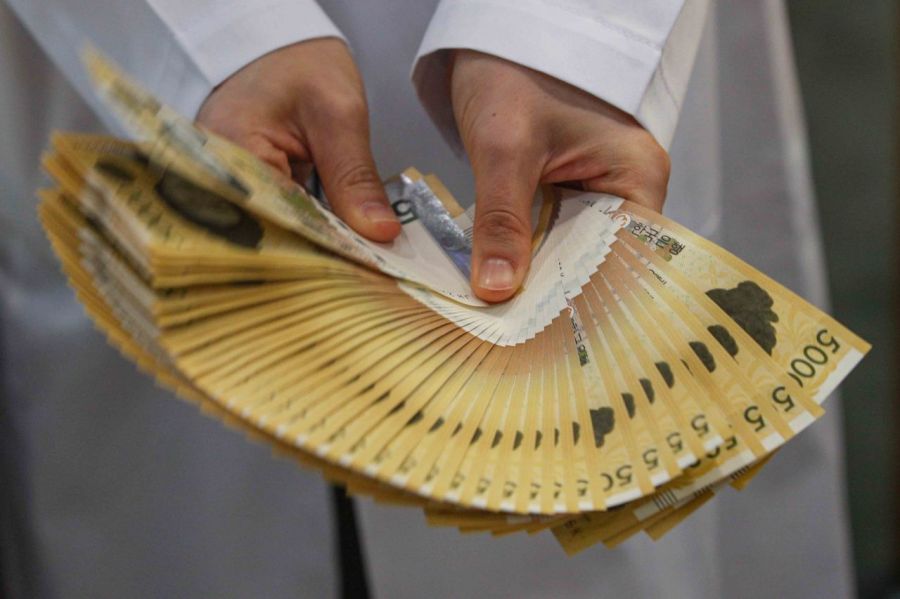 An employee organizing 50,000 won bills at the headquarters of Hana Bank in Jung-gu, Seoul. Photo by Jinhyung Kang aymsdream@
In-person participation methods will also be expanded to improve accessibility. The government plans to proactively gather feedback from socially vulnerable groups, such as the elderly and people with disabilities, who may have difficulty using the internet, in order to better identify policy needs. The size of the citizen panel will also increase from around 300 to about 600 members. In addition to the previous practice of recruiting mainly from private sector pools, the government will now also hold open recruitment for all citizens. One participant shared, "I was glad to be able to voice my opinion even though I am not a public official, and it was empowering to see my ideas resonate with others."
The online participation platform will also be completely revamped. The government will add five-year project briefing materials to the National Participatory Budget website, enabling citizens to directly analyze and review participatory budget projects. Coordination between central and local governments will be strengthened as well. Previously, the central and local participatory budget systems were operated separately, but they will now be integrated through platform linkage.
The government will accept project proposals for the National Participatory Budget System year-round, and will openly recruit members for the citizen panel, which directly evaluates budget projects, until February 28. An official from the Ministry of Planning and Budget commented, "The very experience of citizens directly participating in the budgeting process is an important starting point for enhancing fiscal democracy and transparency," adding, "We will establish an open fiscal system that reviews the national budget from the perspective of the people."
© The Asia Business Daily(www.asiae.co.kr). All rights reserved.


















