The Times Cites Government Sources
"Approval of Chinese Wind Turbine Plant Delayed Over Security Concerns"
"Starmer Aimed to Avoid Provoking Trump"
Reports have emerged that UK Prime Minister Keir Starmer, currently visiting China, postponed approval of plans to build the UK's first Chinese wind turbine factory just before his trip to China.
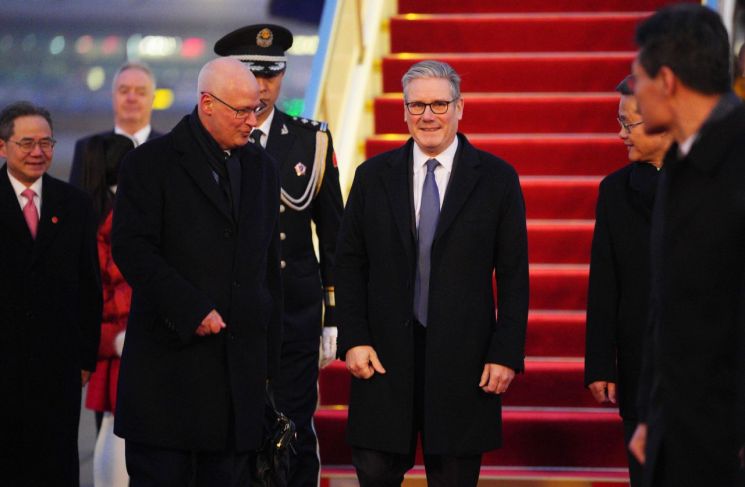 Keir Starmer, the Prime Minister of the United Kingdom, arrived in Beijing, China on the 28th. Photo by AP Yonhap News
According to Yonhap News on the 28th (local time), citing the British daily The Times, "Prime Minister Starmer was scheduled to decide whether to approve the construction of a wind turbine manufacturing plant in Scotland by China's Mingyang Smart Energy Group (Mingyang) before departing for China the previous night, but postponed the decision."
UK government sources told the media that "Prime Minister Starmer wanted to avoid provoking US President Donald Trump ahead of his carefully arranged visit to China." However, the Prime Minister's Office countered by stating that "there were never any plans to announce a decision on this matter before the visit to China."
Mingyang, the largest private wind turbine manufacturer in China, announced in October last year that it would build the largest wind turbine manufacturing facility in the UK, located in Scotland. The project is valued at 1.5 billion pounds (approximately 2.96 trillion won) and is expected to create 1,500 jobs.
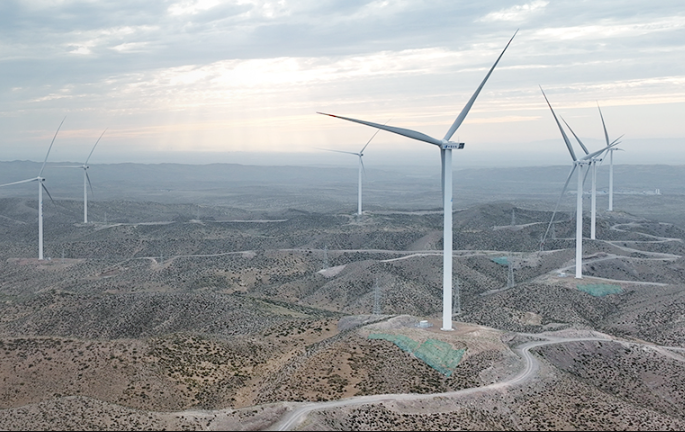 Mingyang, the largest private wind turbine manufacturer in China, announced in October last year that it would build the largest wind turbine manufacturing facility in the UK, located in Scotland. Official website of Mingyang
However, there have been concerns that allowing a Chinese company into the wind power infrastructure sector could pose an energy security risk, given the UK's heavy reliance on wind power in its electricity market. Especially considering that leading European firms such as Siemens of Germany, Vestas and Orsted of Denmark are now focused on the European market due to restrictions on offshore wind power in the United States, some have assessed that their European supply chains could be weakened. Chinese wind turbines, when subsidized by the state, are reportedly up to 50% cheaper than products from European competitors.
In response, there were reports that the Trump administration warned of security risks associated with Mingyang's Scottish plant in June of last year. UK intelligence agencies have reportedly been instructed to submit a report to the Prime Minister's Office on the security risks to the UK's critical national infrastructure if the project is approved. Liam Byrne, Chair of the House of Commons Business and Trade Committee, stated, "We need to be much more cautious in protecting the UK economy from Chinese pressure and unfair competition," adding, "China poses a risk to European energy independence by weakening it through unfair state subsidies."
Meanwhile, on the 28th, Prime Minister Starmer became the first UK Prime Minister in eight years to visit China. Prior to this, on the 20th, he also approved the construction of a massive new Chinese embassy in central London, covering 22,000 square meters (approximately 6,655 pyeong). However, security concerns have also been raised regarding the location of the site. The embassy will be built on the former Royal Mint site in London, and the nearby financial institution communications networks transmit data to the City of London and handle the email and message traffic of millions of internet users. The Prime Minister's Office stated, "After verifying various risks, we are confident that the UK's national security will be protected."
© The Asia Business Daily(www.asiae.co.kr). All rights reserved.


















