Yen Strength, U.S. Shutdown Fears, and Trump’s Tolerance for a Weaker Dollar
Combined Forces Drive Sharp Drop in Won-Dollar Exchange Rate
"Level Drops Lead to Repeated Real Demand Inflows, Gradually Lowering the Bottom"
On the 28th, the won-dollar exchange rate plunged by more than 23 won in a single day, dropping sharply to the 1,420-won level. This marks the lowest weekly closing price in about three months. The simultaneous effects of the strengthening yen, concerns over a potential shutdown of the U.S. federal government (temporary suspension of government operations), and remarks from former U.S. President Donald Trump indicating his acceptance of a weaker dollar all contributed to the decline in the won-dollar exchange rate.
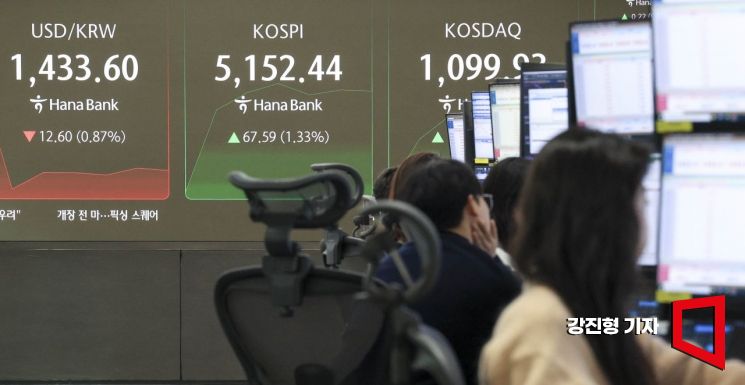
In the Seoul foreign exchange market, the weekly closing price of the won-dollar exchange rate (as of 3:30 p.m.) stood at 1,422.5 won, down 23.7 won from the previous trading day. This is the lowest level since October 20 of last year (1,419.2 won). On this day, the won-dollar exchange rate opened at 1,431.0 won, down 15.2 won from the previous day, and fluctuated around the 1,430-won level in the early session. Around 11 a.m., the rate extended its decline, reaching as low as 1,420.0 won at 2:22 p.m.
In addition to the recent Greenland risk, President Trump's overnight comments that he is not concerned about a weaker dollar triggered a sharp drop in the Dollar Index (DXY). On the 27th (local time), at an event in Iowa, President Trump was asked by reporters whether he was worried about the recent decline in the dollar's value. He replied, "No, I think it's good," adding, "Look at the value of the dollar and look at the business we're doing. The dollar is doing very well." He further stated, "I want to let the dollar find its own level. That's the fair thing to do," indicating he has no intention of artificially defending the dollar.
Concerns over a U.S. federal government shutdown have also intensified. Hwang Yuseon, a senior researcher at the International Finance Center, said, "The Democratic Party's hardline stance on the Department of Homeland Security budget and time constraints have increased the possibility of a partial shutdown," adding, "There are concerns about disruptions to the work of major agencies, such as the release of inflation·employment indicators." She continued, "As the budget negotiations become linked to political issues, including a renewed debate over the Trump administration's immigration policy, the legislative deadlock is likely to persist, and financial markets may become more sensitive to policy risks, so caution is warranted."
The Dollar Index, which measures the value of the dollar against the currencies of six major countries, fell from the 97 range the previous day to 95.536 in the morning, marking its lowest level in about four years since 2022. It then rebounded slightly, staying in the low 96 range. The yen, which tends to move in tandem with the won, has continued to strengthen after U.S. and Japanese monetary authorities hinted at the possibility of an unusual joint intervention. The yen-dollar exchange rate, which was close to 160 yen last week, fell to the 152-yen range on this day.
Moon Daun, a researcher at Korea Investment & Securities, said, "Currently, the environment is one where downward pressure on the exchange rate is dominant from both economic and policy perspectives." However, he added, "It is difficult to say that sentiment toward a weaker won has been completely reversed, so real demand for dollars is likely to flow in each time the rate drops to a lower level." He predicted that, with repeated patterns of declines followed by slight rebounds, the won-dollar exchange rate will gradually lower its bottom in the first half of this year.
© The Asia Business Daily(www.asiae.co.kr). All rights reserved.
![Clutching a Stolen Dior Bag, Saying "I Hate Being Poor but Real"... The Grotesque Con of a "Human Knockoff" [Slate]](https://cwcontent.asiae.co.kr/asiaresize/183/2026021902243444107_1771435474.jpg)











