Thick Winter Coats Reduce Seatbelt Protection
Belt May Instead Compress Abdominal Organs
Wearing thick winter coats while driving in cold weather can actually increase the risk of injury. This conclusion comes from an analysis conducted through direct experiments by a German automotive safety institute.
The study was published by the German Automobile Club (ADAC). ADAC conducted the experiment using crash test dummies designed to simulate human body conditions. One adult-sized and one child-sized dummy were prepared, both dressed in thick winter coats.
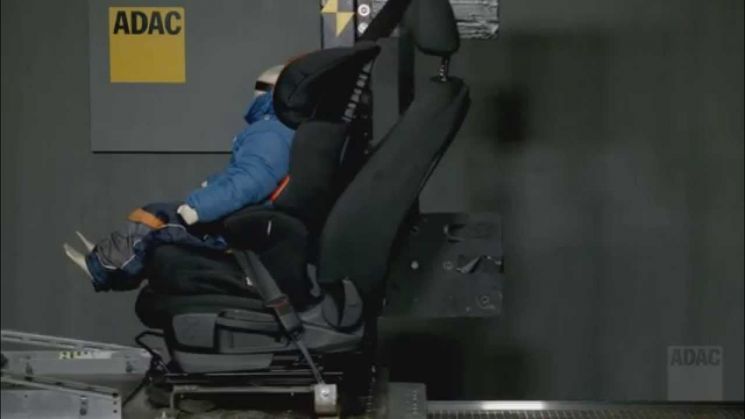
The experiment was as follows: The adult and child dummies, both wearing winter coats, were seated in a car seat and a child safety seat, respectively, and secured with seatbelts. ADAC then crashed the test vehicle at a speed of 16 km/h, simulating a low-speed rear-end collision that could occur in urban traffic conditions.
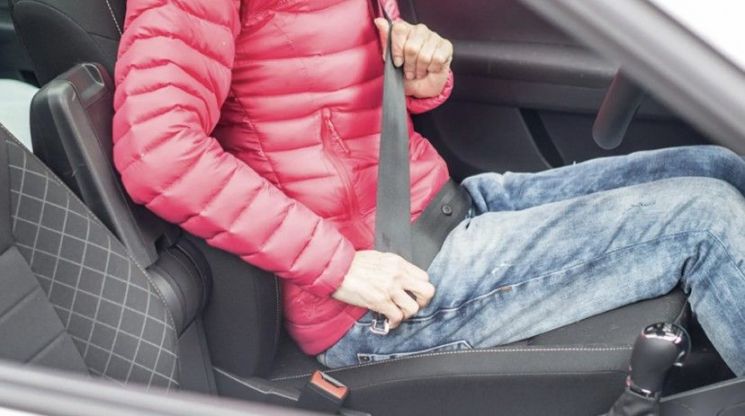 Wearing a seatbelt over thick winter clothing can actually be more dangerous. The photo is not related to any specific expression in the article. Screenshot from AXA website.
What were the results? Due to the thick clothing, the seatbelt was pushed upward over the abdomen, causing significant pressure on the internal organs. The seatbelt, intended to ensure safety, ended up threatening the body because of the bulk of the clothing.
The research team warned, "In a real accident, this would increase the risk of abdominal injuries. The looser the belt becomes due to thick clothing, the worse the occupant's posture control during a collision, and the higher the risk of injury."
They added, "If an accident occurs, the belt spends time compressing the clothing first, allowing the occupant's body to move forward more. This increases the risk of severe injuries such as damage to abdominal organs, spinal injuries, and head trauma."
Overseas vehicle safety organizations, such as the American Automobile Association (AAA) and the National Highway Traffic Safety Administration (NHTSA), have reported similar findings. They point out that when wearing thick coats, the seatbelt does not fit snugly, reducing its protective effect for occupants. This is especially concerning for children in car seats, who are at even greater risk of being ejected from their seats during a crash.
While seatbelts are a lifesaving device that reduces the risk of injury in car accidents, improper use can make them dangerous. When wearing a seatbelt, always check that it is not twisted, and if it is, straighten it immediately. The belt should run across the center of the shoulder, not the neck, and the lap belt should be positioned low and close to the pelvis, not over the abdomen.
© The Asia Business Daily(www.asiae.co.kr). All rights reserved.
![Clutching a Stolen Dior Bag, Saying "I Hate Being Poor but Real"... The Grotesque Con of a "Human Knockoff" [Slate]](https://cwcontent.asiae.co.kr/asiaresize/183/2026021902243444107_1771435474.jpg)











