Trump: "Tariffs on Korean Products and Reciprocal Tariffs Raised from 15% to 25%"
Claims, "Korean Legislature Failed to Enact Trade Agreement"
Move Also Seen as Pressure Against Regulatory Legislation Targeting U.S. Companies
President Donald Trump has abruptly stated that he will raise tariffs on Korean products to pre-trade agreement levels, causing renewed turbulence in Korea-U.S. trade relations. While President Trump cited delays in parliamentary procedures as an issue, the specific reasons and timing for the tariff hikes remain unclear, leading to varied interpretations among the Korean government and industry regarding the underlying motives.
Some observers suggest that the move may also be intended to counter recent developments in Korea, such as the passage of the amended Information and Communications Network Act, the push for the Online Platform Act (which includes U.S. big tech companies), and the government’s intensive investigation into the Coupang personal data leak incident. There is growing attention on whether these interpretations will influence follow-up actions by relevant authorities.
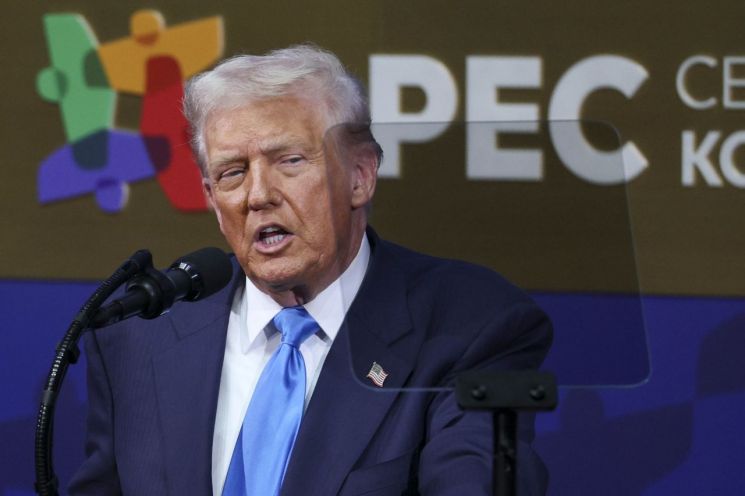
On January 26 (local time), President Trump posted on his social networking service, Truth Social, stating, "The Korean legislature is not upholding the agreement between Korea and the United States. Therefore, I am raising tariffs on Korea-on automobiles, lumber, pharmaceuticals, and all other reciprocal tariffs (country-specific tariffs)-from 15% to 25%."
He added, "President Lee Jaemyung and I reached a great agreement for both countries on July 30, 2025, and I reaffirmed those terms when I was in Korea on October 29, 2025. Why has the Korean legislature not approved (ratified) the agreement?" The "approval by the Korean National Assembly" mentioned by President Trump is interpreted as referring to the passage of the "Special Act on Strategic Investment Management between Korea and the United States" (Special Act on U.S. Investment), which Korea must enact in order to fulfill its promised investments to the United States.
The Korean government submitted the relevant bill to the National Assembly as a legislative proposal by lawmakers in November last year, in accordance with the joint fact sheet summarizing the security and trade agreements between the two countries. The United States also retroactively lowered tariffs on Korean automobiles to 15% as of December 4 last year, following publication in the Federal Register. However, the bill is currently pending in the National Assembly’s Strategy and Finance Committee and other committees.
While it is true, as President Trump pointed out, that the Korean legislature’s ratification has been delayed, some interpret the mention of tariff hikes as having other motives, considering that legislative processes require alignment with parliamentary sessions and significant time for bipartisan agreement. One such motive is the Korean government and political circles’ regulatory moves targeting U.S. companies.
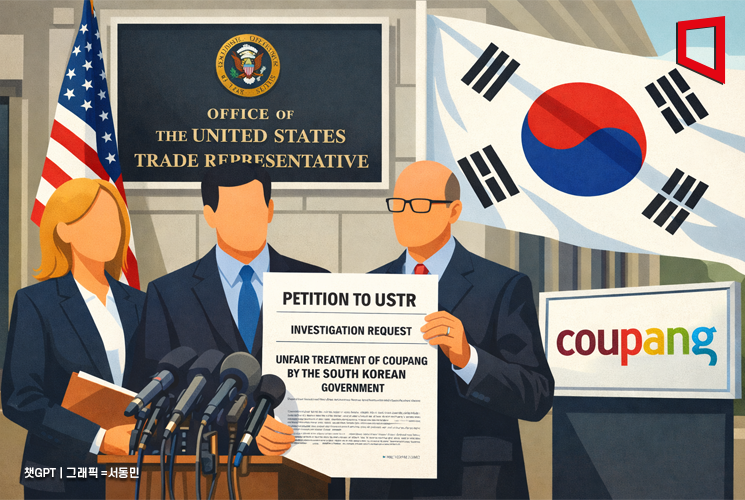
The U.S. administration has already expressed concerns about the amended Information and Communications Network Act enacted by the Korean National Assembly and the proposed online platform regulations. Some in the U.S. investment community have complained that the Korean government is excessively targeting Coupang, a U.S. company, with an all-out investigation triggered by the personal data leak incident. On January 23, Vice President J.D. Vance also questioned Prime Minister Kim Minseok about the Coupang data breach during his visit to the United States.
Yoon Sanghyun, a lawmaker from the People Power Party, wrote on his social media, "There has been a series of criticisms in U.S. political circles that the Korean government is conducting a witch hunt against Coupang, and Coupang’s investors have requested retaliatory measures such as tariffs on Korean products from the U.S. Trade Representative (USTR). Now, Vice President Vance has directly raised the Coupang issue with Prime Minister Kim Minseok, and President Trump has played the tariff hike card." He added, "This shows how trade issues are increasingly being used as diplomatic and trade pressure tools driven by corporate interests."
However, as of now, government authorities maintain that their judgments and responses are based on domestic law, regardless of Korea-U.S. trade issues. The police have notified Harold Rogers, Coupang’s interim CEO, of a third summons after he failed to respond to two previous requests for appearance, and are considering applying for an arrest warrant if he does not comply again. Rogers is to be questioned regarding the circumstances under which Coupang announced its own investigation results related to the personal data leak.
Song Kyunghee, Chairperson of the Personal Information Protection Commission, also stated regarding the investigation into Coupang’s data breach, "We will strictly assess the scale of damage to the public and whether appropriate measures were taken after the incident, and will impose corresponding penalties. We are not considering how this may affect any trade variables." However, there are concerns that if the tariff issue remains unresolved, it could weaken the momentum for further investigations or sanctions.
An industry official commented, "President Trump’s decision to raise tariffs could further squeeze already struggling domestic companies. The Korean government must work to resolve uncertainties in its relationship with the United States so that companies’ business activities are not hampered."
© The Asia Business Daily(www.asiae.co.kr). All rights reserved.


















