Following Only Young and Mumuso, Now ‘New York Bagelers Museum’
"Cases of Korean Brand Imitation in China Are Increasing Day by Day"
As the global popularity of Korean culture, including K-beauty and K-food, continues to rise, there have been increasing instances in China of not only copying Korean products but also imitating the appearance of Korean stores. Critics point out that these cases go beyond simply borrowing concepts, as even the interior design and product lineup are replicated to the extent that they cause consumer confusion.
Controversy Over the 'New York Bagel Museum' Imitation in China
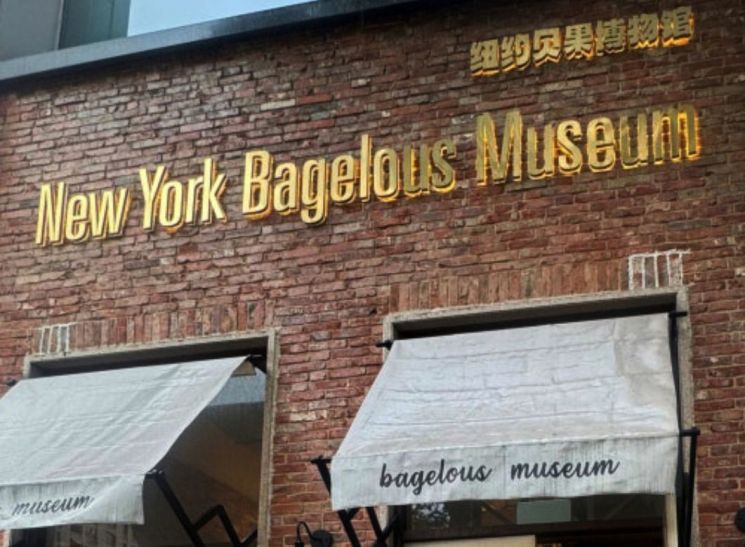
Seo Kyungduk, a professor at Sungshin Women's University, stated on his Facebook page on the 27th, "Many netizens who visited China have reported this to me," adding, "In the heart of Shanghai, a business called 'New York Bagel Museum,' which imitates a famous Korean bakery brand, was openly operating."
The problematic store is located across from the Provisional Government of the Republic of Korea building in Shanghai, China, and has been criticized for its resemblance to the well-known Korean bakery brand London Bagel Museum. Professor Seo pointed out, "The overall interior design, atmosphere, menu, and packaging are so similar that anyone can see it is copying the London Bagel Museum."
On online communities and social networking services (SNS), reviews such as "Anyone can tell it's plagiarism," "It's a blatant knockoff," and "They copied the London Bagel Museum exactly" have been posted by visitors. Professor Seo added, "Upon further investigation, it turns out that stores are already operating not only in Shanghai but also in other cities such as Beijing and Suzhou."
He emphasized, "As the value of Korean brands rises globally, this is a typical ploy to deceive consumers by pretending to be a Korean-related store." He further stressed, "There are limits to what companies can do on their own, so it is urgently necessary for the government to cooperate on intellectual property protection and link with local law enforcement."
Not Olive Young, but 'Only Young'... Slyly Copied Chinese Stores
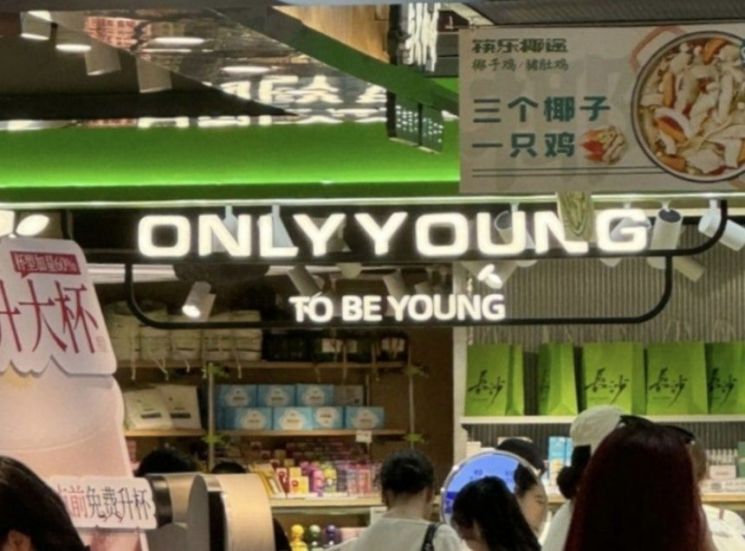
This is not the first time China has faced controversy over imitation. Recently, in Changsha City, Hunan Province, a store called 'Only Young,' which imitates the leading Korean beauty retailer Olive Young, appeared and sparked controversy. Olive Young, recognized as a 'K-beauty shopping mecca,' surpassed 1 trillion won in cumulative purchases by foreign customers at its domestic offline stores last year. Critics argue that the store concept was copied to capitalize on this global recognition.
Similar cases have also been observed in the Middle East. Mumuso, a Chinese lifestyle goods distributor, was found to have used 'KOREA' or the abbreviation 'KR' on signboards at some of its stores in the Middle East, misleading customers into thinking it is a Korean company.
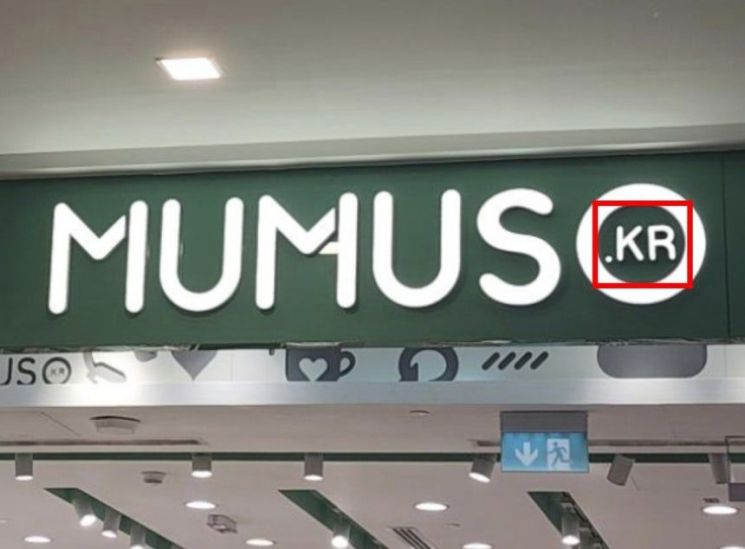
Mumuso has previously sparked controversy for marketing itself as a Korean company. When this issue was made public in 2019, both domestic and international netizens criticized the company, and it appeared that Mumuso had removed the 'KR' designation for a time. However, it seems that the company has recently resumed using it. There are particular concerns that foreign tourists in global destinations like Dubai, unaware of the facts, may easily mistake Mumuso for a Korean company.
Commenting on this, Professor Seo said, "Cases of Chinese companies blatantly imitating successful Korean brands are increasing day by day," emphasizing, "To prevent such cases from recurring, the government must establish proactive strategies to protect companies' intellectual property rights."
© The Asia Business Daily(www.asiae.co.kr). All rights reserved.



















