NYT Estimates Appearance Fee at $400,000 to $600,000
Honnold Says, "I Would Have Climbed Even Without Payment If Permitted"
It has been reported that Alex Honnold, who climbed the Taipei 101 skyscraper in Taiwan without ropes or any protective equipment, received up to 860 million won as an appearance fee for the live broadcast on Netflix.
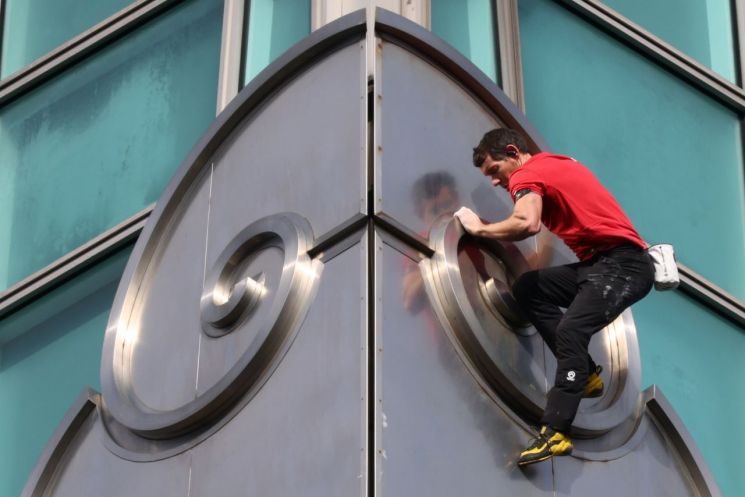 On January 25, American rock climber Alex Honnold is climbing the Taipei 101 skyscraper in Taipei, Taiwan. Photo by EPA Yonhap News.
On January 25 (local time), international media outlets such as The New York Times estimated that Honnold earned between 400,000 and 600,000 US dollars (approximately 580 million to 860 million won) as his appearance fee and broadcasting rights payment, which is considered a "mid-six figures" amount. "Mid-six figures" refers to a mid-range amount in the hundreds of thousands of dollars.
In an interview with The New York Times, Honnold said, "Compared to the contract sizes of professional athletes, it's an embarrassingly small amount," but added, "If I had been granted permission, I would have climbed even without being paid."
Honnold began his climb at 9:10 a.m. the previous day and reached the top of the 508-meter, 101-story building in about one hour and thirty minutes. Immediately after the climb, he shared his thoughts, saying, "It feels different to accomplish something I have imagined for so long," and described it as "an unbelievably amazing experience."
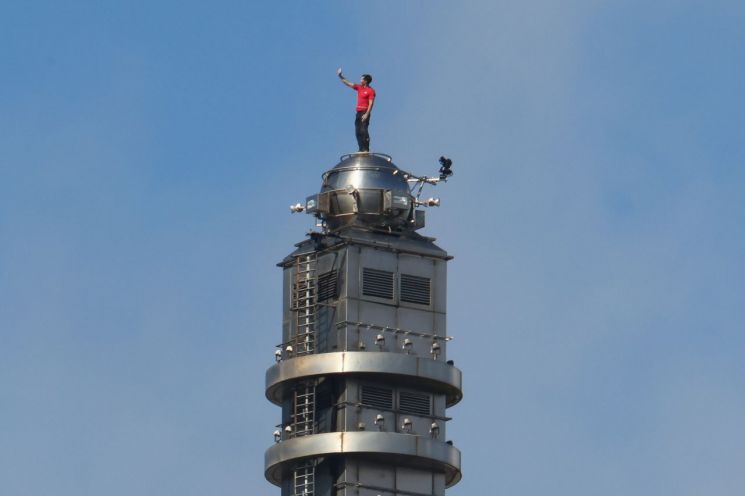 On January 25, American rock climber Alex Honnold reached the top of the Taipei 101 skyscraper in Taipei, Taiwan, and took a selfie. Photo by EPA Yonhap News
This challenge was a highly difficult ascent of a building whose exterior is mostly glass, and was completed without any safety equipment. The process was broadcast live worldwide via Netflix. While citizens expressed both awe and alarm, some have criticized the live broadcast of such a dangerous feat, citing the high risk of fatal accidents as inappropriate.
In response, Netflix explained, "To prepare for any unforeseen accidents, we implemented a delay of about 10 seconds so the broadcast would air slightly later than the actual on-site situation."
© The Asia Business Daily(www.asiae.co.kr). All rights reserved.


















