Implementation of Revised Youth Job Leap Incentive Program
Stronger Incentives to Ease Capital Region Concentration
Simultaneous Support for Youth and Companies... Effectiveness in Focus
As the government accelerates efforts to address the risk of regional extinction, starting this year, young people who find employment outside the Seoul metropolitan area and remain in their jobs for more than six months will be eligible to receive up to 7.2 million won over two years through the "Youth Job Leap Incentive Program." This initiative aims to encourage young people to settle in local regions while also reducing the hiring burden on companies, drawing attention to the effectiveness of the program relative to the fiscal investment.
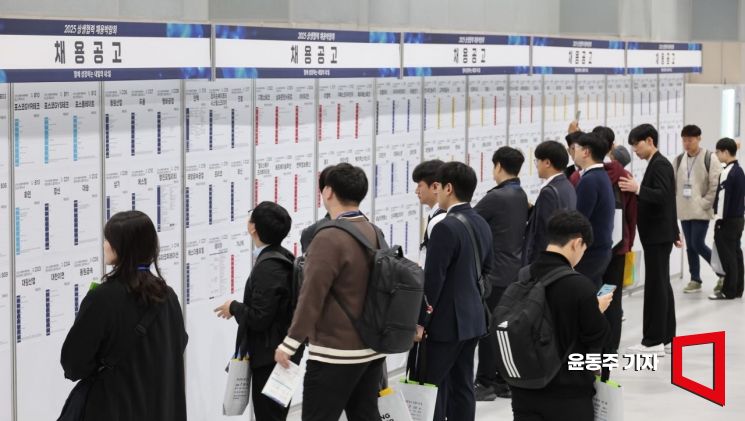 Job seekers attending the "2025 Win-Win Cooperation Job Fair" held on October 21 last year at COEX Magok in Gangseo-gu, Seoul, are checking the job postings.
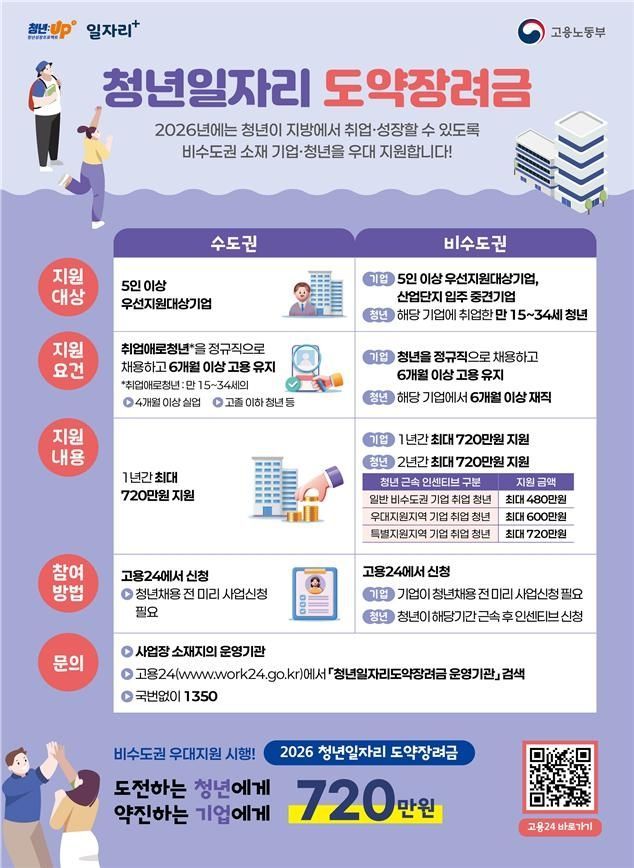
The Ministry of Employment and Labor announced that it will implement the 2026 Youth Job Leap Incentive Program starting from January 26, 2026. The Youth Job Leap Incentive Program is a system that provides incentives to both companies and young employees when small and medium-sized enterprises (SMEs) hire young people and retain them for a certain period. Beginning this year, the program has been divided into two types-metropolitan and non-metropolitan areas-to clarify policy direction.
Up to 7.2 Million Won Over Two Years for Youth Employed Outside the Capital Region
The most notable change is the expanded support for individuals. Young people who are employed at SMEs outside the metropolitan area and remain in their positions for more than six months are now eligible to receive retention incentives for up to two years. The previous maximum support limit of 4.8 million won has been raised to up to 7.2 million won, depending on the region.
However, the amount of support varies by region. The program differentiates between general, preferential, and special regions, so young people employed outside the metropolitan area can receive up to 4.8 million won, 6 million won, or 7.2 million won over two years, respectively. Young people employed by companies in the metropolitan area are not eligible for separate retention incentives.
Up to 600,000 Won Per Month for Companies... Stronger Hiring Incentives
Companies will receive support at the same level as before. Companies that hire young employees and retain them for more than six months will be provided with incentives of up to 7.2 million won per year (600,000 won per month). For the metropolitan area, eligible companies are those with five or more employees that are designated as priority support companies and hire young people facing employment difficulties (such as those unemployed for more than four months or with a high school diploma or less). For the non-metropolitan area, eligible companies include priority support companies that hire young people and mid-sized companies located in industrial complexes.
Lim Youngmi, Director General for Employment Policy at the Ministry of Employment and Labor, stated, "Given that jobs and high wages are concentrated in the metropolitan area, we expect the Youth Job Leap Incentive Program to support the creation of quality jobs in local regions and help young people find employment and grow outside the capital region."
Whether Young People 'Settle Down' Is Key
However, there are cautious views regarding the effectiveness of the policy. Some point out that it remains to be seen whether short-term financial support will actually lead to long-term settlement of young people in local areas. Ultimately, if improvements in industrial competitiveness and residential and cultural infrastructure within the regions are not made in parallel, the effectiveness of the incentives may be limited. Nevertheless, the government's direct linkage of youth employment policy to the structural issue of metropolitan concentration is seen as a meaningful attempt.
© The Asia Business Daily(www.asiae.co.kr). All rights reserved.


















