The "Gyeranjang" Craze Spreads Across Social Media
Korean Cuisine Gains Momentum with Simplicity and Cost-Effectiveness
Following the global influence of K-pop and K-beauty, K-food is also expanding its presence in the international market, and the Korean dish currently attracting attention in the United States is somewhat unexpected. The spotlight is on "Gyeranjang" (soy sauce marinated eggs), made by soaking soft-boiled eggs in soy sauce. This simple dish is captivating Millennials & Gen Z in the United States, emerging as a new K-food trend. Experts note that it is particularly meaningful as Korean cuisine is now being consumed not only as "dining out" or a "special experience," but also as an everyday meal prepared at home.

"Why is this so addictive?"... 'Mayak Eggs' Heat Up American Online Communities
Recently, Reddit, the largest online community in the United States, has seen a flood of posts about Gyeranjang. In the United States, Gyeranjang is called "Mayak Egg." Just like "Mayak Gimbap" and "Mayak Tteokbokki," the word "Mayak" (meaning "narcotic" in Korean) is used in its original form. The term implies that "once you taste it, you can't stop." Local users are responding enthusiastically, saying, "It's as addictive as if it actually contains narcotics," "I never get tired of eating it every day," and "I can't believe only Koreans have been enjoying this delicious food."
Videos introducing Gyeranjang are also spreading rapidly on social media platforms such as TikTok and Instagram. Simple scenes of placing a soft-boiled egg on rice, popping the yolk, and drizzling sesame oil have garnered tens of millions of views. Comments like "Perfect for breakfast," "Much easier than I thought," and "I make this at home every day" are pouring in.
 Recently, there has been a craze for "dalgyaljang" (soy sauce marinated eggs) among Americans. TikTok
The Key to Popularity: Simplicity and Cost-Effectiveness
Experts cite "accessibility" as the primary reason behind the Gyeranjang craze. Well-known Korean dishes such as bibimbap, japchae, and bulgogi are complicated to prepare and require significant effort. The complexity of ingredient preparation and cooking processes has created high entry barriers for Western consumers.
In contrast, Gyeranjang is made simply by boiling eggs and soaking them in soy sauce marinade. With minimal use of heat and short cooking time, it is regarded as a "practical home-cooked meal." Especially in the context of soaring restaurant prices in the United States, the fact that it provides a protein-rich meal at a low cost is seen as another factor driving its popularity.
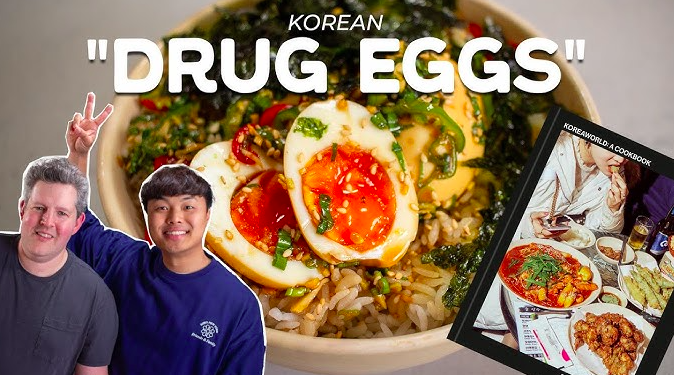
Gyeranjang is being consumed in a variety of ways as it adapts to local preferences. It is commonly paired with grains or salads instead of rice, or served as a finger food by adding mayonnaise on top of the egg. The high versatility of the dish, rather than a fixed recipe, is seen as a factor accelerating its spread.
K-Food: From "Special Occasion" to "Everyday Meal"
Experts are paying attention to the possibility that this phenomenon may not be a fleeting trend. Overseas consumers are increasingly purchasing Korean foods they encounter in K-dramas, YouTube mukbangs, and social media short-form videos directly through online shopping or at local supermarkets. This "direct consumption" trend-where consumers buy products they see in content immediately-has become firmly established worldwide.
Experts agree, "K-food has grown into a category with clear global competitiveness, not just as a 'Korean Wave item,' but also in terms of taste, cooking convenience, and product diversity. Especially among Millennials & Gen Z, Korean food is becoming a staple in everyday diets, indicating strong long-term growth potential."
© The Asia Business Daily(www.asiae.co.kr). All rights reserved.



















