More Than Half of Cases Are Among Infants and Young Children
Stay Home for 48 Hours After Symptoms Disappear
Cases of norovirus infection, often referred to as the "unwelcome guest of winter," have been surging for 10 consecutive weeks.
On January 24, the Korea Disease Control and Prevention Agency urged the public to follow prevention guidelines, noting that norovirus infections have increased for 10 consecutive weeks and that the proportion of cases among infants and young children is also rising.
According to sample surveillance at 210 hospital-level institutions for communicable diseases, the number of norovirus infection cases has continued to increase for 10 consecutive weeks, starting from the first week of November 2025 (week 45 of 2025) up to the third week of January 2026. The number of cases over the past five weeks was as follows: 240 in the third week of December 2025, 262 in the fourth week of December, 354 in the first week of January 2026, 548 in the second week of January, and 617 in the third week of January. Among all cases, children aged 0 to 6 accounted for 51.1%, which is an increase of 11.5 percentage points compared to 217 cases (39.6%) the previous week. Patients aged 7 to 18 made up 19.3%, while those aged 19 to 49 accounted for 14.4%.
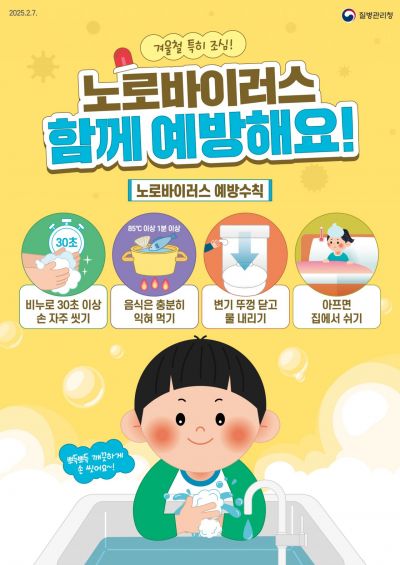
"Close the toilet lid before flushing" to prevent infection via droplets
Norovirus is highly contagious and can survive in everyday environments for up to three days. The virus is mainly transmitted through the consumption of contaminated water or food, such as seafood. In addition, it can spread through contact with infected individuals or exposure to droplets from their vomit. Symptoms such as vomiting and diarrhea typically appear within 12 to 48 hours after infection, and abdominal pain, chills, and fever may also occur. Due to the wide variety of viral genotypes and the relatively short duration of post-infection immunity-up to about 18 months-reinfection is possible even after a previous infection.
Patients should refrain from attending daycare, school, or work for up to 48 hours after symptoms have disappeared. It is also important to separate living spaces, including bathrooms, from other family members. To prevent the spread of the virus via droplets, the toilet lid should always be closed before flushing after bowel movements. In places where a patient has been present, all contact surfaces such as doorknobs, any items contaminated with patient secretions, and bathrooms should be cleaned and disinfected with a diluted bleach solution. During cleaning and disinfection, a KF94 mask and gloves should be worn to prevent infection via droplets. For effective prevention, hands should be washed with soap for at least 30 seconds rather than using hand sanitizer, and food ingredients should be washed under running water and thoroughly cooked at 85°C or higher for at least one minute before consumption.
Im Seungkwan, Commissioner of the Korea Disease Control and Prevention Agency, stated, "To prevent norovirus infection, it is important to follow prevention guidelines such as proper handwashing and to eat food that has been safely prepared." He added, "In particular, childcare facilities should keep children at home if norovirus infection is suspected and report any outbreaks to the local public health center."
© The Asia Business Daily(www.asiae.co.kr). All rights reserved.

















