Expanding the Collector Experience Beyond Artwork Transactions
Blending Art Appreciation with Personal Networking
Membership Models Spreading Across the Industry
High Satisfaction Driven by Experience-Based Programs
The landscape surrounding art collecting is expanding from mere 'artwork transactions' to encompass 'experiences and communities.' As high-priced membership services are being launched by auction houses and galleries, networking and lifestyle offerings for collectors are emerging as new business models.
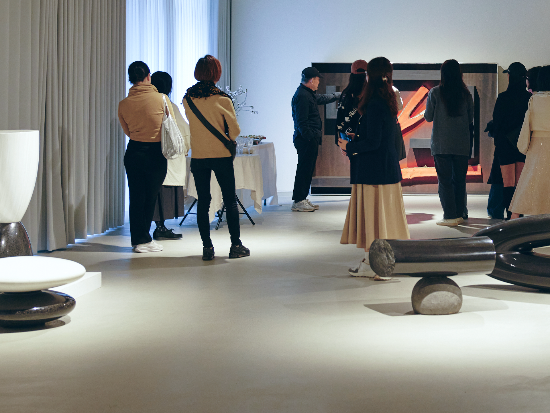
According to the art industry on January 26, Seoul Auction recently launched a membership service called 'The Chamber' with an annual fee of 15 million won. This service, limited to 100 members per year, positions itself as a high-end community and aims to cover not only art auctions but also the entire collector experience and lifestyle. While it operates exclusive membership programs-such as artist talks, studio visits, and domestic and international art tours-about once a month, similar to existing services, its distinctive feature is the substantial benefits that leverage the strengths of a leading domestic auction house. For example, the commission fee for purchasing artwork at Seoul Auction’s offline auctions is reduced from the usual 18% to 10%.
A Seoul Auction representative stated, "We plan to go beyond simply purchasing art or auction pieces and build a salon-style exchange and high-end networking platform." The representative added, "Membership holders will be invited not only to artist talks but also to events that are generally difficult to access, such as Art Basel, overseas art tours, and luxury brand events." They further explained, "If a member purchases artwork worth over 170 million won, the amount saved on commission fees will be similar to the annual membership fee. We will also provide a dedicated concierge service for transportation, installation, restoration, and portfolio management after the purchase."
This trend is not limited to Seoul Auction. Industry insiders note that community-based membership models are showing a certain level of success. A representative example is Printbakery’s membership program 'PB'S,' now in its third year. The renewal rate is about 50%. The annual fee started at 1.5 million won in 2024, increased to 3 million won for the second round, and then to 6 million won for the third, reflecting participants’ demands for better experiences even at higher fees.
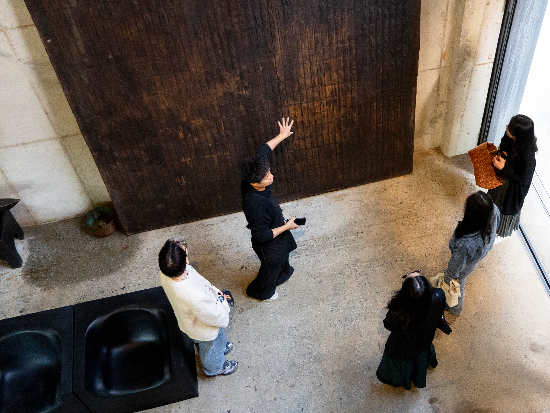
Jin Hyemin, PR Manager at Printbakery, said, "Initially, we operated two to three programs a year with about 50 members, but now it has expanded to up to ten annual programs. Participants with a strong desire for knowledge show great interest in gatherings that combine networking. Although the cost can be a burden, the inclusion of artwork purchasing opportunities makes it especially popular among collectors in their 30s and 40s."
The membership program at Shilla Gallery, which operates on a referral basis, is also receiving an enthusiastic response. Since 2024, only those who have completed a three-month in-house art history course are eligible to join, and about 40 members are currently participating. Members share their appreciation for art by attending one or two exhibitions, performances, or creative activities together each month. The annual fee is 2.5 million won. Lee Junyeop, CEO of Shilla Gallery, explained, "Many participants prefer academic discussions over networking. Most members see art as an identity rather than an accessory. This is also a new form of 'identity consumption' that supports the gallery."
So far, high-priced membership systems have been evaluated relatively positively for expanding the collector experience and broadening the scope of artistic exchange. However, there are concerns within and outside the industry that if membership fees rise excessively in the future, or if networking and exclusivity are overemphasized at the expense of the original purpose of art appreciation, negative side effects may arise. An art industry insider commented, "While the high entry barrier helps filter out art dealers, if the membership is perceived as merely a social club, its sustainability may be limited. The key is how to maintain a balance between artistic exchange and commercial networking."
© The Asia Business Daily(www.asiae.co.kr). All rights reserved.