Supreme Court Sides with Bereaved Families and Orders Remand
The Supreme Court en banc has ruled that the right of bereaved families of victims of the May 18 Democratization Movement to claim compensation for emotional distress from the state remains valid.
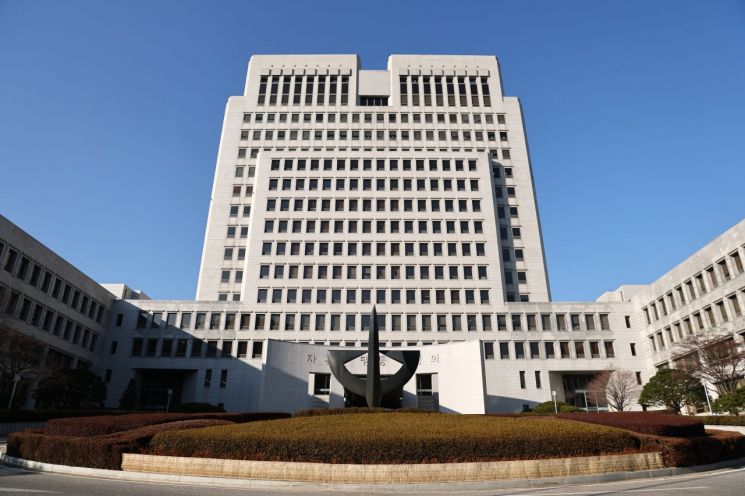
On January 22, the Supreme Court en banc (Presiding Justice Noh Taeak) overturned the previous ruling, which had dismissed the damages claim filed by Yoo and 32 others against the state, and remanded the case to the Gwangju High Court.
This case originated from a provision in the "Gwangju Democratization Compensation Act" enacted in the 1990s. The law included a "deemed settlement" clause, which stipulated that if those involved or their families received compensation, it would be regarded as a judicial settlement. As a result, bereaved families were not able to file separate claims for state compensation.
Subsequently, in 2021, the Constitutional Court ruled that this provision was unconstitutional to the extent that it barred claims for state compensation for emotional damages. Following this, the bereaved families claimed compensation for emotional distress. However, the government refused the payment, arguing that the three-year statute of limitations began when the decision to pay compensation was accepted and had already expired.
The first trial ruled in favor of the bereaved families. The first-instance court stated, "The consolation payment is merely a social security benefit and is distinct from compensation for emotional distress," adding, "It cannot be regarded as compensation for emotional damages." In contrast, the appellate court held, "It is reasonable to view that the three-year short statute of limitations begins, at the latest, from the date the parties received the decision on compensation from the Compensation Review Committee," and ruled that "the plaintiffs' claims for compensation for emotional distress have already expired due to the statute of limitations."
Eleven Supreme Court justices, in the majority opinion, stated, "Until the Constitutional Court's ruling of unconstitutionality, there was an impediment preventing the plaintiffs from exercising their unique right to claim compensation for emotional distress as family members of those involved," and further ruled, "That impediment was only removed by the unconstitutionality decision, allowing the exercise of the right to claim compensation for emotional distress."
The justices also noted, "Considering the purpose of the state compensation system, the unique circumstances of historical cases, and the need to protect victims, it cannot be objectively or reasonably expected that bereaved families would exercise their unique right to claim compensation for emotional distress on the date the compensation decision was made." They concluded, "Therefore, the date of the compensation decision cannot serve as the starting point for the statute of limitations."
Meanwhile, Supreme Court Justice Oh Kyungmi, in a separate opinion, stated, "It constitutes an abuse of rights, contrary to the principle of good faith, for the state as the defendant to raise the defense of the statute of limitations." In contrast, Justice Noh Taeak expressed a dissenting opinion, saying, "Although the pain suffered by those involved in the May 18 Democratization Movement and their families must be fully compensated, the right to claim compensation for emotional distress has expired due to the statute of limitations," and argued, "Relief for these individuals should be achieved through legislation."
On the same day, the Supreme Court en banc also overturned a precedent regarding the right of the Korea Workers' Compensation & Welfare Service to claim reimbursement (right of recourse) for insurance payouts related to industrial accidents. The Supreme Court en banc rendered a final judgment (reversal and remand) against the Service in a recourse claim lawsuit it had filed against a forklift driver and a forklift lessor.
Previously, the Supreme Court had interpreted Article 87, Paragraph 1 of the Industrial Accident Compensation Insurance Act to mean that a "third party" refers to "someone who, along with the employer who is the policyholder, has no direct or indirect insurance relationship with the injured worker." Thus, since a construction equipment lessor and their employee had no "insurance relationship" with the injured worker, the Service could exercise its right of recourse. However, the en banc decision on this day established a new legal principle, stating that when determining "third party" under this provision, the standard should be whether the party shares the same inherent risk at the workplace, rather than whether there is an "insurance relationship."
© The Asia Business Daily(www.asiae.co.kr). All rights reserved.

![Clutching a Stolen Dior Bag, Saying "I Hate Being Poor but Real"... The Grotesque Con of a "Human Knockoff" [Slate]](https://cwcontent.asiae.co.kr/asiaresize/183/2026021902243444107_1771435474.jpg)














