Pandas to Disappear from Japan After 54 Years
China Strengthens Cooperation with Germany and France
China is set to receive the return of two giant pandas from Japan, while at the same time expanding its "panda diplomacy" by leasing additional pandas to Germany and France, showing a contrasting approach by country. Some observers interpret this as a sign that China’s diplomatic messaging around panda leasing is becoming more differentiated, especially given the recent deterioration in China-Japan relations. On January 22, Yonhap News, citing China’s state-run English-language newspaper Global Times, reported that the last two giant pandas remaining in Japan are scheduled to be returned to China soon. Meanwhile, the Chinese government has signed a new agreement with Germany to lease two more pandas.
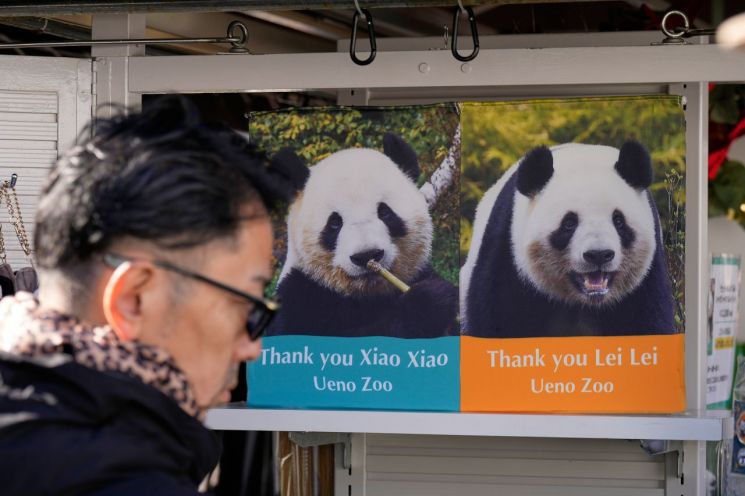 Tokyo Ueno Zoo plans to return the twin pandas born at the zoo, the male "Xiao Xiao" and the female "Lei Lei," to China on the 27th. Photo by AP Yonhap News
Recently, the China Wildlife Conservation Association (CWCA) announced that it has finalized plans to send two pandas from the Chengdu Giant Panda Base to Hellabrunn Zoo in Munich, Germany. This lease is part of a China-Germany cooperation agreement focused on joint research in panda conservation, breeding, and disease management. The two countries plan to conduct joint research over the next ten years. The association stated that this cooperation will also help strengthen ties between the peoples of both nations. The announcement comes as German Chancellor Friedrich Merz is scheduled to visit China in late February.
Imminent Panda Return Amid China-Japan Tensions... Expansion of 'Panda Diplomacy' in Germany and France
Since 2017, Germany has housed giant pandas "Meng Meng" and "Jiao Qing" at Berlin Zoo under a 15-year lease agreement. Meng Meng gave birth to twin pandas in Germany for the first time in 2019. These twins were returned to China in 2023, and another set of twins born in 2024 is also expected to return to China within two to four years.
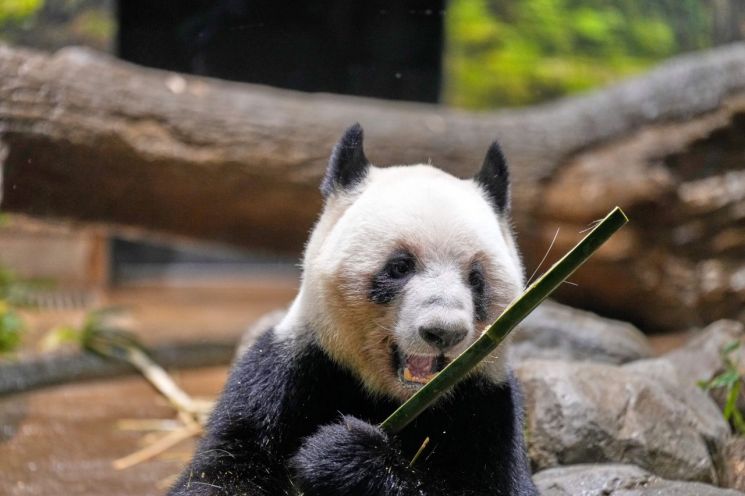
China is also continuing its panda diplomacy with France amid improving bilateral relations. The association announced that, following President Emmanuel Macron’s visit to China in December 2023, a new giant panda will be leased to France in 2027. In contrast, Japan’s more than 50-year history of panda care, which began with the normalization of diplomatic relations in 1972, is effectively coming to an end. Tokyo Ueno Zoo plans to return the twin pandas born at the zoo, the male "Xiao Xiao" and the female "Lei Lei," to China on January 27. Their parents, "Ri Ri" and "Shin Shin," already returned to China in September 2023. The last day for the public to view the two pandas is January 25.
'Zero Pandas' Becomes Reality... China Says, "Japanese People, Come See Them in China"
The China Daily reported that long lines have formed at Ueno Zoo ahead of the pandas' return, with local visitors expressing hope that pandas will one day return to Japan. However, the Chinese Ministry of Foreign Affairs has indicated that there are no plans for additional leases to Japan. Chinese Foreign Ministry spokesperson Guo Jia-kun stated, "Xiao Xiao and Lei Lei will return to China as scheduled before February 2026," adding, "We welcome Japanese people to come to China to see the pandas."
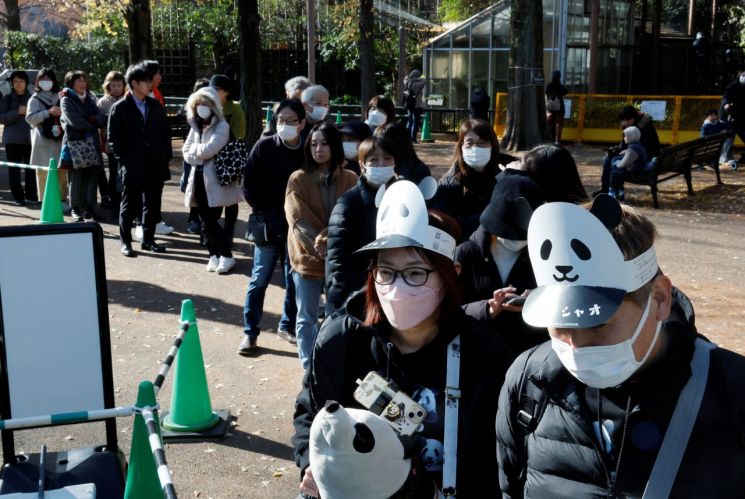 Citizens waiting to see the panda at Ueno Zoo ahead of the panda's return. Photo by Reuters Yonhap News
China has pursued "panda diplomacy" by leasing or gifting the endangered giant panda, which is native only to China, to friendly countries. The principle is that pandas born overseas are typically returned to China between the ages of two and four. Fu Bao, born in South Korea, was also returned to China in April 2024 in accordance with this rule.
In South Korea, discussions about leasing additional pandas have recently arisen following summit-level diplomacy. However, domestic animal rights groups have criticized the practice of using pandas as diplomatic tools, arguing that it undermines animal welfare. They point out that long-distance travel and environmental changes cause significant stress to the animals. As tensions between China and Japan escalate following Japanese Prime Minister Sanae Takaichi's remarks about possible intervention in a Taiwan contingency, the potential end of over 50 years of panda leasing is drawing attention to the diplomatic repercussions surrounding pandas.
© The Asia Business Daily(www.asiae.co.kr). All rights reserved.
![A Woman with 50 Million Won Debt Clutches a Stolen Dior Bag and Jumps... A Monster Is Born [Slate]](https://cwcontent.asiae.co.kr/asiaresize/183/2026021902243444107_1771435474.jpg)


















