Listening to Lawmakers' Opinions on Prosecution Reform at the General Assembly... Divided Views
"Empathy for the President's Concerns" vs "Need for Checks on Power"
Challenges Remain: Coordination on SCIO Personnel Structure and Scope of Investigations
On January 22, the Democratic Party of Korea confirmed a wide range of opinions within the party regarding prosecution reform, including the Prosecution Office Act and the Serious Crimes Investigation Office Act (SCIO Act), which the government had announced for legislative notice. The Democratic Party decided to narrow down the issues through further discussions.
On this day, the Democratic Party held a general assembly to listen to lawmakers' views on prosecution reform. Kim Hankyu, Senior Deputy Floor Leader for Policy of the Democratic Party, said, "Han Jeongae, Chair of the Democratic Party Policy Committee, has decided to once again organize additional debates or summarize the discussions," adding, "The legislative notice is scheduled for the 26th, and we will try to meet that timeline."
Within the party, there was a wide spectrum of opinions on prosecution reform. Kim explained, "Externally, there were many strong views regarding what is commonly referred to as the separation of investigative powers between the police and the prosecution, but internally, there was a much broader range of opinions than the media perceives, and there were also many who supported the government’s proposal." He added, "When collecting opinions, many lawmakers felt that, as the ruling party, we have a responsibility regarding the operation of the state, the restructuring of personnel if the prosecution is separated into the SCIO and the Prosecution Office, and other related issues."
Some lawmakers who had previously hesitated to voice their opinions appeared to gain confidence from President Lee Jaemyung’s remarks the previous day, which emphasized a cautious approach to prosecution reform. In his New Year’s press conference the day before, President Lee stated, "The core of prosecution reform is not simply to take away power from the prosecution," and emphasized, "Protecting the rights and human rights of the people is what matters most." President Lee also said, "If we completely strip prosecutors of all their powers, who will take responsibility in the end?" and added, "In politics, one can make such claims, but administration does not work that way."
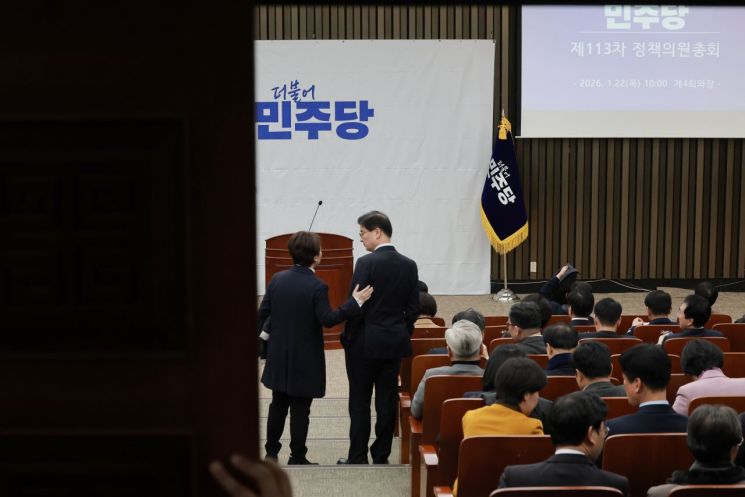
Kim, the Senior Deputy Floor Leader for Policy, said, "Since we are the ruling party, many people empathized with the President’s concerns, and they used his remarks as the basis for their own arguments."
It was reported that lawmakers had diverse views on each issue. Regarding the prosecution’s supplementary investigation rights, Kim said, "Some argued that, in principle, the supplementary investigation rights mentioned by the President are necessary, but in exceptional cases such as when the statute of limitations is about to expire, they should be recognized. Others said that even without supplementary investigation rights, there are alternative ways to verify facts or address issues through requests for supplementary investigations, so further review is needed."
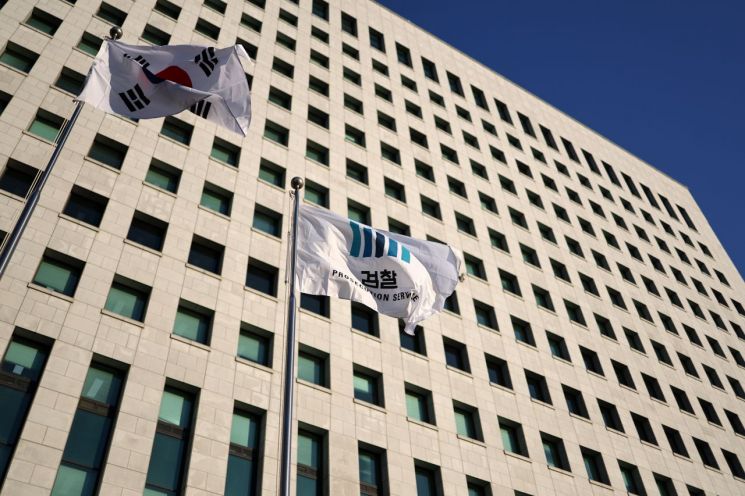
Regarding the scope of investigations by the SCIO, opinions within the party ranged from restricting it to corruption and economic crimes, to handling all nine types of crimes but limiting them through enforcement ordinances. On the issue of dividing SCIO personnel into investigative judges and professional investigators, Kim said, "Since it is possible to consider sending prosecutors and investigators to the SCIO, there were significant opinions that unnecessary hierarchical structures or the creation of a sense of alienation could be problematic, and that if personnel are transferred from other agencies such as the National Investigation Headquarters rather than the prosecution, these issues should be reconsidered."
© The Asia Business Daily(www.asiae.co.kr). All rights reserved.


















