Restricted to Processing Use Under Normal Circumstances
Expected to Reduce Government Grain Inventory Costs
Flexible Operation on a Scale of 20,000 to 30,000 Hectares
The "rice for supply adjustment" program, which restricts the use of rice to processing purposes under normal circumstances but supplies it as table rice in times of shortage, will be implemented for the first time this year.
The Ministry of Agriculture, Food and Rural Affairs announced on January 21, 2026, that starting this year, the rice for supply adjustment program will be carried out on a total scale of 20,000 to 30,000 hectares.
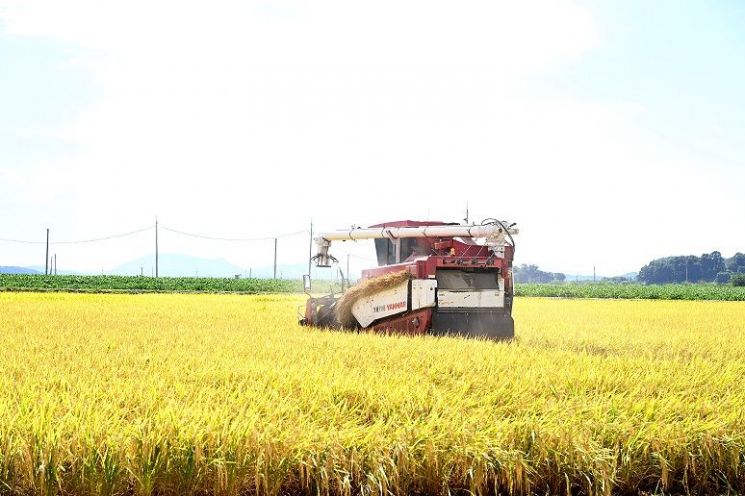
An official from the Ministry of Agriculture, Food and Rural Affairs explained, "The main policies for stabilizing supply and demand so far have been market isolation and the cultivation of alternative crops. However, in the case of alternative crops, if the cultivation area increases rapidly, it can result in an oversupply of those crops, which limits further expansion. Rice for supply adjustment is expected to greatly contribute to stabilizing the rice supply by reducing the area cultivated for table rice, without causing additional oversupply concerns for other crops such as soybeans or powdered rice."
This program, implemented for the first time this year, restricts the use of rice to processing purposes from the production stage, isolating it from the table rice market. In emergencies such as poor harvests, it can be converted to table rice to stabilize supply. By reducing the area cultivated for table rice without causing additional oversupply of alternative crops like soybeans or powdered rice, the program helps stabilize the rice supply, ensures stable income for rice farmers, and reduces government fiscal expenditures.
Farmers participating in the rice for supply adjustment program can secure a fixed income of 11.21 million won per hectare, regardless of fluctuations in rice prices, if their yield is at the average level. This income consists of a direct payment of 5 million won and a processing rice shipment payment of 6.21 million won. This is 650,000 won higher than the average income from regular cultivation. Since private new rice is supplied to rice processing companies, the government can also save on storage and management costs associated with public stockpiling and market isolation.
The government also expects this program to contribute to the growth of the rice processing industry. By supplying private new rice (rice for supply adjustment) as raw material to rice processing companies instead of government-managed old rice, product quality can be improved. The Ministry of Agriculture, Food and Rural Affairs plans to foster high-growth sectors such as traditional liquor by supplying the varieties and regions desired by rice processing companies in a customized manner, and by giving priority allocation for supply volumes.
The rice for supply adjustment program will officially begin next month. Farmers wishing to participate must submit an application form for the rice for supply adjustment program to their local township, town, or district offices between February and May. After signing a shipment contract with a Rice Processing Complex (RPC) specifying the contract volume and area, the application process is complete. Farmers who deliver the contracted volume to the RPC as agreed will receive the direct payment from the local government and the processing rice shipment payment from the RPC within the year. The government plans to grant priority participation rights next year to farmers who participate in the program this year.
Byun Sangmoon, Director General of Food Policy at the Ministry of Agriculture, Food and Rural Affairs, stated, "The rice for supply adjustment program is a policy that can achieve three goals: stabilizing the rice supply, ensuring stable farm income, and fostering the rice processing industry. As this is the first year of implementation, we ask for the active interest and participation of farmers and RPCs to ensure the program is successfully established."
© The Asia Business Daily(www.asiae.co.kr). All rights reserved.

















