Sticky Ingredients Linger Between Teeth
Flossing and Modified Bass Technique Needed
Experts have pointed out that desserts with high sugar content and strong stickiness, such as the recently popular "Dubai Chewy Cookie" (Dujjonku), can increase the risk of cavities and gum inflammation. Due to the nature of their ingredients, residues can remain for a long time at the junction between the teeth and gums, making oral care after consumption especially important.
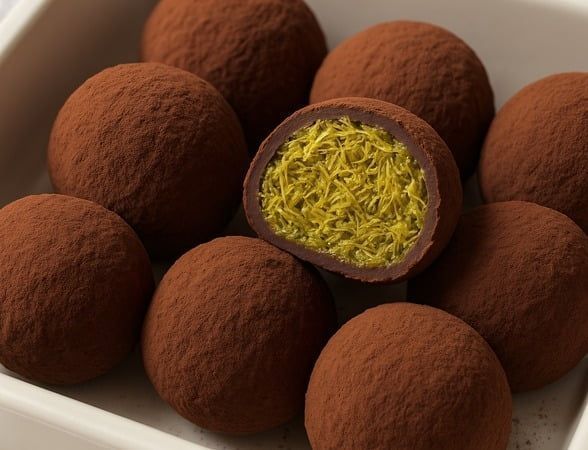
Cavities occur when bacteria in the mouth break down sugars in food, producing acid that corrodes the surface of the teeth. In particular, the higher the sugar content, the more acid is produced by bacteria, and the stickier the food, the longer it adheres to the teeth, prolonging exposure to acid.
The Stickiness of "Dujjonku" Can Cause Cavities and Gum Inflammation
Lim Hyunchang, Professor of Periodontology at Kyung Hee University Dental Hospital, stated, "Some of the ingredients used in Dujjonku can remain for a long time in the narrow gaps between teeth or at the gum margin, known as the gingival sulcus." He added, "This can lead to gum inflammation, so proper brushing is important."
Sticky ingredients such as marshmallows, which are included in Dujjonku, easily adhere to the tooth surface and may not be completely removed by regular brushing alone. The remaining residue can become a continuous nutrient source for cavity-causing bacteria, accelerating tooth decay and contributing to tartar formation.
Floss First and Use the Modified Bass Technique... Post-Consumption Care Is Key
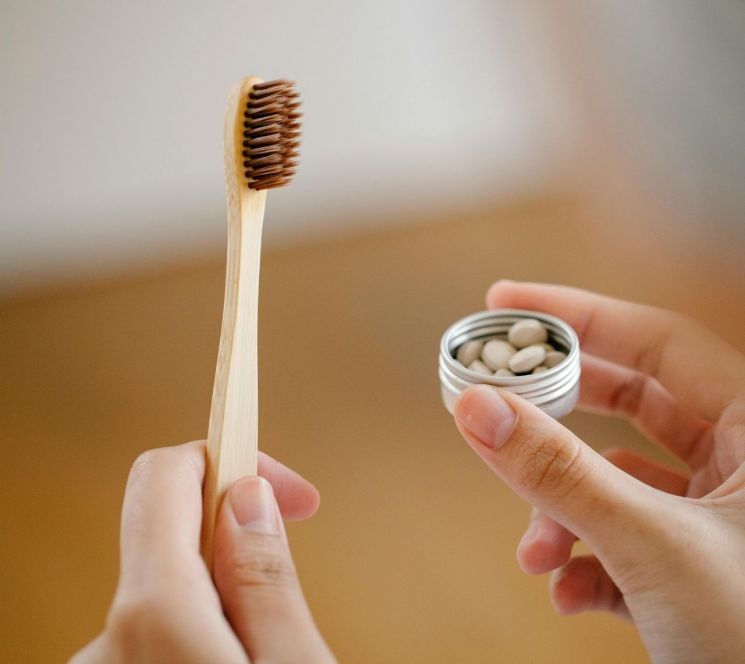
Experts advise that after eating sticky desserts like Dujjonku, more meticulous brushing than usual is necessary. In general, brushing should be done within 2 to 3 minutes after eating, and when consuming foods that easily stick between the teeth and gums, the "modified Bass technique," which involves tilting the toothbrush at a 45-degree angle and using a vibrating, sweeping motion, can be helpful.
Professor Lim explained, "The modified Bass technique helps remove dental plaque accumulated at the junction of the teeth and gums," and cautioned, "If you brush too vigorously side to side, it may actually wear down those areas, so care is needed."
Furthermore, since brushing alone cannot completely remove food stuck between the teeth, the use of supplementary oral care products is also necessary. After eating sticky desserts, the risk of "proximal caries" (cavities between teeth) increases, so the use of dental floss or interdental brushes is recommended.
Professor Lim said, "Using dental floss before brushing helps not only remove plaque but also allows the fluoride in toothpaste to penetrate between the teeth." He added, "The correct way to use floss is to cut a 30 to 40 cm length, gently insert it between the teeth, and move it up and down along both tooth surfaces." He further noted, "If the spaces between the teeth are wide, interdental brushes are more suitable than floss."
© The Asia Business Daily(www.asiae.co.kr). All rights reserved.


















