Negotiation Demands Sent to Principal Employers Such as Hyundai Motor and Mobis
Metal Workers' Union: "Negotiations with Principal Employers Possible Even Before Law Takes Effect"
Business Community: "Collapse of Single Bargaining Channel... Cau
The subcontractor union at Hankook Tire recently demanded job security and union recognition from the company, requesting negotiations. The union, established after the Daejeon plant fire in 2023, had previously continued negotiations with subcontractors, but the situation has now changed. A representative of the subcontractor union stated, "The revised Trade Union Act clearly defines the responsibilities of the principal employer," adding, "Hankook Tire can no longer hide in a legal blind spot."
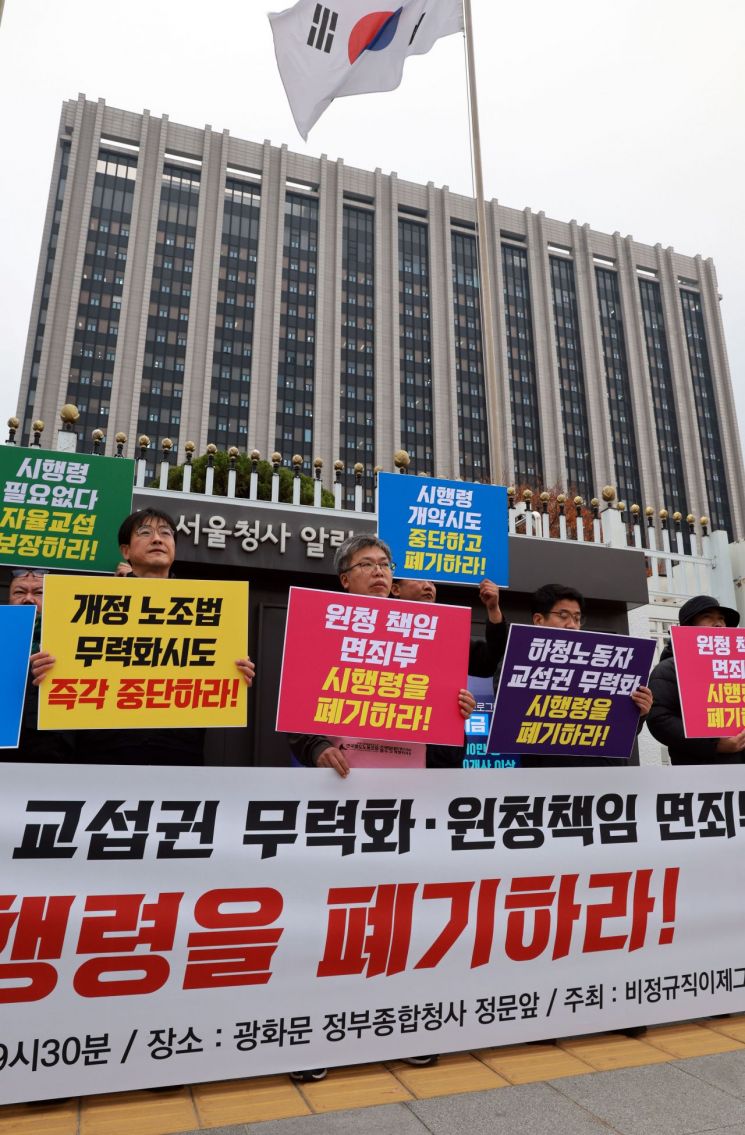
With the amendment to Articles 2 and 3 of the Trade Union Act, commonly referred to as the "Yellow Envelope Act," set to take effect in March, demands from subcontractor unions for direct negotiations with principal employers are already intensifying across the industry. As the law imposes a duty to negotiate on principal employers based on their employer status, concerns are rising that confusion will spread rapidly in the coming months.
According to labor and industry sources on January 22, there are 12 subcontractor unions affiliated with the Korean Metal Workers' Union that have sent official requests for negotiations to principal employers. The Ulsan Irregular Workers' Chapter, Jeonju Irregular Workers' Chapter, Asan Plant In-house Subcontractor Chapter, and Namyang Irregular Workers' Chapter have all demanded negotiations with Hyundai Motor Company.
Additionally, three chapters, including the Chungnam Hyundai Steel Irregular Workers' Chapter, have requested negotiations with Hyundai Steel, while four chapters, including the Hyundai Mobis Asan Chapter, have demanded negotiations with Hyundai Mobis. Affiliates of the Hyundai Motor Group, with their complex principal-subcontractor structures, have become the primary targets. Furthermore, subcontractor unions in the shipbuilding industry are pressuring shipbuilders, citing the recent boom in the shipbuilding sector, to provide performance bonuses equal to those of regular employees.
The Korean Metal Workers' Union explained, "There are 878 members in the four Hyundai Motor irregular workers' chapters, 2,535 members in the three Hyundai Steel irregular workers' chapters, 951 members in the four Hyundai Mobis chapters, and 83 members in the BMI chapter, totaling 4,447 members demanding principal employer negotiations." The union added, "Since the revised Trade Union Act is legislation that confirms the legal principle of recognizing principal employer status, negotiations with principal employers are possible even before the law goes into effect."
The union has set January 23 as the deadline for the first round of official negotiation requests to principal employers, and it is expected that demands for negotiations will continue to increase. As it has been customary for labor and management to begin negotiation procedures every January, the union plans to accelerate negotiations with principal employers.
The business community is currently taking a wait-and-see approach. Since the discussions on amending the Yellow Envelope Act began, there had been widespread expectations that demands for negotiations from subcontractor unions would surge, leading to a sense of resignation that "the inevitable has arrived."
An industry representative commented, "We repeatedly voiced concerns during the legislative process that such confusion was foreseeable, but the amendment was passed without delay, which remains a significant regret," adding, "Considerable confusion is inevitable as principal employers are now required to determine their obligations to respond to subcontractor negotiation requests."
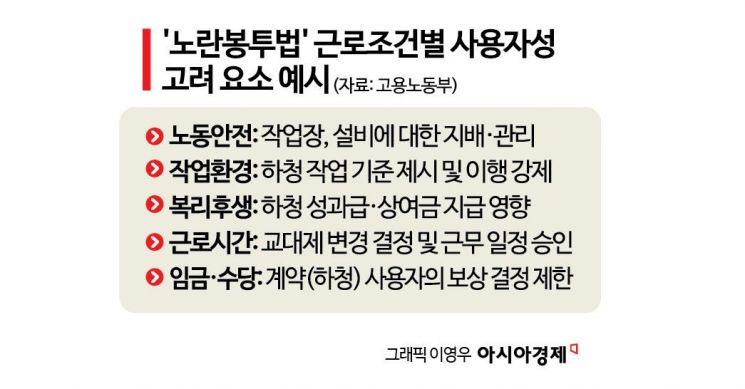
The business community also points out that, even after the law takes effect, there are still ambiguities in the interpretation guidelines of the Trade Union Act regarding the determination of principal employer status.
The guidelines state that "if the principal employer controls and supervises the overall safety and health management system, it is highly likely that employer status will be recognized." However, there are concerns that principal employer status could be acknowledged simply because a principal employer took measures to prevent subcontractor safety accidents, even when there was no legal obligation to do so. Additionally, the business community argues that factors such as whether office or break areas are controlled or determined by the principal employer should be excluded from consideration when assessing employer status.
© The Asia Business Daily(www.asiae.co.kr). All rights reserved.
!["The Woman Who Threw Herself into the Water Clutching a Stolen Dior Bag"...A Grotesque Success Story That Shakes the Korean Psyche [Slate]](https://cwcontent.asiae.co.kr/asiaresize/183/2026021902243444107_1771435474.jpg)

















