United Nations University Institute for Water, Environment and Health Study
A Significant Portion of the Global Population Lives in 'Water Insecure' Regions
"An Irreversible Situation... Minimizing Damage Must Be the Priority"
A United Nations study has revealed that billions of people worldwide are facing an irreversible "water bankruptcy" situation due to severe water shortages. While the UN has previously addressed water resource depletion using terms such as "water stress" and "water crisis," which assume the possibility of recovery, this is reportedly the first time it has used the term "bankruptcy."
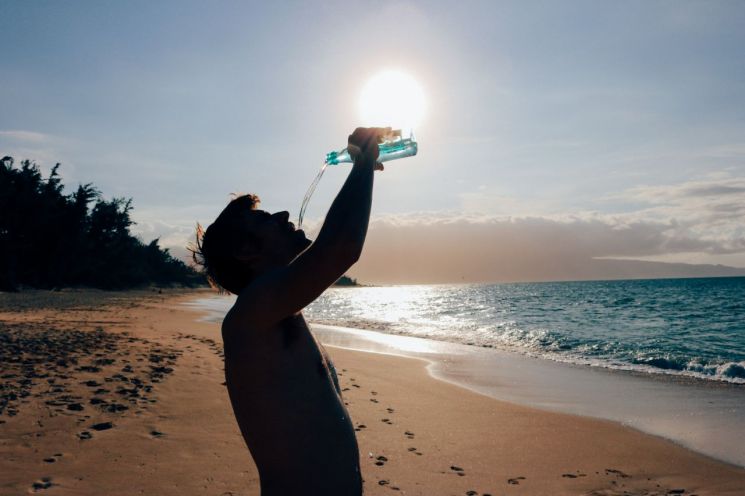 A United Nations study has revealed that billions of people worldwide are facing an irreversible "water bankruptcy" situation due to severe water shortages. Photo to aid understanding of the article.
According to Yonhap News, the United Nations University Institute for Water, Environment and Health warned in a report released on January 20 (local time) that "three-quarters of the world's population live in areas classified as 'water insecure' or 'severely water insecure'." The report found that 4 billion people globally face severe water shortages for at least one month each year.
The report stated, "Humanity has been extracting water reserves from groundwater, wetlands, and river ecosystems at an unsustainable rate for decades," and diagnosed, "With water supply deteriorating due to climate change and water pollution, we have now moved beyond the crisis stage."
Kaveh Madani, Director of the United Nations University Institute for Water, Environment and Health, said, "Water bankruptcy is not a matter of how much water there is, but how water is managed," adding, "By acknowledging the reality of water bankruptcy, we can make the difficult choices needed to protect people, the economy, and ecosystems." He emphasized that the current approach of trying to normalize water scarcity is no longer valid, and that priority should now be given to minimizing damage.
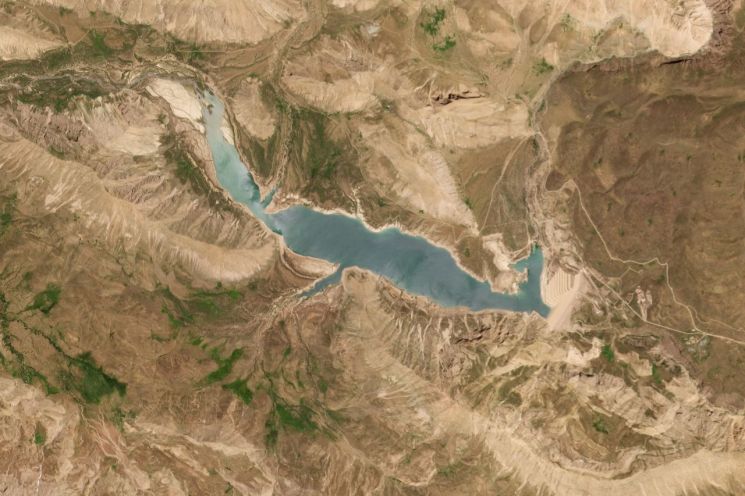 The Lar Dam on the outskirts of Tehran, Iran, which experienced the worst drought last May. Photo by AP Yonhap News
While not every basin and country on Earth is currently in a state of water bankruptcy, water resource systems affect multiple communities across regions. The main regions identified as urgently needing solutions to water issues include the Middle East and North Africa, parts of South Asia, and the southwestern United States, particularly the Colorado River and nearby reservoirs.
The United Nations Sustainable Development Goals (UN-SDGs), adopted in 2015, include the goal of "clean water and sanitation." The aim is to ensure equitable access for all to safe and affordable drinking water and sanitation facilities, reduce water pollution, and achieve sustainable water management by 2030.
This report points out that the current agenda, which focuses on drinking water and sanitation, is not suitable for many regions, and proposes officially recognizing the "water bankruptcy" situation. It also presents a new agenda that recognizes water as both a constraint and an opportunity in fulfilling commitments related to climate change, biodiversity, and land, and calls for the establishment of a water bankruptcy monitoring system utilizing Earth observation, artificial intelligence (AI), and integrated modeling.
Chilidze Marwala, Rector of the United Nations University and UN Under-Secretary-General, said, "Water bankruptcy is a cause of vulnerability, migration, and conflict," adding, "Fair management, such as protecting vulnerable groups and equitably sharing unavoidable losses, will be key to maintaining peace, stability, and social cohesion."
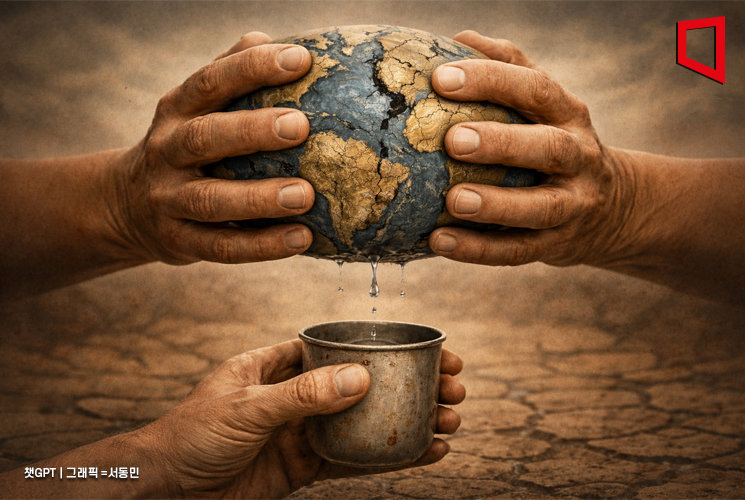
The UN is set to hold a high-level preparatory meeting for the "UN Water Conference" in Dakar, Senegal, from January 26 to 27. The main conference is scheduled to take place in the United Arab Emirates (UAE) in December.
© The Asia Business Daily(www.asiae.co.kr). All rights reserved.














