'Design Competition' Emerges Amid Technological Standardization
Coway Moves to Defend Rental Market Leadership as Samsung and LG Join the Fray
As Coway moves to establish a new "Design Monitoring Task Force (TF)" for products such as water purifiers, industry insiders interpret this as a strategic move to respond to, and maintain its leadership amid, the accelerated entry of major conglomerates like Samsung Electronics and LG Electronics into the rental market.
According to the rental industry on January 21, Coway plans to officially launch the Design Monitoring TF within the first quarter of this year to protect its intellectual property (IP), and to build a constant response system against imitation designs. The TF will report directly to the CEO and consist of specialists in IP, legal affairs, product planning, design, research and development (R&D), and public relations. Unlike the previous reactive approach, Coway intends to respond based on a design IP protection system that includes "continuous monitoring, rights review, official warnings, and legal action," and will adhere to a "zero tolerance policy."
The reason the rental industry is particularly sensitive to design is the inherent limitations in product differentiation. The industry believes that as specialization has progressed over a long period, product prices and functions have become standardized. As a result, even a small difference in design has emerged as a key competitive factor. An industry official commented, "Samsung Electronics and LG Electronics also follow the design trends popular in the industry, to the extent that it is difficult to distinguish between them except for their logos," and added, "As the gap in functionality has narrowed, minor design differences have effectively become the means of differentiation, which seems to be why Coway is trying to put stronger pressure on competitors."
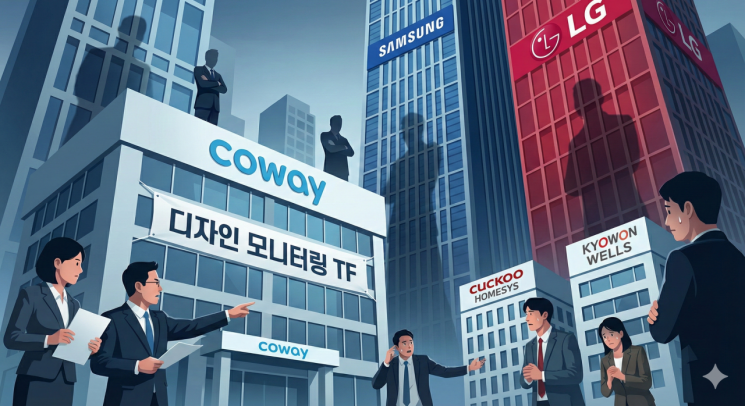
This heightened sensitivity has also contributed to a surge in lawsuits over alleged design infringement. Coway is currently in the first trial of a lawsuit against Cuckoo Homesys and Kyowon Wells, seeking a sales ban and damages for alleged infringement of the design and patent rights of its "Icon Ice Water Purifier." Additionally, Coway has raised concerns about the similarity in design between Cuckoo Homesys's massage chair and air purifier products and its own "Virex Pebble Chair" and "Power Up Air Purifier," respectively.
The trend of comprehensive home appliance conglomerates accelerating their entry into the rental market is becoming increasingly pronounced. At "CES 2026," the world's largest home appliance and IT exhibition held in Las Vegas this month, Samsung Electronics unveiled a new AI-powered ice water purifier, expanding its lineup. LG Electronics, which has steadily invested in its home appliance subscription business, is estimated to have achieved 2 trillion won in sales from this segment last year. As competition intensifies with the full-scale participation of major conglomerates, market leader Coway is seen as raising its level of asset protection.
Yoon Shinwoo, managing patent attorney at BizN Patent & Law Office, stated, "Preventing imitation competition could have the effect of resetting the rules of competition across the market." However, he also noted, "If companies with high market share strengthen their exercise of rights, latecomers may face increased costs as they need to conduct risk assessments or redesign to avoid infringement."
© The Asia Business Daily(www.asiae.co.kr). All rights reserved.

















