Chungnam Provincial Council Reveals Influx of Metropolitan Municipal Waste
"Policy Failure: Strengthened Regulations Without Expanding Treatment Facilities"
With a complete ban on direct landfilling of municipal solid waste in the Seoul metropolitan area set to take effect this year, it has been revealed that waste generated in the metropolitan area is being transported into the Chungcheong region. This situation has brought to light the structural limitations of the government’s waste management policy. Critics argue that the system, which is based on the principle of local disposal, is in fact shifting the burden onto non-metropolitan areas.
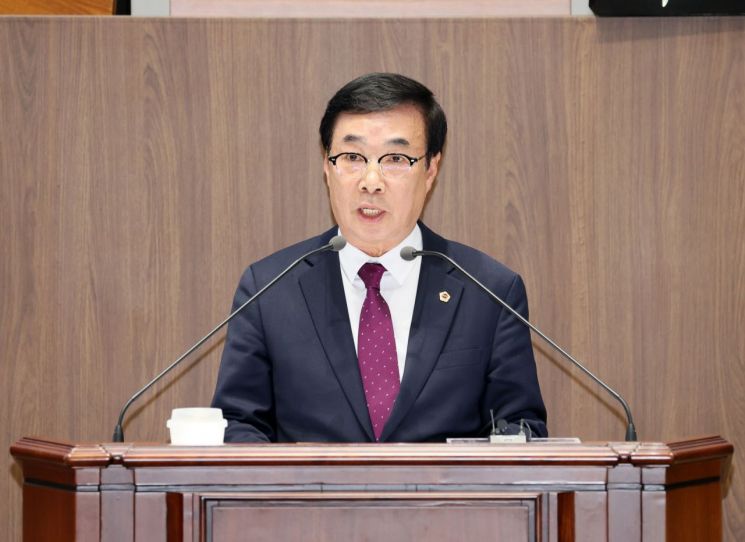
On January 20, Ki-young Park, a member of the Chungnam Provincial Council (Gongju 2, People Power Party), disclosed the reality of municipal solid waste from the metropolitan area being brought into the Chungcheong region during a five-minute free speech at the first plenary session of the 363rd extraordinary meeting. He called for a fundamental review of the current waste management policy as a whole.
Park stated, “Since the complete ban on direct landfilling of municipal solid waste in the metropolitan area came into effect on the 1st of this month, the phenomenon of waste from the metropolitan area moving into the Chungcheong region has already become a reality. Contrary to the policy’s intent, the disposal burden is being shifted to neighboring areas.”
After media reports confirmed that waste from the metropolitan area had been brought into the Chungnam region, Park requested data from the relevant departments and directly inspected the situation. As a result, it was confirmed that municipal solid waste from the metropolitan area had been received by four cities and counties and six waste treatment companies in the Chungnam region.
Regarding this, Park remarked, “It is commendable that the Chungnam provincial government and Gongju city promptly verified the facts and expressed their intention to consider strong administrative measures, such as business suspension, should any illegalities be found. Their initial response and administrative resolve were clear.”
However, he drew a clear line, stating that this issue cannot be viewed merely as the misconduct of individual companies.
Park criticized, “The very structure of the policy, which bans direct landfilling without expanding treatment facilities, is problematic. By strengthening regulations without first establishing conditions for disposal in the metropolitan area, the system has effectively paved the way for waste to be transported outside the metropolitan area.”
He particularly emphasized, “Chungnam is neither a transit point nor a solution for the metropolitan area’s waste problem. The principle that the metropolitan area is responsible for the waste it generates must be implemented as policy, not just declared as a slogan.”
He continued, “If regulations are prioritized without expanding key incineration facilities and implementing structural measures focused on reduction and recycling, the damage will inevitably be shifted entirely to non-metropolitan areas. Now is the time to move away from temporary fixes and transition to a responsible, nationwide waste management system.”
© The Asia Business Daily(www.asiae.co.kr). All rights reserved.

















