Germany Unveils 5 Trillion Won EV Subsidy Program
Chinese Automakers Also Expected to Benefit
Subsidies to Vary by Income Level
Germany has reintroduced electric vehicle subsidies that it had previously abolished.
According to the Financial Times (FT) and other sources, on January 19 (local time), the German government unveiled a new electric vehicle subsidy program worth a total of 3 billion euros (approximately 5.1 trillion won). This measure aims to support the automotive industry within Germany and expand demand for electric vehicles.
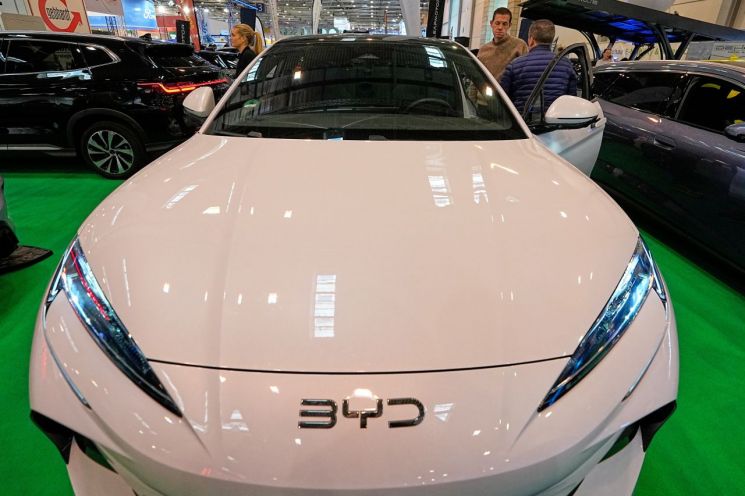
A key feature of this program is that it does not discriminate based on the country of origin. While the German government has stated its policy goal of supporting domestic automakers, it does not plan to exclude foreign manufacturers, such as those from China, from receiving subsidies.
German Environment Minister Karsten Schneider said, "Claims that Chinese automakers are taking over the German market are not reflected in actual figures or on the roads," adding, "We are simply responding to competition and are not imposing restrictions targeting any specific country."
FT reported that the new subsidy program will be open to all automakers, including those from China. As a result, there is analysis that this could be favorable for Chinese electric vehicle companies such as BYD.
BYD sold about 23,000 vehicles in Germany last year, an eightfold increase from the previous year, but its market share remains below 1%. Industry experts believe that if Chinese electric vehicles, which are highly price-competitive, become eligible for purchase subsidies, accessibility for German consumers could increase significantly. Once subsidies are provided, the perceived price of relatively affordable Chinese electric vehicles will become even lower.
This policy stance by Germany contrasts with other European countries. The United Kingdom also operates an electric vehicle purchase support system, but in practice restricts participation by Chinese companies through environmental standards and technical requirements.
Through this subsidy program, the German government plans to support the purchase or lease of about 800,000 new vehicles by 2029. Subsidies will range from 1,500 to 6,000 euros (approximately 2.6 million to 10.3 million won), depending on household income and number of household members. Plug-in hybrid vehicles and range-extended models that meet certain emissions criteria are also included in the program.
This measure reflects strong demands from the automotive industry. According to FT, battery vehicle sales in Germany fell by 27% in 2024. Although a recovery followed, with new registrations last year reaching about 545,000 units, surpassing 2023, overall market uncertainty remains.
The German Association of the Automotive Industry (VDA) welcomed the new subsidy program but pointed out that, without simultaneous expansion of charging infrastructure, the effects may be only short-term.
© The Asia Business Daily(www.asiae.co.kr). All rights reserved.

















