Ministry of Health and Welfare Issues Legislative Notice for Enforcement Decree and Rules
Residency Requirement Applies to Medical School Locations and Adjacent Areas
Service in Medically Underserved Regions such as Jeonnam, Gyeongbuk, and Gangwon
License Suspension for Failure to Fulfill Mandatory Service
In preparation for the implementation of the “Regional Doctor System,” which requires doctors to serve for 10 years in a designated region to address gaps in local and essential healthcare, the government will specify the selection process, mandatory service regions, and support measures.
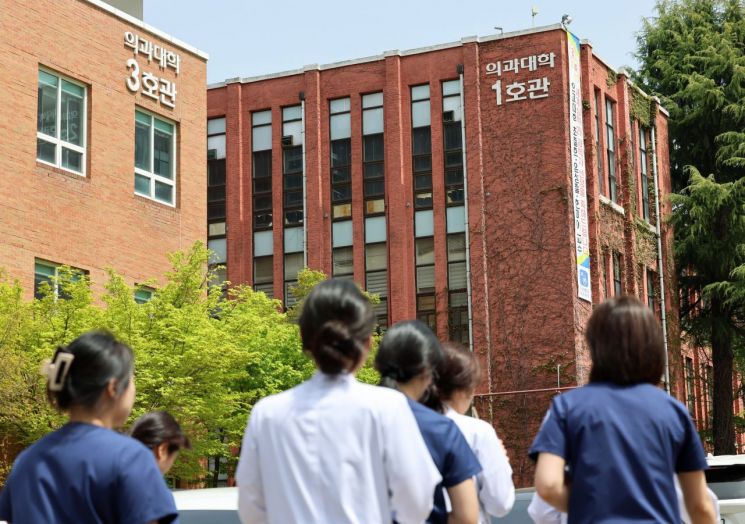
The Ministry of Health and Welfare announced on January 20 that it will issue a legislative notice for the draft enforcement decree and enforcement rules of the “Act on the Training and Support of Regional Doctors” (Regional Doctor Training Act) until February 2 of next month.
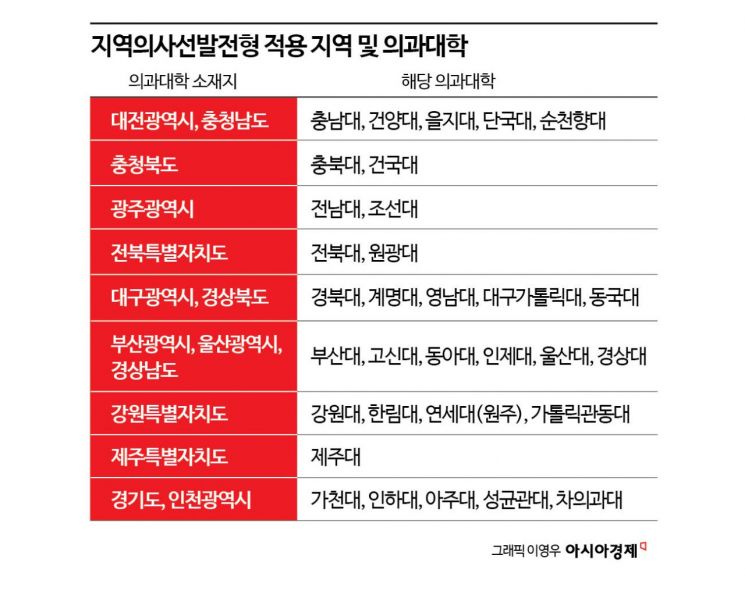
According to the draft enforcement decree and rules, the regional doctor selection track will be operated within the existing medical school admission quota and will apply to 32 universities in 14 cities and provinces with medical schools, excluding Seoul. The selection ratio will be determined and announced by the Minister of Health and Welfare in consultation with the Minister of Education, taking into account the local population size, distribution of medically underserved areas, and the current status of medical resources.
If there are vacancies after the regional doctor selection process, up to 10% of the medical school’s admission quota may be allocated to this track for the admissions process two years later.
Applicants for this track must reside in the region where the medical school is located or in an adjacent area, and must have graduated from a high school within that region. For example, to apply to medical schools in the Daejeon and Chungcheong area such as Chungnam National University, Konyang University, Eulji University, Dankook University, and Soonchunhyang University, applicants must have graduated from a high school in areas such as Cheonan, Gongju, Seosan, Nonsan, or Hongseong.
Applicants must also have graduated from a middle school outside the Seoul metropolitan area. In particular, for medical schools located in Gyeonggi Province or Incheon Metropolitan City, applicants must have graduated from both a high school and a middle school in the same locality as the medical school.
The government and local governments will provide support for tuition, textbook fees, dormitory fees, and living expenses to students admitted through the regional doctor selection track. If a student takes a leave of absence, is held back, suspended, or disciplined, this financial support will be suspended. If the student fails to fulfill the mandatory service, they must return the full amount of support received, including interest. However, if there are unavoidable circumstances such as illness, disability, or death, the repayment amount may be reduced.
Regional doctors may complete their training at training hospitals outside of Seoul. Mandatory service will primarily be assigned to medically underserved regions, and service locations will be designated in connection with the doctor's home region. Priority will be given to areas lacking essential medical personnel, such as emergency medical institutions or public medical institutions. However, if there are circumstances that make it difficult to serve in the designated region, such as the absence of available medical institutions, a different service region may be assigned.
The Minister of Health and Welfare may revoke the medical license of a regional doctor who has had their license suspended three or more times or who fails to fulfill their mandatory service.
The legal basis has also been established for the creation of a “Regional Doctor Support Center,” which will be responsible for managing and supporting regional doctors’ service. To support regional doctors, the Minister of Health and Welfare may commission central and regional support centers to corporations or national university hospitals with expertise in local healthcare and medical workforce training.
The Ministry of Health and Welfare plans to finalize the enforcement decree and rules after collecting public comments during the legislative notice period. Additional rules detailing the system’s standards will be announced later, reflecting further input from stakeholders and experts.
© The Asia Business Daily(www.asiae.co.kr). All rights reserved.


















