Legislative Notice for Amendments to the Industrial Cluster Act
Admission of Construction Businesses, Introduction of Cafes, Convenience Stores, and Cultural Facilities
Easing Barriers for Expansion of Advanced Industry Sectors
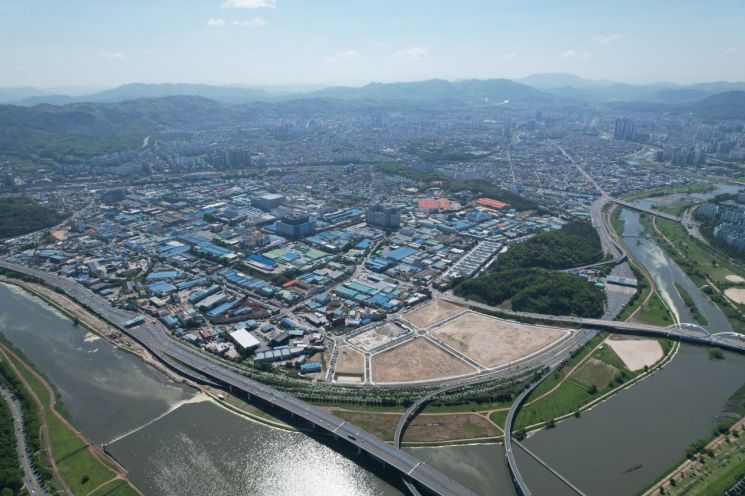
The government has announced a significant overhaul of regulations governing industrial complex locations, aiming to expand the admission of advanced and new industries and to allow for cultural and residential functions. The intention is to transform manufacturing-centered industrial complexes into integrated ecosystems that combine research, technology, and daily life, thereby enhancing competitiveness in attracting corporate investment and talent.
On January 20, the Ministry of Trade, Industry and Energy announced the pre-legislative notice of partial amendments to the Enforcement Decree and Enforcement Rules of the Act on the Promotion of Industrial Cluster Development and Factory Establishment, as well as the guidelines for industrial complex management. The key feature of these amendments is the revision of core regulations, including industry classification, facility installation, and licensing procedures, with the goal of resolving corporate difficulties and promoting advanced investment.
The main measures consist of five pillars: ▲expanding the admission of advanced and new industries into industrial complexes, ▲allowing cultural, sports, and convenience infrastructure, ▲improving residential conditions, ▲enhancing convenience for tenant companies, and ▲supplementing the system.
First, the range of industries eligible to move into industrial complexes and knowledge industry centers has been expanded. Construction businesses such as electrical, information and communication, fire safety, and national heritage restoration, which were previously restricted from entering industrial complexes, will now be allowed to move in alongside manufacturing facilities. As a result, companies that perform both manufacturing and construction functions are expected to be relieved of the burden of separating office spaces.
Additionally, the number of knowledge and information and communication industry categories has increased from 78 to 95, and advanced industry categories have expanded from 85 to 92. These industries will be permitted to establish new factories or expand existing ones within the Seoul metropolitan area, and factory installations will also be allowed in natural green zones. The Ministry stated, "This will help promote the admission of new industries and address vacancies in knowledge industry centers."
Corporate ESG management and regional contributions have also been considered. Previously, cultural and sports facilities within factories could only be used by employees, but going forward, they may also be opened free of charge to local residents and workers from nearby companies. The Ministry explained, "We have shifted the system towards utilizing industrial complexes together with the local community."
Measures to improve residential conditions are also included. In green areas and on land where waste landfill operations have ended, it will now be possible to install cultural and sports facilities as well as renewable energy installations. Auxiliary facilities such as cafes and convenience stores will be explicitly recognized as neighborhood living facilities, allowing them to be installed without changing the building's designated use. Furthermore, officetels will be permitted in knowledge industry centers outside industrial complexes, expanding residential supply to meet corporate workforce demand.
Regulatory burdens and administrative procedures for tenant companies will also be streamlined. Various application documents may now be delivered electronically via SNS or email, and business commencement notifications for non-manufacturing sites can be replaced with non-face-to-face methods such as video verification. Tenant companies will also be eligible for exceptions to the industry allocation plan, and guidance on exemption from startup fees for small-scale factory startups will be included in official forms.
System improvements are also being implemented on a large scale. These include simplifying the procedures for the Industrial Complex Admission Review Committee, updating references to the Road Name Address Act, supplementing special provisions for industrial land leasing, and reflecting revisions to the standard industrial classification-all of which will be addressed simultaneously.
The Ministry stated, "We will continue to improve the system so that industrial complexes function as hubs for advanced industries and develop into living and cultural spaces accessible to both workers and local residents. We will also continuously identify and promptly address regulatory challenges on the ground."
© The Asia Business Daily(www.asiae.co.kr). All rights reserved.

















