Cultural Heritage Administration Announces Re-legislation of World Heritage Act Enforcement Decree
First Legally Binding Case through Application to Domestic Law
Professor Kim Chungho: "Rely on 'Data,' Not Subjective Judgment"
 Heo Min, Commissioner of the Cultural Heritage Administration, is giving opening remarks at the World Heritage Impact Assessment press briefing held at the Government Complex Seoul in Jongno-gu, Seoul on January 19, 2026. Photo by Jo Yongjun
Until now, the review process for development projects around cultural heritage sites has been criticized as a "black box." This is because, rather than clear numerical standards, the fate of projects worth hundreds of billions of won has depended on the subjective judgments of review committee members.
The core of the World Heritage Impact Assessment (HIA) roadmap announced by the Cultural Heritage Administration on January 19 is to replace this "bureaucratic control" with a "system." Commissioner Heo Min emphasized the advancement of the system, stating, "Korea will likely be the first country in the world to legislate the application of HIA in domestic law."
"World's First Legislation"...From Recommendation to Requirement
At the end of last year, the Cultural Heritage Administration announced its intention to re-legislate the amendment to the Enforcement Decree of the World Heritage Act, which includes the scope of projects subject to HIA, preliminary review procedures, and standards for preparing assessment reports. Since 2011, when ICOMOS, an advisory body to UNESCO, issued its guidelines, several countries have adopted them. However, it is unusual to grant legal binding force by revising an enforcement decree, as Korea is doing.
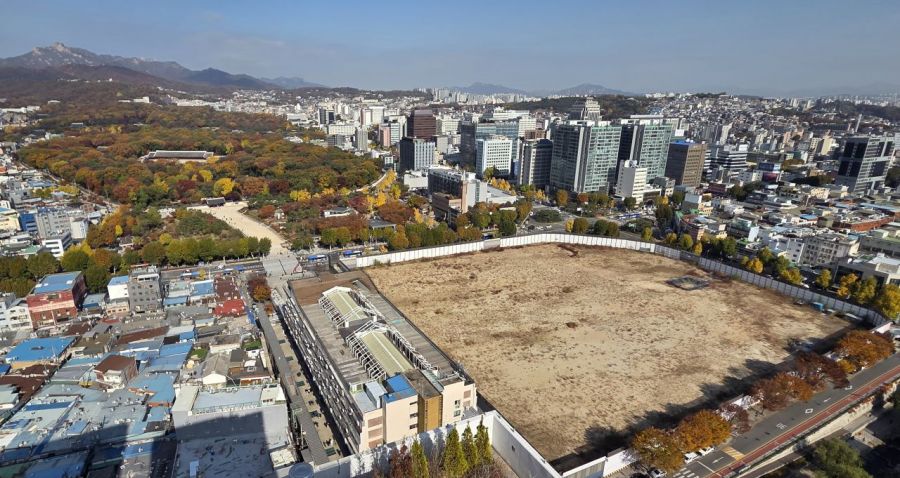
Commissioner Heo stated, "We will minimize unnecessary procedures and processes in accordance with international standards," and promised, "In particular, for critical cases such as Jongmyo Shrine, we will work directly with international organizations like the UNESCO World Heritage Centre to ensure objectivity in the assessment process." This reflects a determination to conduct assessments according to global standards, free from domestic interests.
Screening in Advance, Proving with 'Data'
Kim Chungho, professor of urban engineering at the University of Seoul and a presenter at the briefing, stressed the strict application of the "four-stage process (preliminary review - scoping - HIA - review)" as a key requirement for the successful establishment of HIA. The first step is the preliminary review. He explained, "The key is not to indiscriminately regulate all development projects, but to determine at the initial stage what impact the project will have on heritage." The logic is that if the preliminary review finds the impact to be minimal, the process should be immediately terminated, serving as a "filter" to save developers unnecessary costs and time.
If the project passes the preliminary review and a full assessment is required, it moves to the "scoping" stage. Professor Kim analyzed, "Rather than examining every aspect of the heritage, the process narrows the scope to focus on which elements of Outstanding Universal Value (OUV) are at issue. This reduces unnecessary investigations and allows administrative resources to be concentrated on the core issues."
 Heo Min, Commissioner of the Cultural Heritage Administration, is giving opening remarks at the World Heritage Impact Assessment press briefing held at the Government Seoul Office in Jongno-gu, Seoul on January 19, 2026. Photo by Jo Yongjun
The subsequent HIA stage is the domain of experts. Through quantitative data and 3D simulations, the positive and negative impacts are scientifically analyzed, and practical "mitigation measures" are derived. In Korea, this procedure was piloted starting in 2019 with the construction of the Second Geumgang Bridge in Gongju, as well as the Daehungsa Hogukdaejeon in Haenam and the Geumeowon at Magoksa Temple in Gongju.
However, challenges remain. Since the cost of assessment is usually borne by the developer, there are concerns that the results may be tailored to suit the developer's interests-so-called "self-assessment" controversy. Kang Dongjin, professor at Kyungsung University, advised, "To ensure the credibility of the assessment, it is essential to strengthen the qualification requirements for the assessment body and to operate an independent group of experts to verify the results." The Cultural Heritage Administration plans to refine the system through coordination meetings and by actively engaging with local residents.
© The Asia Business Daily(www.asiae.co.kr). All rights reserved.



















