Bank of Korea's "December 2025 Producer Price Index"
Semiconductor Prices Remain High as Winter Agricultural Product Prices Surge
The producer price index has risen for the fourth consecutive month. This sustained upward trend is attributed to strong demand for semiconductors, which has kept prices high, as well as a surge in the prices of agricultural products such as winter fruits.
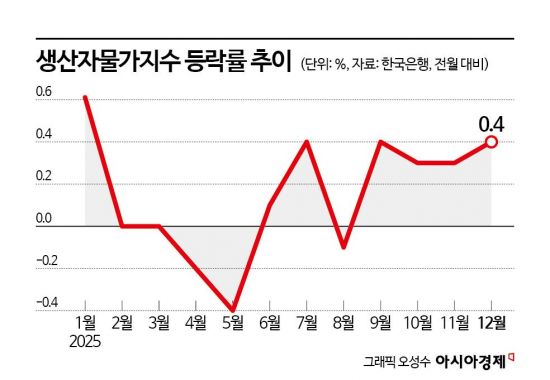
According to the "Provisional Producer Price Index for December 2025" released by the Bank of Korea on January 20, the producer price index for December 2025 stood at 121.76 (2020=100), up 0.4% from the previous month. This marks a four-month streak of increases since September. Compared to the same period last year, the index rose by 1.9%.
By category, agricultural, forestry, and fishery products led the rise in producer prices. This category increased by 3.5% from the previous month, driven by a 5.8% increase in agricultural products and a 1.3% increase in livestock products. Notably, agricultural products reversed from a -2.3% drop in November 2025 to an increase within just one month. Compared to the same month last year, agricultural products rose by 7.5%.
Lee Moonhee, Head of the Price Statistics Team at the Economic Statistics Department 1 of the Bank of Korea, explained, "In addition to seasonal supply and demand fluctuations, the delayed harvest of certain fruit items caused temporary supply disruptions." In fact, among agricultural products, apple prices rose by 19.8% from the previous month. The price of tangerines, a representative winter fruit, also jumped by 12.9%.
However, Lee added, "It is not unusual for agricultural products to show month-on-month increases during the summer and winter, so this upward trend is not unprecedented. The year-on-year increase can also be attributed to differences in shipping periods and supply-demand conditions for each item, which led to varying trends by product."
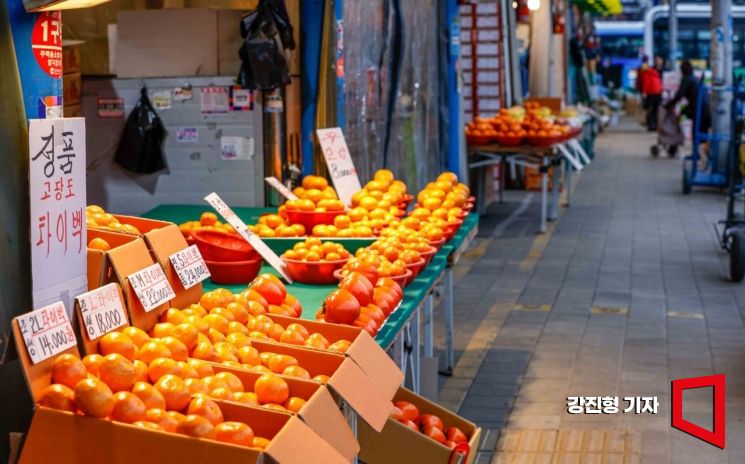 Seoul Dongdaemun-gu Cheongnyangni Agricultural and Marine Products Market is showing a quiet scene. Photo by Kang Jin-hyung
Manufactured goods rose by 0.4% from the previous month. In December 2025, semiconductor prices surged, leading to a 2.3% increase in computers, electronics, and optical devices compared to the previous month. Primary metal products also rose by 1.1% during the same period.
Electricity, gas, water, and waste services increased by 0.2% from the previous month, driven by a 1.6% rise in industrial city gas and a 2.3% increase in sewage treatment. The service sector rose by 0.2% during the same period, mainly due to a 0.4% increase in restaurant and accommodation services and a 0.7% increase in financial and insurance services.
The producer price index for 2025 rose by 1.2% compared to the previous year.
Despite the producer price index rising for four consecutive months, some point out that its impact on consumer prices may be limited.
Lee explained, "The consumer price index is mainly compiled based on consumer goods purchased by households, while the producer price index includes raw materials, intermediate goods, and capital goods, so the coverage and price survey standards differ, which can lead to different trends. While the overall trends may be similar, the consumer price index may show different patterns depending on the time lag in reflection, companies' pricing policies according to market competition, and government price stabilization measures."
He further noted, "The recent rise in the producer price index is mainly due to higher prices of intermediate goods such as semiconductors, so there may be a time lag before it affects the consumer price index. Additionally, since international oil prices are still declining on a monthly average basis, these changes could also impact consumer prices, especially petroleum products."
In December 2025, the domestic supply price index rose by 0.4% from the previous month and 1.3% year-on-year. The domestic supply price index measures price changes for goods and services supplied domestically (including both domestic shipments and imports) to understand the transmission of price fluctuations. By stage of production, prices for raw materials (up 1.8%), intermediate goods (up 0.4%), and final goods (up 0.2%) all increased.
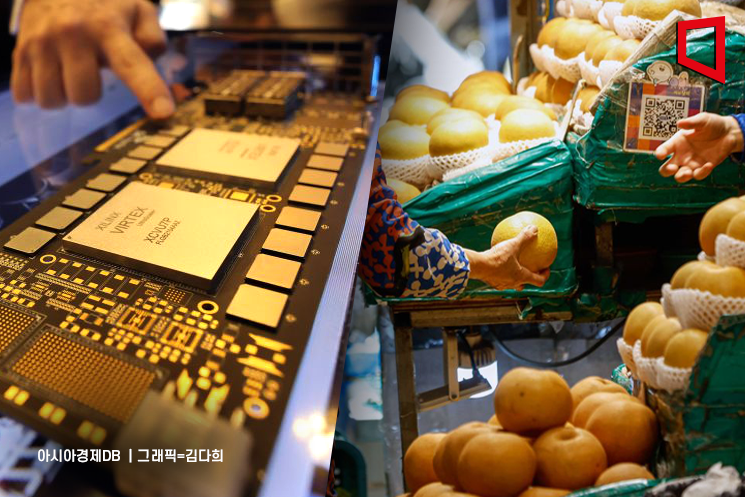
The total output price index, which includes both domestic shipments and exports, also rose by 0.4% from the previous month. This was due to increases in manufactured goods (up 0.5%) and agricultural, forestry, and fishery products (up 3.2%). Year-on-year, the index increased by 2.6%.
© The Asia Business Daily(www.asiae.co.kr). All rights reserved.
![Clutching a Stolen Dior Bag, Saying "I Hate Being Poor but Real"... The Grotesque Con of a "Human Knockoff" [Slate]](https://cwcontent.asiae.co.kr/asiaresize/183/2026021902243444107_1771435474.jpg)


















