Decentralization Hinges on Expanding the Autonomy of Cities, Counties, and Districts
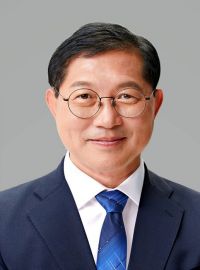 Sungwhi Kang, Deputy Floor Leader for Policy of the Democratic Party of Korea.
Sungwhi Kang, Deputy Floor Leader for Policy of the Democratic Party of Korea, commented on the discussion regarding the administrative integration of Gwangju and Jeonnam, stating, "The success of the Gwangju·Jeonnam Special City depends on the substantial empowerment of basic local governments."
While Kang agreed that the launch of the Gwangju·Jeonnam Special City could serve as an important turning point for strengthening local autonomy and achieving balanced national development, he pointed out that the decentralization felt by residents ultimately depends on whether the autonomy of cities, counties, and districts is expanded.
He stated, "A model of integration that concentrates authority at the metropolitan level will find it difficult to bring about meaningful changes in residents' lives," adding, "The Gwangju·Jeonnam Special City should not be about expanding administrative boundaries, but rather about redesigning decentralization to strengthen basic local governance."
He particularly emphasized that, since administration most closely tied to daily life is carried out by basic local governments, it is important to avoid a structure in which their functions and roles are reduced or financial support is diminished after the launch of the special city. If basic local governments are downgraded to subordinate executive bodies of the metropolitan government, both the justification and effectiveness of integration could be undermined.
Kang referred to the principles of subsidiarity and local administration as fundamental to local autonomy, explaining that policy decisions and implementation should take place at the administrative unit closest to the residents. He said, "If, after the launch of the special city, basic local governments lose their independent decision-making and executive authority, such integration can never succeed."
He also argued that, upon the launch of the special city, the authority of basic local governments must be institutionally and clearly guaranteed. To this end, he stressed the need for measures such as strengthening fiscal authority by expanding the transfer of national taxes to local taxes, securing stable independent financial resources, and establishing institutional safeguards to prevent reductions in grants and adjustment subsidies.
In terms of organizational management, he stated that the autonomy of basic local governments must be ensured. He added that organizational and personnel authority should be substantially guaranteed to allow for policy design tailored to local circumstances, and that work closely related to residents, such as welfare, urban planning, and environmental affairs, should be boldly transferred to basic local governments.
Kang stated, "A special city should not be judged by its size or the scale of its authority, but by how much it actually improves the lives of residents." He added, "A dual decentralization model that robustly empowers basic local governments, as much as it strengthens metropolitan authority, should be the core design principle of the Gwangju·Jeonnam Special City."
He further emphasized, "The success of the special city depends on the vitality of basic local governance," and insisted, "We must develop genuine local autonomy that residents can truly experience by strengthening the autonomy of cities, counties, and districts."
© The Asia Business Daily(www.asiae.co.kr). All rights reserved.
















