52nd Memorial Attended by Grandson and Family for the First Time
The Spirit of "Active Independence" Resonates Throughout the Memorial Hall
The history of the independence movement is preserved in records, but Doctor Park Yeol's struggle was ultimately proven through action.
His spirit of resistance, which called for freedom and justice at the heart of Japanese imperial rule, was passionately revived once again in Mungyeong on January 17.
The 52nd memorial service for Doctor Park Yeol was solemnly held at 10:30 a.m. that day at the Park Yeol Memorial Hall in Mungyeong.
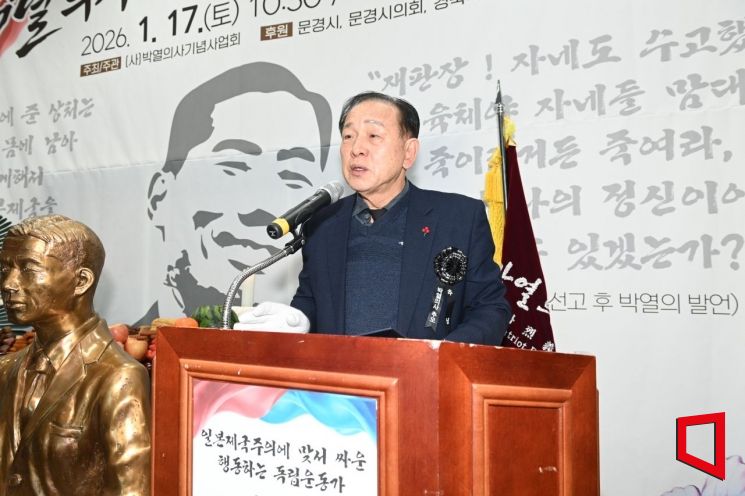
More than 200 people attended the memorial service to honor his legacy, including Doctor Park Yeol's grandson and family members, Shin Hyunguk, Mayor of Mungyeong, Lee Jeonggeol, Chairman of the Mungyeong City Council, city and provincial council members, Lee Kyubong, Chief of Mungyeong Police Station, Shin Dongsung, Commander of the Mungyeong Yechandae, Park Inwon, former Chairman of the Park Yeol Memorial Project Association, Park Kyungkyu, President of the Mungyeong Branch of the Korean Senior Citizens Association, leaders of local security and veterans' organizations, leaders of Confucian organizations, and local citizens.
Born in 1902 in Mungyeong, North Gyeongsang Province, Park Yeol participated in the March 1st Movement and later moved to Japan, where he devoted himself to the anarchist independence movement. In 1926, he was sentenced to death on charges of plotting to assassinate the Japanese emperor, but his sentence was commuted to life imprisonment, and he endured 22 years and 2 months in prison.
He is regarded as the independence activist with the longest incarceration record, known as an activist and thinker who fought at the very heart of Japanese imperialism.
Even after Korea's liberation, he dedicated himself to the rights of Koreans in Japan by organizing the Korean Residents Union in Japan and serving as its head from the first to the fifth term. However, during the Korean War, he was forcibly taken to North Korea, where he passed away on January 17, 1974, at the age of 73.
In 1989, the government posthumously awarded him the Order of Merit for National Foundation, Presidential Medal, in recognition of his achievements.
During the pre-ceremony event, the harmonica club of the Mungyeong Cultural Center performed songs including "Farewell at Busan Station," said to be one of Park Yeol's favorite songs, heightening the atmosphere of remembrance. The main ceremony proceeded with a national tribute, memorial speeches, readings of commemorative writings, the donation and recitation of a memorial poem, the laying of flowers and incense, and the chanting of "manse" three times.
In particular, student representatives-both male and female-from Hamchang Elementary School, Park Yeol's alma mater, read memorial writings they had composed themselves, reviving the spirit of their predecessor in today's language and receiving a warm response. The reading, which went beyond a simple program item, deepened the meaning of the memorial service by demonstrating that the "heart for the nation" continues across generations.
Suhwon, Chairman of the Park Yeol Memorial Project Association, said, "This year's 52nd memorial service was especially meaningful because Doctor Park Yeol's family members attended in person," adding, "Let us transform Doctor Park Yeol's patriotic spirit into energy for the development of Mungyeong and the Republic of Korea."
He continued, "We will quietly begin preparations at the private level to one day bring Doctor Park Yeol's grave, currently located at the Patriotic Martyrs' Cemetery in Pyongyang, back to his homeland."
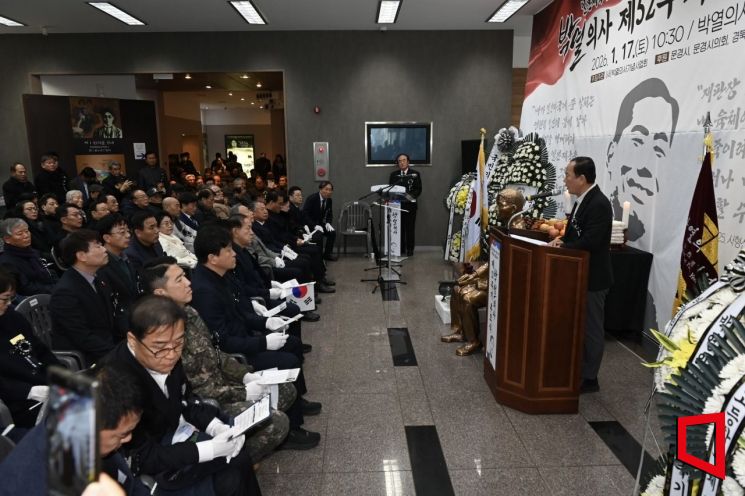
Shin Hyunguk, Mayor of Mungyeong, emphasized, "Doctor Park Yeol was an activist who, even under the oppression of Japanese rule, upheld the values of freedom and justice and made the world aware of our nation's will for independence. I hope that his dedication to the independence of our nation and the dignity of our people will live on this land forever."
The memorial service did not end with commemorating one person's life. The moment Park Yeol's name was called once more, Mungyeong became a "city of remembrance," connecting the past to the present, while its citizens quietly reaffirmed their responsibility to carry history into the future.
© The Asia Business Daily(www.asiae.co.kr). All rights reserved.













