Establishment of Dedicated Teams and Divisions
Development of Specialized Programs
An elderly resident living alone in Seodaemun District, who had just been discharged after knee replacement surgery, felt overwhelmed on the way home. Not only was it difficult to travel safely from the hospital to their house due to limited mobility, but they were also anxious about how to manage daily life after discharge.
This resident used the district's "Safe Transportation Service for Discharged Patients" to return home safely, and was subsequently connected to the Integrated Care program, receiving tailored services such as household support and exercise prescriptions. The resident said, "I felt reassured, as if someone was with me until the very end."
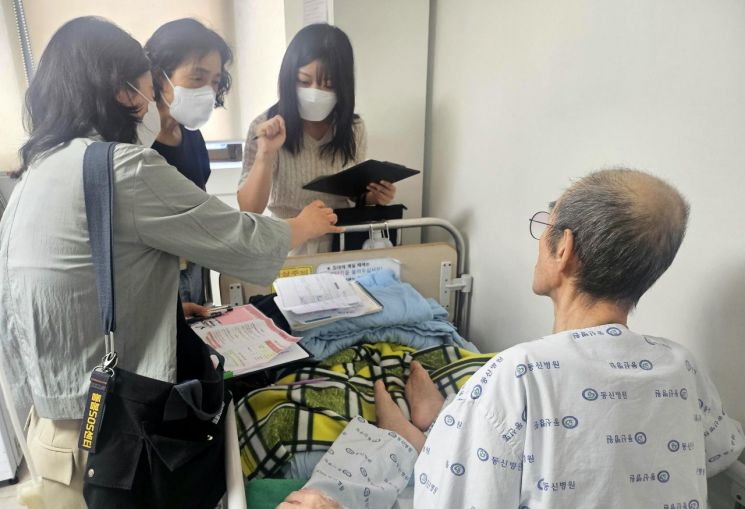 Seodaemun District is preparing to implement the Ministry of Health and Welfare's "Integrated Care" main project by promoting the specialized project "Safe Transportation Service for Discharged Patients." Provided by Seodaemun District.
On March 27 this year, the "Act on Integrated Support for Community Care Including Medical and Nursing Services" (Integrated Care Act) will be fully implemented. This law integrates and connects medical, nursing, and welfare services so that individuals who have difficulty with daily activities due to frailty, disability, illness, or accident can continue to lead healthy lives in their own homes.
This is a proactive response to social changes such as accelerating aging, an increase in single-person households, and a widening gap in care. The core goal is to resolve the inconvenience residents have faced, as health, welfare, nursing, and housing services have operated separately, forcing them to visit multiple agencies.
With the law's implementation approaching, Seoul’s district offices are preparing in earnest by reorganizing their structures, securing budgets, and developing specialized programs. As of January 1, Guro District established the "Integrated Care Division," which consists of three teams: Care Policy, Care Support, and Single-Person Household Care. This division oversees the entire process, from policy planning and identifying eligible individuals to service coordination and follow-up management. In particular, through financial business agreements with hospitals, the district will provide "Discharged Patient Linked Care Services" that connect discharged patients to necessary medical and care services, as well as "Integrated Daily Living Care Services" to support the daily lives of those in need.
Seodaemun District also launched the "Integrated Care Planning Team" this year, operating a two-team system. Building on last year’s field experience led by the "Integrated Care Support Team" within the district’s Life Care Division, the district has now separated and strengthened the functions of planning, coordination, and evaluation from field support. Last year, Seodaemun District was selected for Seoul’s "Integrated Care Specialized Project Contest," secured funding, and has been running the "Safe Transportation Service for Discharged Patients" for seniors, chronic patients, and those recovering from surgery.
On January 19, Mapo District established the Integrated Care Team within the Welfare Policy Division of the Welfare Partnership Bureau. The district has set up Integrated Support Desks at local community centers to identify eligible residents, conduct home visits, and manage everything from service linkage to follow-up in a one-stop process. Integrated Information Desks have also been established at related medical, nursing, and welfare institutions to make it easier for residents to access relevant services.
Dongdaemun District created a "Care Policy Team" within the Welfare Policy Division and allocated 600 million won to expand the scope of services. Through last year’s pilot project, the district surveyed 202 people, identified 59 eligible for integrated care, and has so far provided 111 service connections to 32 individuals. This year, the district plans to identify over 400 eligible residents and expand service linkages. In particular, to prevent gaps in care when patients return home after treatment, the local care network will intervene from the discharge stage to provide bundled medical, nursing, and housing services as needed.
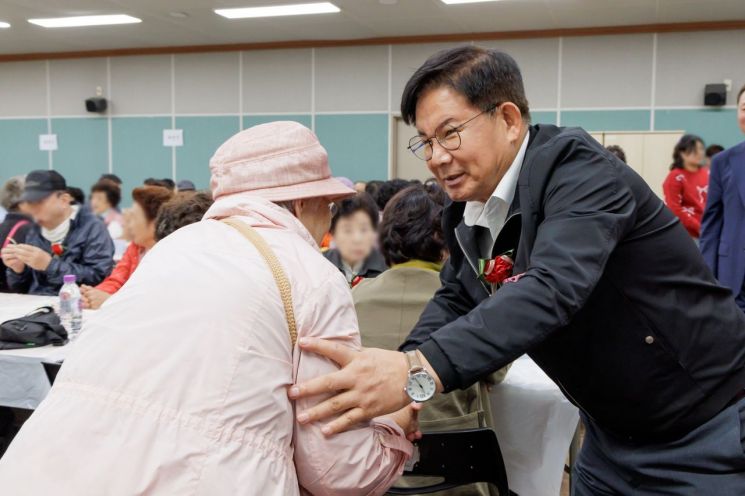 Park Kangsoo, Mayor of Mapo District, is checking on the well-being of the elderly. Provided by Mapo District.
The common principle shared by each district is "one-stop application, tailored support." The core idea is that residents can receive integrated support across five key areas-healthcare, medical, nursing, care, and housing-by applying just once. The primary beneficiaries are seniors aged 65 and older, with plans to expand eligibility to people with disabilities starting in March.
Each district stated, "We will continue to strengthen community-based care systems so that residents in need can receive timely services," adding, "We are committed to providing stable, integrated care services that residents can truly experience in their daily lives."
© The Asia Business Daily(www.asiae.co.kr). All rights reserved.
![From Bar Hostess to Organ Seller to High Society... The Grotesque Con of a "Human Counterfeit" [Slate]](https://cwcontent.asiae.co.kr/asiaresize/183/2026021902243444107_1771435474.jpg)

















