Protests Prolonged by Soaring Inflation and Economic Hardship
Estimated 18,000 Deaths in Demonstrations
Iranian Authorities Blame United States for Crisis
Iran has strongly condemned the United States' remarks about regime change in Iran, stating that such comments "mean all-out war." Amid growing anxiety over soaring inflation, protests in Iran have resulted in an estimated 18,000 deaths. Iranian authorities are attributing responsibility for the current situation to the United States and Israel.
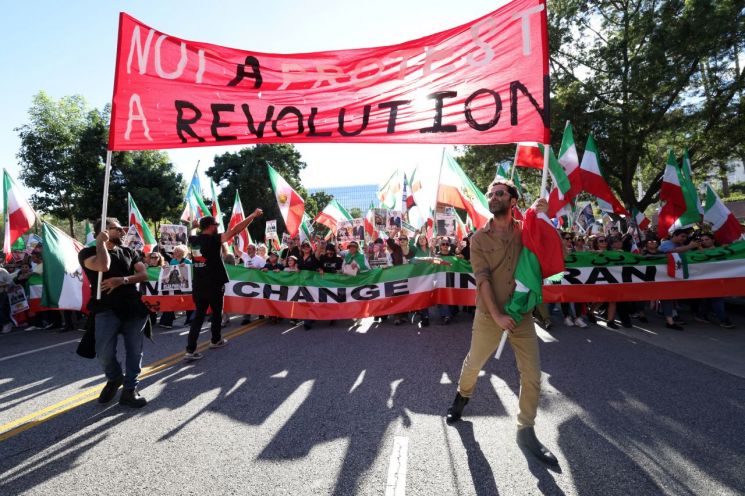
On January 19 (local time), Iranian President Masoud Pezeshkian wrote on X (formerly Twitter), "An attack on our nation's Supreme Leader is tantamount to an all-out war against the Iranian nation." He continued, "If there are hardships and difficulties in the lives of our beloved Iranian people, one of the causes is the long-standing hostility and inhumane sanctions imposed by the U.S. government and its allies."
This message appears to be a response to recent remarks by U.S. President Donald Trump regarding regime change in Iran. In an interview with the U.S. political media outlet Politico on January 17, President Trump said, "It is time to look for new leadership in Iran." This was interpreted as a call to end the 37-year rule of Iran's Supreme Leader, Ayatollah Seyyed Ali Khamenei. President Trump criticized the Iranian authorities' harsh crackdown on anti-government protests, stating, "As a leader of a country, his (Khamenei's) crime is that he has completely destroyed the nation and used a level of violence never seen before."
As the protests in Iran have yet to subside, the number of casualties continues to rise. Supreme Leader Khamenei stated in a national television address that "thousands" have died in the protests. According to the Associated Press, this is the first time an Iranian leader has mentioned the scale of casualties resulting from the wave of protests that began on December 28 last year and led to a violent crackdown.
Foreign media outlets report that the actual death toll may be much higher than the official figures, providing more specific estimates of the damage. The Sunday Times, the weekend edition of the British daily The Times, reported, based on reports obtained from local doctors, that between 16,500 and 18,000 people have died and 330,000 have been injured. The U.S.-based Human Rights Activists News Agency (HRANA) reported that at least 3,308 people have died as a result of the crackdown. The Associated Press analyzed, "This is a higher number of deaths than any protest or unrest in Iran in decades, reminiscent of the chaos during the 1979 Iranian Revolution."
Supreme Leader Khamenei and other Iranian authorities are shifting responsibility for the economic and human losses caused by the protests to the United States and other external actors. Targeting President Trump, Supreme Leader Khamenei called him a "criminal" and pointed to the United States as the root cause of the situation. According to Iranian authorities, the United States, Israel, and armed groups abroad incited the protesters, escalating the demonstrations and ultimately increasing the number of victims. Iranian authorities have also claimed that some protesters are mercenaries linked to the intelligence agencies of Israel and the United States.
Contrary to the claims of Iranian authorities, the prevailing assessment is that the unrest in Iran was triggered by widespread anger over surging inflation, the collapse of the currency, and mounting economic hardship, which erupted into protests. The British newspaper The Guardian analyzed, "Protests over the rising cost of living have transformed into broad anti-government demonstrations demanding regime change."
The protests in Iran, which had escalated to the point where military action was being considered, have recently shown signs of subsiding. President Trump reportedly considered a military strike against Iran at one point, but abandoned the plan following objections from Israel and others. According to the U.S. media outlet Axios, Israeli Prime Minister Benjamin Netanyahu told President Trump that Israel was not prepared for Iranian retaliation and questioned the effectiveness of U.S. airstrikes. Axios also reported that Saudi Crown Prince Mohammed bin Salman urged restraint, citing risks to regional stability.
Iranian authorities are also emphasizing that the situation is being brought under control by announcing the reopening of schools and the restoration of internet access. According to local Iranian media, the country's domestic intranet messenger application is expected to be reactivated soon. When the protests spread, Iranian authorities had completely cut off international phone and internet connections on the afternoon of January 8. Schools, which had been closed for a week, also reopened on this day.
© The Asia Business Daily(www.asiae.co.kr). All rights reserved.

















