This Year's Domestic Sales Targets: 41.0% Set for Expansion, 40.0% at Last Year's Level, 19.0% Set for Reduction
Export Targets: 53.7% at Last Year's Level, 26.3% Set for Expansion, 20.0% Set for Reduction
Core Management Direction: 68.0% Stability (Maintenance), 22.0% Expansion (Growth), 10.0% Contraction
Key Variables in Management Planning: "Economic and Demand Outlook" (44.0%), "Cost and Profitability Factors" (31.0%), in Order
Exchange Rate Assumption for Planning: 1,390 Won per Dollar, Funding Interest Rate Forecast at 3.08%
Risk Factors for the Korean Economy
The Gumi Chamber of Commerce and Industry in North Gyeongsang Province (Chairman Yoon Jaeho) conducted the "2026 Gumi Manufacturing Companies' Business Performance Targets and External Environment Survey" for 100 local manufacturing companies from December 1 to December 12, 2025.
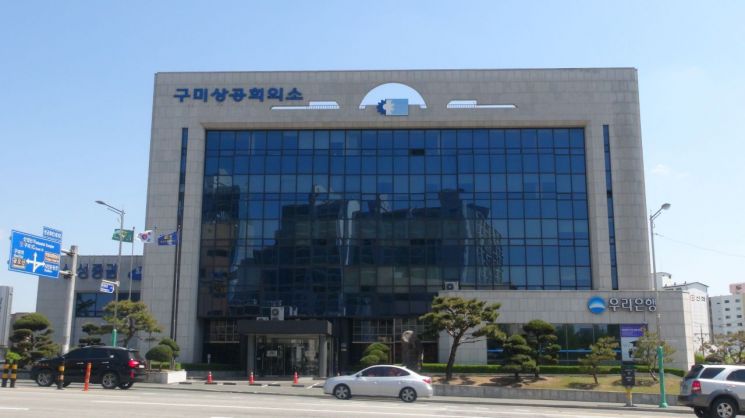
Regarding domestic sales targets set by Gumi manufacturers for this year compared to last year's actual performance, 41.0% of companies set expanded targets, 40.0% set the same targets, and 19.0% set reduced targets.
For exports, 53.7% of companies set targets at the same level as the previous year, 26.3% set expanded targets, and 20.0% set reduced targets.
Amid these figures, the core direction of this year's management plans shows that 68.0% of companies chose stability (maintenance) management, followed by expansion (growth) management at 22.0%, and contraction management at 10.0%. Compared to the same survey conducted two years ago, the proportion of companies choosing stability management increased by 17.0 percentage points, while those choosing expansion (growth) management decreased by 13.0 percentage points.
The main factors influencing such conservative management planning were cited as follows: "economic and demand outlook" (44.0%) was the most frequently mentioned, followed by "cost and profitability factors" (31.0%), "external trade risks" (13.0%), "changes in policy and regulatory environment" (8.0%), and "internal company circumstances" (4.0%).
In other words, as uncertainty in external environmental factors grows, Gumi manufacturers set their average exchange rate assumption for management planning at 1,390 won per dollar, which is more than 60 won lower than the recent average exchange rate in January (1,451 won). This suggests that stabilizing the foreign exchange market is urgently needed. The expected funding interest rate was projected at 3.08%, somewhat lower than the early 4% range seen last year.
Under these circumstances, the most frequently cited downside risk to South Korea's economic growth was "exchange rate factors (high exchange rates and increased volatility)" at 22.5%, followed by "trade uncertainty stemming from Trump" at 22.0%, "global economic slowdown" at 19.0%, and "oil and raw material price volatility" at 18.0%.
Finally, when asked which policies the government should prioritize to revitalize the economy and improve corporate performance this year, the most requested were "domestic investment promotion policies" (24.0%), "strengthening trade response such as tariffs" (21.5%), and "exchange rate stabilization policies" (21.0%). Other requests included "policies to boost consumption" (11.5%), "support policies for crisis industries" (11.0%), "support measures for fostering AI and advanced industries" (9.0%), and "policies to vitalize the stock market" (1.5%).
Shim Kyujeong, Head of Economic Research and Corporate Attraction at the Gumi Chamber of Commerce and Industry, commented that the fact that more than two-thirds of Gumi manufacturers are choosing stability (maintenance) management reflects the significant impact of external uncertainties. However, he emphasized that Gumi is transforming into an industrial complex of opportunity, with prospects for greater advancement as the "Southern Semiconductor Belt," the attraction of AI data centers, and the expansion of new airport networks, making comprehensive government support more crucial than ever.
© The Asia Business Daily(www.asiae.co.kr). All rights reserved.
![From Hostess to Organ Seller to High Society... The Grotesque Scam of a "Human Counterfeit" Shaking the Korean Psyche [Slate]](https://cwcontent.asiae.co.kr/asiaresize/183/2026021902243444107_1771435474.jpg)
















