Kiosks and Security Baskets Are High-Risk Areas for Bacteria
Experts Warn: "Pay More Attention to Frequently Touched Surfaces Than Waiting Areas"
An analysis has revealed that in airports, where thousands of people pass through each day, the highest risk of infection does not come from waiting areas, but rather from facilities that are repeatedly touched by many people, such as self check-in kiosks and security screening baskets.
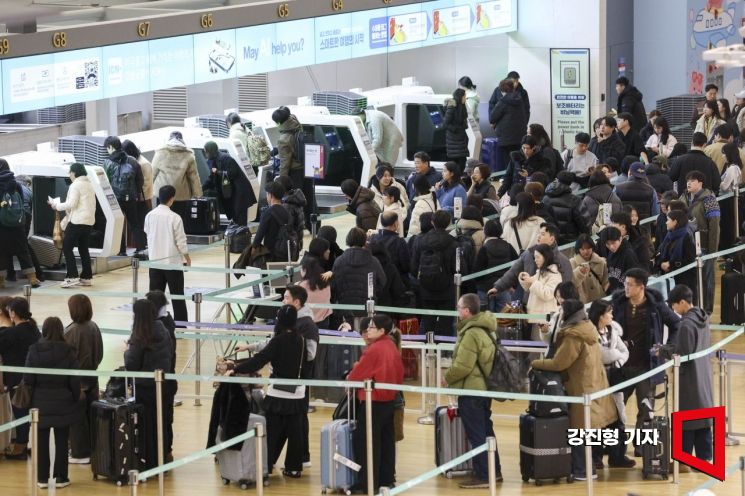 The scene of Incheon International Airport Terminal 1 bustling with travelers. Photo by The Asia Business Daily
Recently, the American media outlet Island introduced airport facilities with particularly high levels of bacterial contamination, based on various scientific studies and hygiene-related data. Experts commonly pointed out, "Although airports have a high population density, the risk of infection is greater on surfaces with frequent contact than in the space itself."
The More Frequently Touched a Facility Is, the Greater the Infection Risk
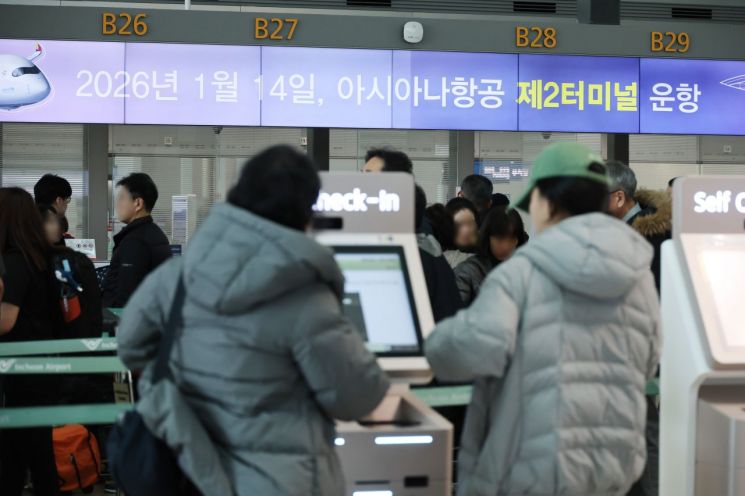
Self check-in kiosks were identified as the most contaminated facilities. In some cases, more than 250,000 bacterial colonies have been detected on touchscreen surfaces, which is higher than the average toilet seat. Since an unspecified number of people use these kiosks consecutively and they are not disinfected after each use, bacteria can easily accumulate. Some viruses are also known to survive on touchscreen surfaces for several days.
The plastic baskets used at security checkpoints were also singled out as high-risk facilities for infection. According to a 2018 study published in the international journal 'BMC Infectious Diseases,' more than half of the security baskets at Helsinki-Vantaa Airport in Finland tested positive for viruses that cause the common cold and flu. In contrast, these viruses were not found on restroom surfaces at the same airport.
A study by the American data analytics company Travelmath, which investigated bacterial contamination at major airport touchpoints, also identified security screening baskets as "the most unpleasant yet unavoidable items."
Experts recommend minimizing direct contact by placing mobile phones or small electronic devices in a pouch or plastic bag rather than putting them directly into the security basket.
Escalators and Gate Seats Are Also Hygiene Blind Spots
Escalator handrails in airports are also considered areas where bacteria easily accumulate. Due to the properties of rubber materials, contamination is not easily visible, and oil and bacteria can easily seep into tiny crevices. One 2017 study of shopping mall escalators found more than 50 types of bacteria, including E. coli and Staphylococcus aureus.
Public restrooms are known to harbor bacteria not only on toilet seats but also on sinks, flush handles, and door handles. However, airport restrooms are generally considered to be relatively well-maintained due to more frequent cleaning compared to other public facilities.
Experts emphasized, "Since airports are places where high-density contact is repeated, carrying hand sanitizer or disinfectant wipes and thoroughly washing your hands are the most effective ways to prevent infection."
© The Asia Business Daily(www.asiae.co.kr). All rights reserved.
![User Who Sold Erroneously Deposited Bitcoins to Repay Debt and Fund Entertainment... What Did the Supreme Court Decide in 2021? [Legal Issue Check]](https://cwcontent.asiae.co.kr/asiaresize/183/2026020910431234020_1770601391.png)

















