"Minimizing the Impact on Korean Companies"
Thorough Analysis of Taiwan Agreement... Reports from Relevant Ministries and Communication with Industry Planned
Coupang Incident "Inappropriate to Interpret as a U.S.-Korea Diplomatic or Trade Issue"
The Blue House has announced that it will hold discussions to minimize the impact on Korean companies in accordance with the existing Korea-U.S. agreement to provide "no less favorable treatment" regarding the expanding trend of U.S. tariffs on semiconductor items.
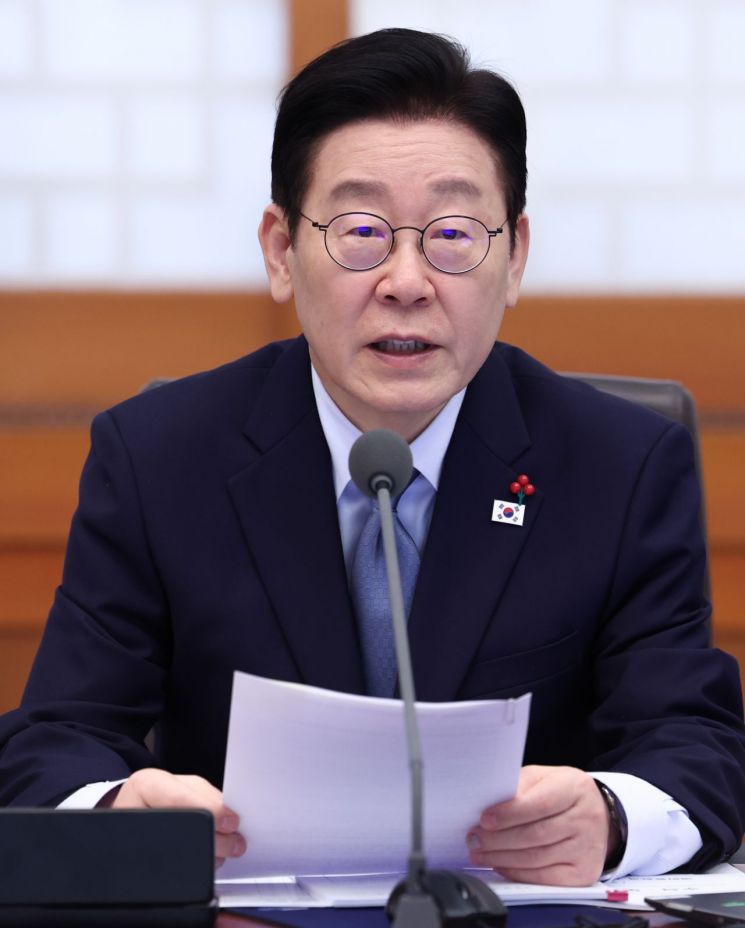
A Blue House official stated on the 18th, "When the Korea-U.S. Joint Fact Sheet was released last year, it was clearly specified that 'conditions no less favorable than those for major countries' would be applied to Korea in the semiconductor sector." The official added that the government will closely analyze the recently concluded semiconductor agreement between the United States and Taiwan.
The government plans to continuously monitor how the existing agreements between Korea and the United States are being implemented. The Blue House will soon receive reports from relevant ministries, including the Ministry of Trade, Industry and Energy, and will also gather feedback from companies. The Blue House official explained, "We will continue to confirm specific details during consultations with the U.S. side and plan to communicate with the industry as well."
Previously, U.S. President Donald Trump signed a proclamation imposing a 25% tariff on semiconductor chips that are imported into the United States and then re-exported to third countries. According to the White House, this measure mainly targets AI accelerator semiconductors such as Nvidia's 'H200', and is based on the U.S. Department of Commerce's investigation under Section 232 of the Trade Expansion Act regarding the impact of semiconductor imports on U.S. national security.
Through a fact sheet, the White House stated, "President Trump may soon impose broader import tariffs to encourage domestic manufacturing of semiconductors and related products in the United States, and may introduce a corresponding tariff offset program."
President Trump also issued a separate proclamation directing negotiations with trading partners to adjust the structure of critical mineral imports to align with U.S. security interests. The proclamation also included the possibility of setting minimum import prices for certain critical minerals, depending on the outcome of the negotiations. Yeo Han-koo, Trade Minister at the Ministry of Trade, Industry and Energy, said at the airport upon returning from the United States the previous day, "The memory chips that our companies mainly export are excluded," and added, "While the impact on Korea may be limited, we cannot be complacent as it is unclear when and in what form the second phase of measures may be introduced."
Additionally, the Blue House stated that it is not appropriate to interpret the massive personal information leak incident at Coupang as an issue of diplomatic or trade relations between Korea and the United States. The Blue House explained, "The Coupang incident is an unprecedented large-scale personal information leak, and an investigation is underway in accordance with the law," adding, "We plan to continue to explain our position to the U.S. side."
© The Asia Business Daily(www.asiae.co.kr). All rights reserved.

















